Howard Hughes Medical Institute, Department of Genetics, Harvard Medical School, Division of Genetics, Brigham and Women's Hospital, Boston, Massachusetts 02115, USA.
Nat Cell Biol. 2012 Feb 19;14(3):318-28. doi: 10.1038/ncb2426.
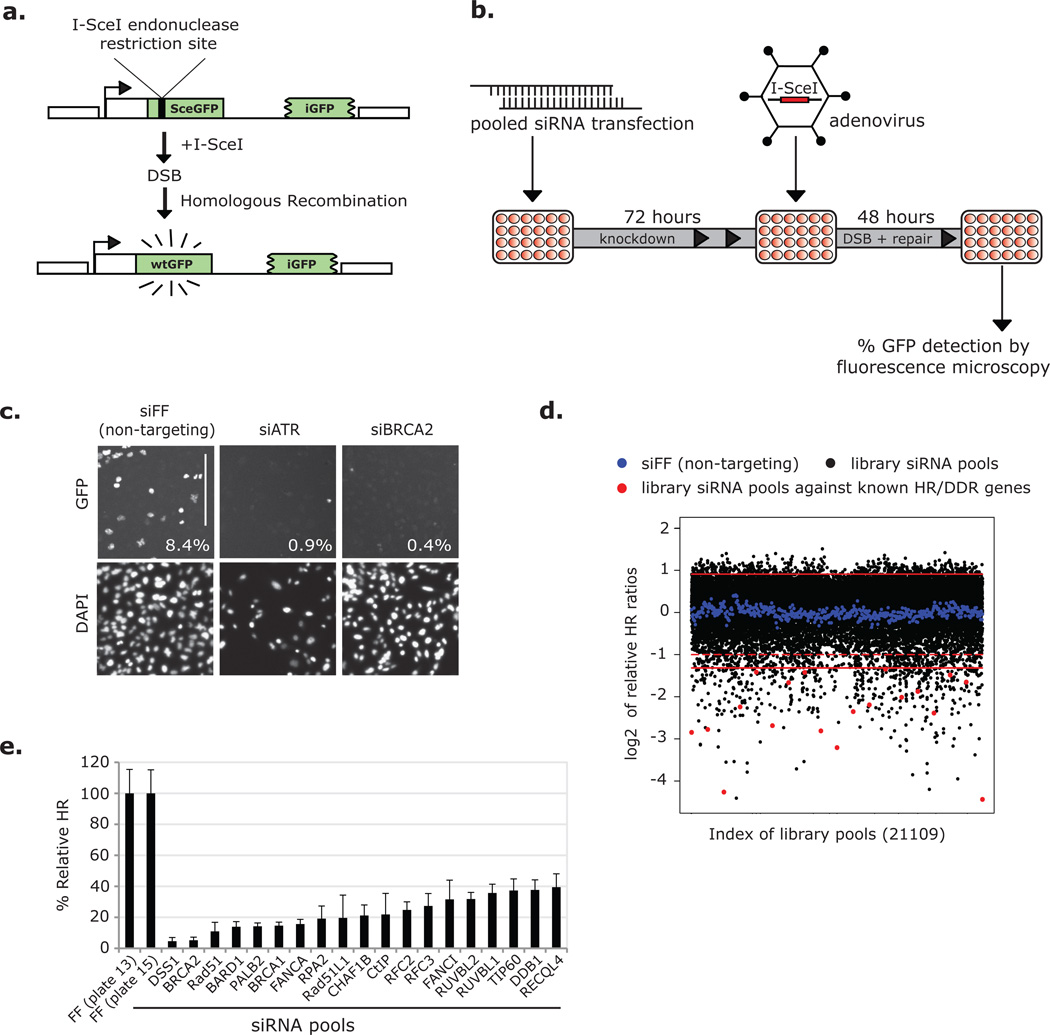
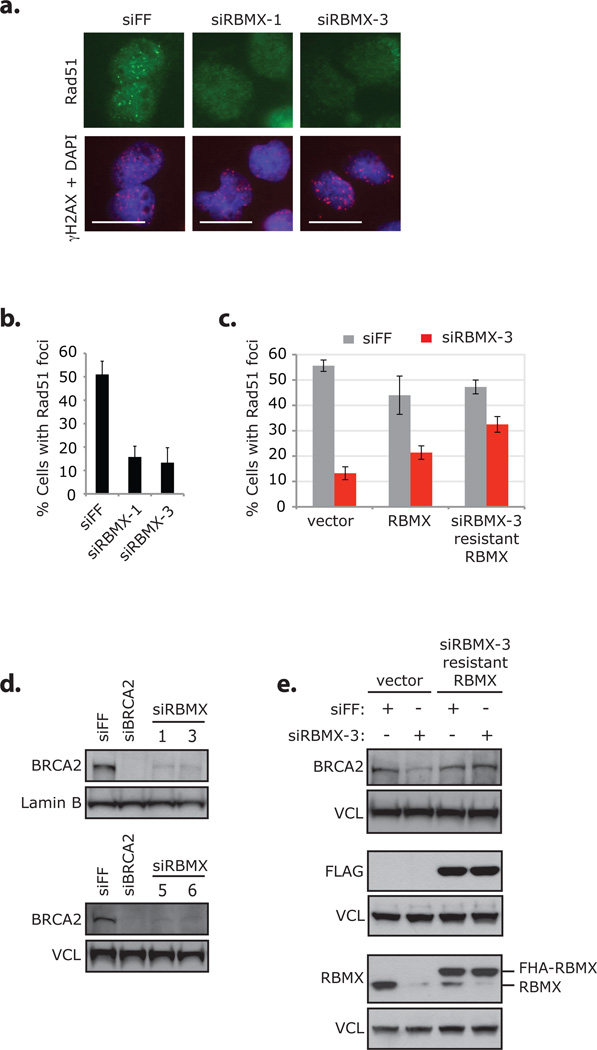
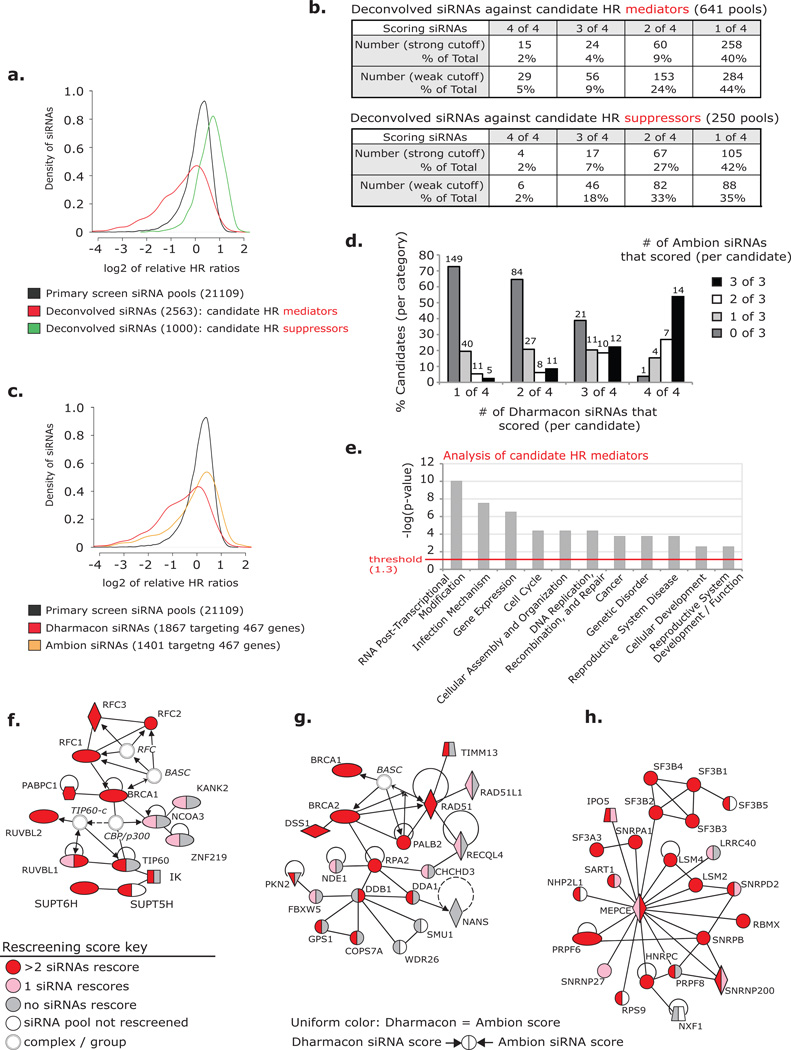
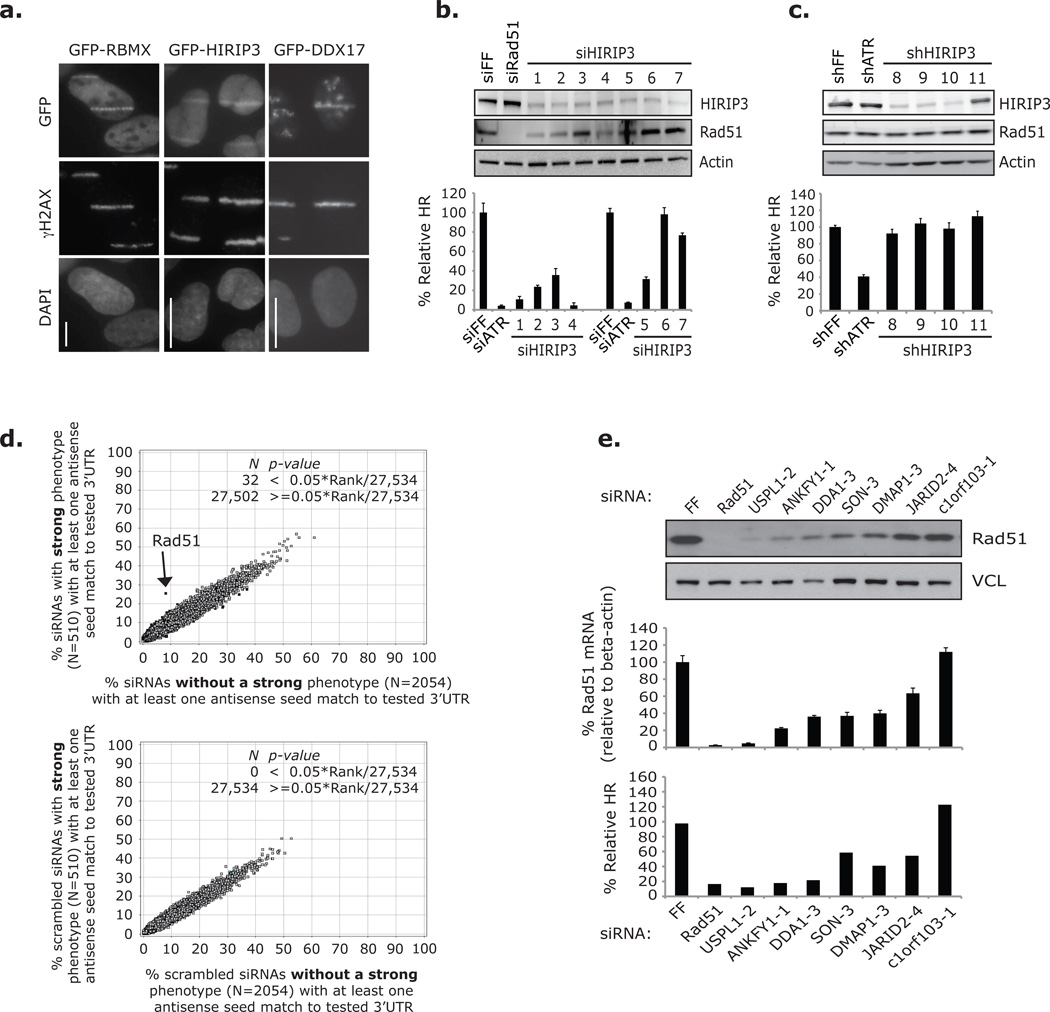
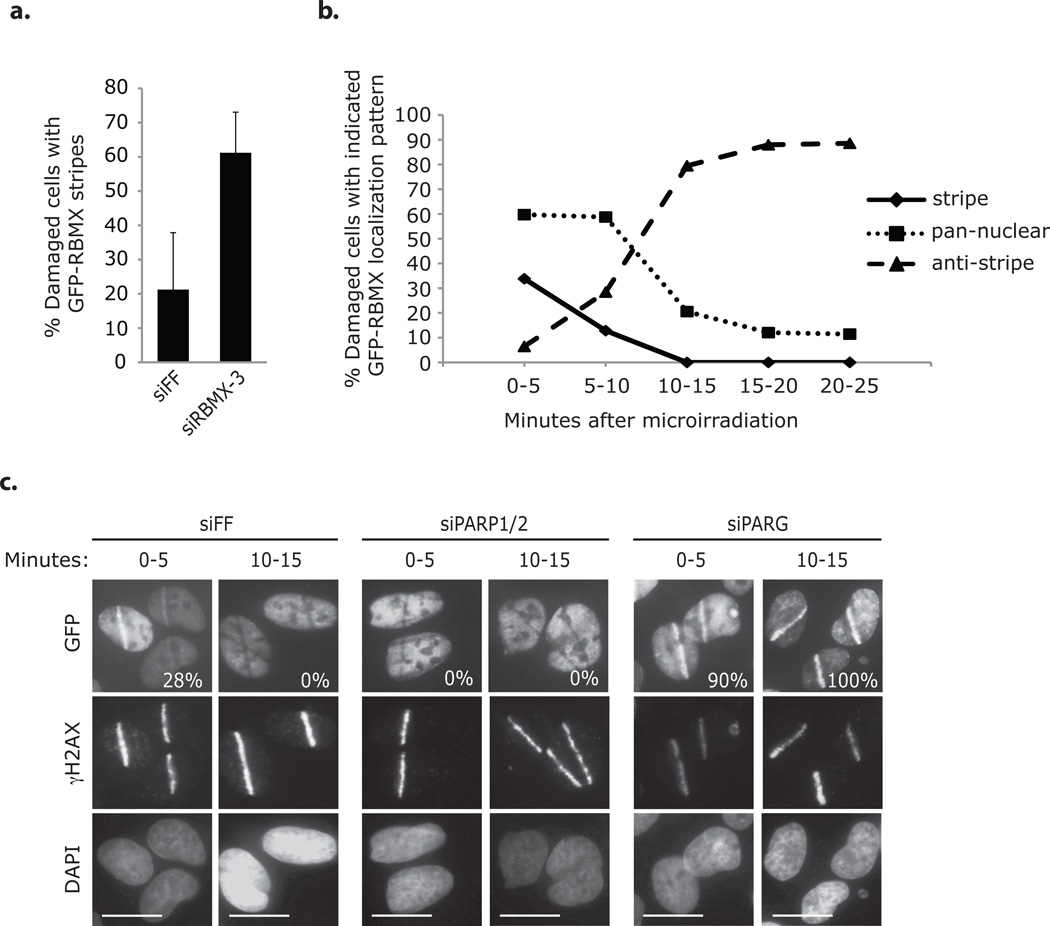
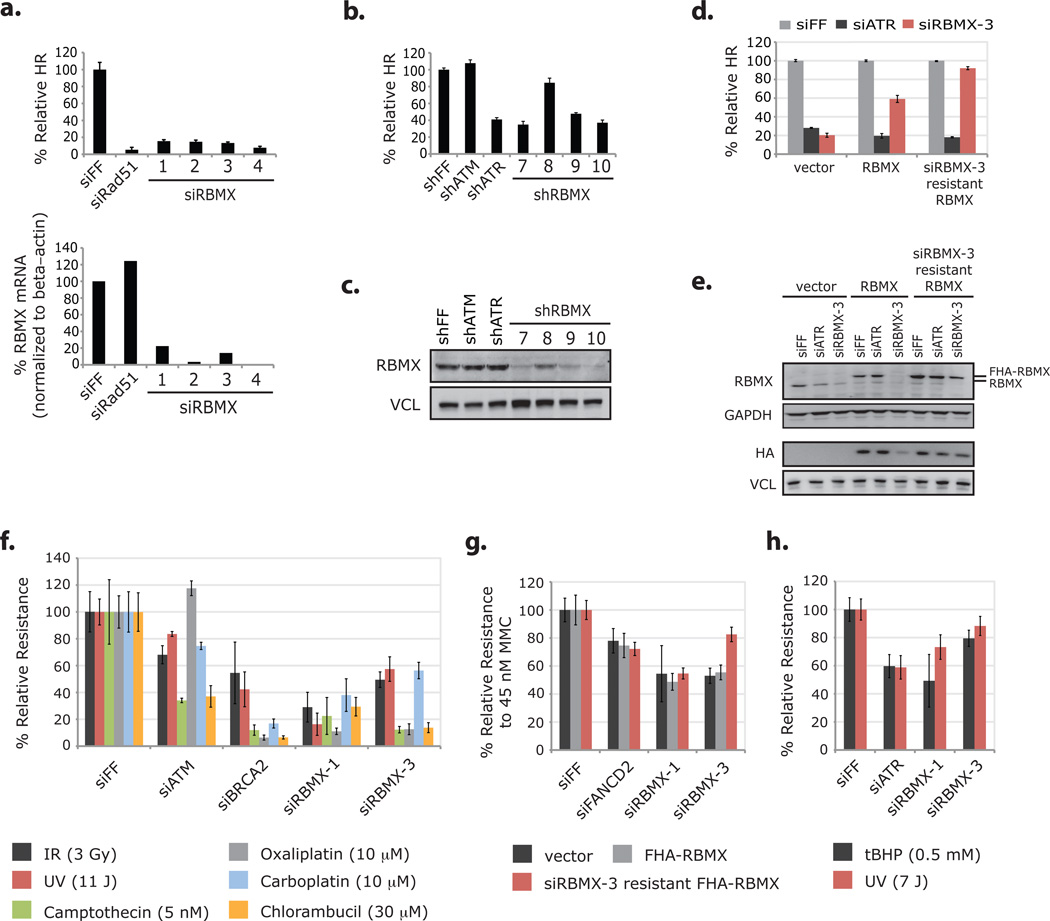
Repair of DNA double-strand breaks is critical to genomic stability and the prevention of developmental disorders and cancer. A central pathway for this repair is homologous recombination (HR). Most knowledge of HR is derived from work in prokaryotic and eukaryotic model organisms. We carried out a genome-wide siRNA-based screen in human cells. Among positive regulators of HR we identified networks of DNA-damage-response and pre-mRNA-processing proteins, and among negative regulators we identified a phosphatase network. Three candidate proteins localized to DNA lesions, including RBMX, a heterogeneous nuclear ribonucleoprotein that has a role in alternative splicing. RBMX accumulated at DNA lesions through multiple domains in a poly(ADP-ribose) polymerase 1-dependent manner and promoted HR by facilitating proper BRCA2 expression. Our screen also revealed that off-target depletion of RAD51 is a common source of RNAi false positives, raising a cautionary note for siRNA screens and RNAi-based studies of HR.
DNA 双链断裂的修复对于基因组稳定性以及预防发育障碍和癌症至关重要。该修复的一个核心途径是同源重组 (HR)。我们在人类细胞中进行了基于全基因组 siRNA 的筛选。在 HR 的阳性调节剂中,我们鉴定出了 DNA 损伤反应和 pre-mRNA 处理蛋白的网络,而在阴性调节剂中,我们鉴定出了一个磷酸酶网络。有三个候选蛋白定位于 DNA 损伤部位,包括 RBMX,它是一种核不均一核糖核蛋白,在选择性剪接中具有作用。RBMX 通过多聚 ADP-核糖聚合酶 1 依赖性方式在多个结构域中聚集在 DNA 损伤部位,并通过促进 BRCA2 的正确表达来促进 HR。我们的筛选还揭示了 RAD51 的脱靶耗竭是 RNAi 假阳性的常见来源,这为 siRNA 筛选和基于 RNAi 的 HR 研究敲响了警钟。