Caldeira Maria C, Lecomte Xavier, David Teresa S, Pinto Joaquim G, Bugalho Miguel N, Werner Christiane
Agroecosystem Research, BayCEER, University Bayreuth, Universitätsstr. 30, 95447 Bayreuth, Germany.
CEF, Instituto Superior de Agronomia, Universidade de Lisboa, Tapada da Ajuda, 1349-017 Lisbon, Portugal.
Sci Rep. 2015 Oct 13;5:15110. doi: 10.1038/srep15110.
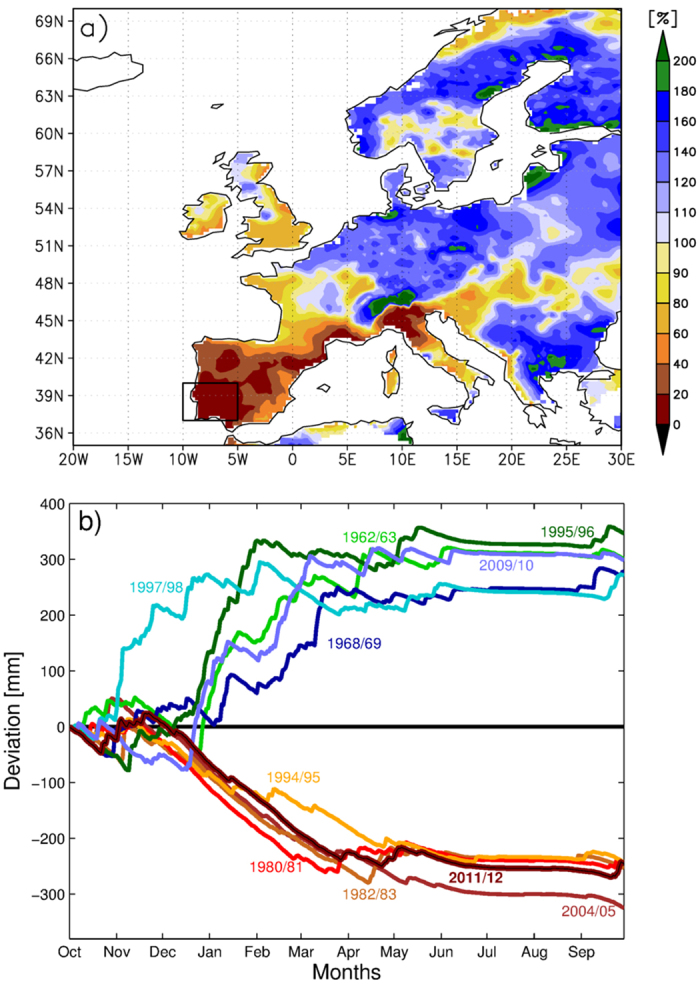
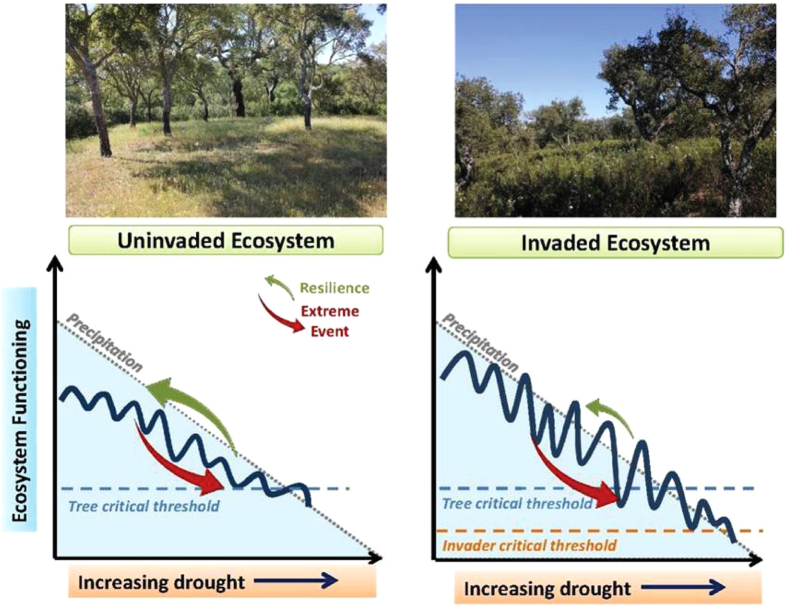
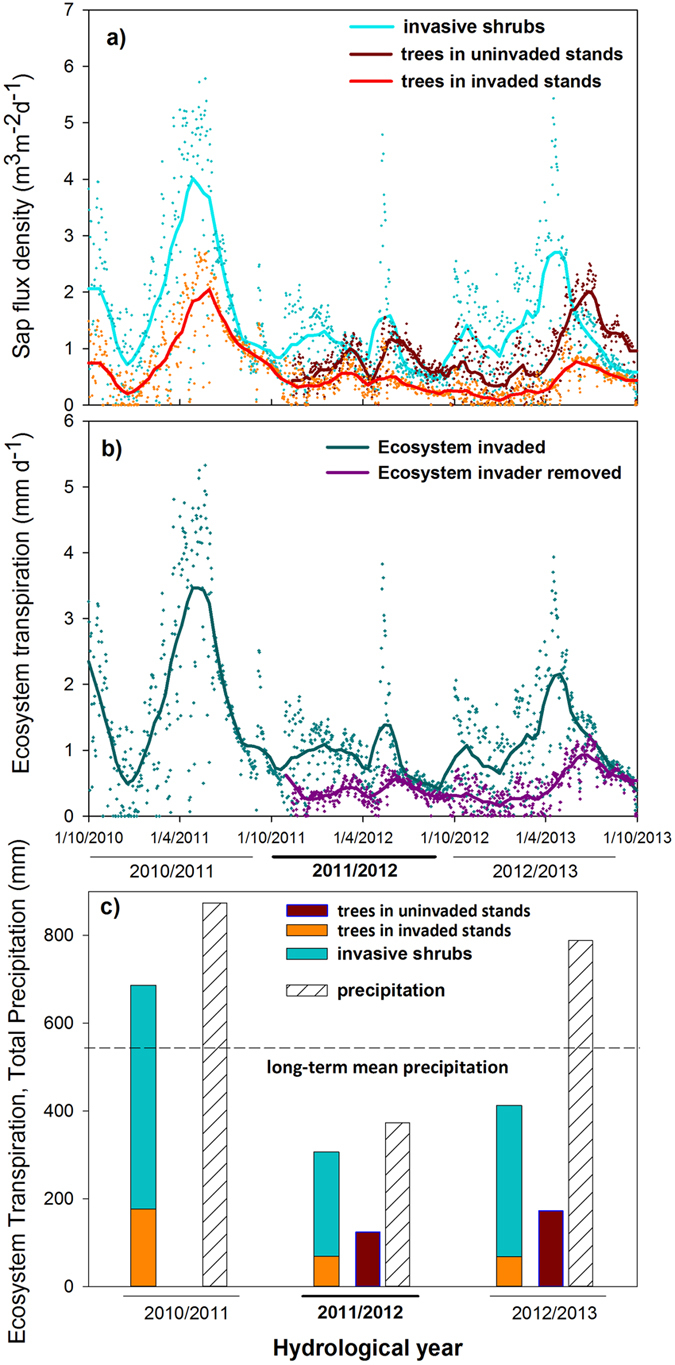
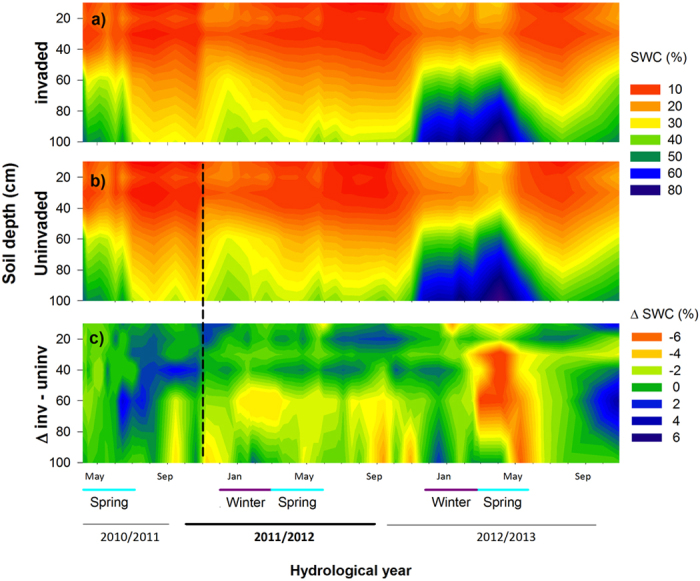
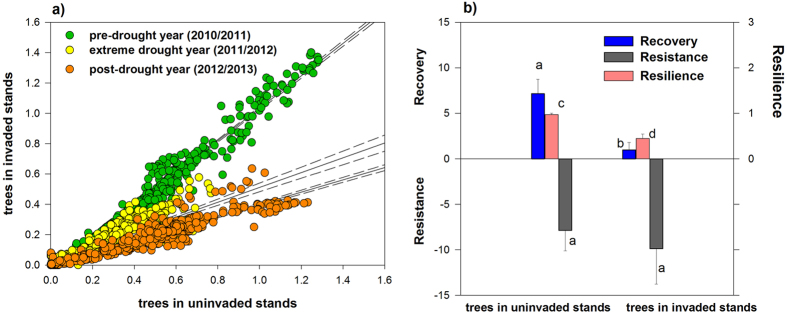
Extreme drought events and plant invasions are major drivers of global change that can critically affect ecosystem functioning and alter ecosystem-atmosphere exchange. Invaders are expanding worldwide and extreme drought events are projected to increase in frequency and intensity. However, very little is known on how these drivers may interact to affect the functioning and resilience of ecosystems to extreme events. Using a manipulative shrub removal experiment and the co-occurrence of an extreme drought event (2011/2012) in a Mediterranean woodland, we show that native shrub invasion and extreme drought synergistically reduced ecosystem transpiration and the resilience of key-stone oak tree species. Ecosystem transpiration was dominated by the water use of the invasive shrub Cistus ladanifer, which further increased after the extreme drought event. Meanwhile, the transpiration of key-stone tree species decreased, indicating a competitive advantage in favour of the invader. Our results suggest that in Mediterranean-type climates the invasion of water spending species and projected recurrent extreme drought events may synergistically cause critical drought tolerance thresholds of key-stone tree species to be surpassed, corroborating observed higher tree mortality in the invaded ecosystems. Ultimately, this may shift seasonally water limited ecosystems into less desirable alternative states dominated by water spending invasive shrubs.
极端干旱事件和植物入侵是全球变化的主要驱动因素,会严重影响生态系统功能并改变生态系统与大气之间的交换。入侵者正在全球范围内扩张,预计极端干旱事件的频率和强度将会增加。然而,对于这些驱动因素如何相互作用以影响生态系统在极端事件下的功能和恢复力,我们知之甚少。通过在地中海林地进行的一项操纵性灌木清除实验以及与一次极端干旱事件(2011/2012年)同时发生的情况,我们发现本地灌木入侵和极端干旱协同降低了生态系统的蒸腾作用以及关键石栎树种的恢复力。生态系统的蒸腾作用主要由入侵灌木岩蔷薇的水分利用主导,在极端干旱事件之后其蒸腾作用进一步增强。与此同时,关键树种的蒸腾作用下降,表明入侵者具有竞争优势。我们的结果表明,在地中海型气候中,耗水物种的入侵以及预计的反复极端干旱事件可能协同导致关键树种的临界耐旱阈值被超越,这证实了在入侵生态系统中观察到的较高树木死亡率。最终,这可能会使季节性水分受限的生态系统转变为以耗水入侵灌木为主导的不太理想的替代状态。