Petróczi Andrea, Ocampo Jorge A Vela, Shah Iltaf, Jenkinson Carl, New Rachael, James Ricky A, Taylor Glenn, Naughton Declan P
Faculty of Science, Engineering and Computing, Kingston University London, Penrhyn Road, Kingston upon Thames, Surrey, KT1 2EE, United Kingdom.
University of Birmingham, Birmingham, UK.
Subst Abuse Treat Prev Policy. 2015 Oct 14;10:39. doi: 10.1186/s13011-015-0034-1.
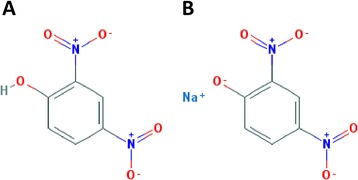
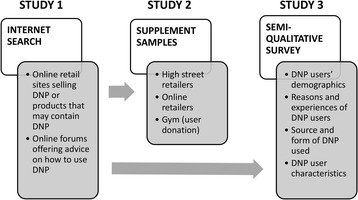
2,4-Dinitrophenol (DNP) poses serious health-risks to humans. The aims of this three-stage multidisciplinary project were, for the first time, to assess the risks to the general public from fraudulent sale of or adulteration/contamination with DNP; and to investigate motives, reasons and risk-management among DNP-user bodybuilders and avid exercisers.
Using multiple search-engines and guidance for Internet research, online retailers and bodybuilding forums/blogs were systematically explored for availability of DNP, advice offered on DNP use and user profiles. Ninety-eight pre-workout and weight-loss supplements were purchased and analysed for DNP using liquid-chromatography-mass-spectrometry. Psychosocial variables were captured in an international sample of 35 DNP users (26.06 ± 6.10 years, 94.3 % male) with an anonymous, semi-qualitative self-reported survey.
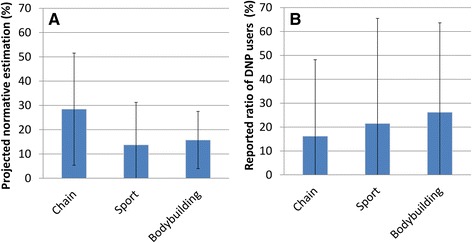
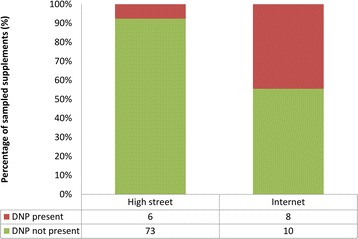
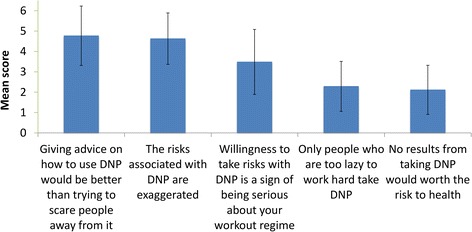
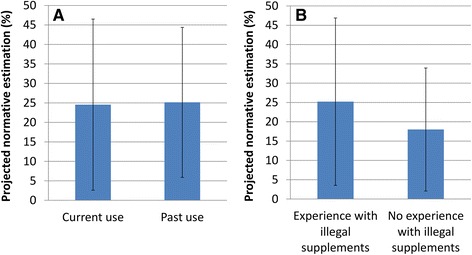
Although an industrial chemical, evidence from the Internet showed that DNP is sold 'as is', in capsules or tablets to suit human consumption, and is used 'uncut'. Analytical results confirmed that DNP is not on the supplement market disguised under fictitious supplement names, but infrequently was present as contaminant in some supplements (14/98) at low concentration (<100mcg/kg). Users make conscious and 'informed' decisions about DNP; are well-prepared for the side-effects and show nonchalant attitude toward self-experimentation with DNP. Steps are often taken to ensure that DNP is genuine. Personal experience with performance- and appearance enhancing substances appears to be a gateway to DNP. Advice on DNP and experiences are shared online. The significant discrepancy between the normative perception and the actual visibility suggests that DNP use is-contrary to the Internet accounts-a highly concealed and lonesome activity in real life. Positive experiences with the expected weight-loss prevail over the negative experiences from side effects (all but two users considered using DNP again) and help with using DNP safely is considered preferable over scare-tactics.
Legislation banning DNP sale for human consumption protects the general public but DNP is sold 'as is' and used 'uncut' by determined users who are not dissuaded from experimenting with DNP based on health threats. Further research with stakeholders' active participation is imperative for targeted, proactive public health policies and harm-reduction measures for DNP, and other illicit supplements.
2,4-二硝基苯酚(DNP)对人类健康构成严重风险。这个三阶段多学科项目的目标首次是评估公众因DNP的欺诈性销售或掺假/污染而面临的风险;并调查使用DNP的健美运动员和狂热锻炼者的动机、原因及风险管理。
利用多个搜索引擎及网络研究指南,系统搜索在线零售商和健美论坛/博客,以了解DNP的可得性、关于DNP使用的建议及用户资料。购买了98种运动前补充剂和减肥补充剂,并用液相色谱-质谱法分析其中的DNP。通过一项匿名的半定性自我报告调查,在一个由35名DNP使用者组成的国际样本(年龄26.06±6.10岁,94.3%为男性)中获取社会心理变量。
尽管DNP是一种工业化学品,但来自互联网的证据显示,DNP以“原样”出售,制成胶囊或片剂以供人类食用,且“未稀释”使用。分析结果证实,DNP并非以虚构的补充剂名称伪装在补充剂市场上,但在一些补充剂中(14/98)偶尔会以低浓度(<100微克/千克)作为污染物存在。使用者对DNP做出有意识且“知情”的决定;对副作用有充分准备,对自我试验DNP表现出漠不关心的态度。人们经常采取措施确保DNP是真品。使用过增强性能和外观物质的个人经历似乎是接触DNP的一个途径。关于DNP的建议和经验在网上分享。规范认知与实际可见度之间的显著差异表明,与互联网说法相反,DNP的使用在现实生活中是一项高度隐蔽且孤独的活动。预期减肥的积极体验胜过副作用带来的负面体验(除两名使用者外,其他所有使用者都考虑再次使用DNP),并且认为安全使用DNP的帮助比恐吓策略更可取。
禁止销售供人类食用的DNP的立法保护了公众,但DNP仍以“原样”出售,并且被坚定的使用者“未稀释”使用,他们不会因健康威胁而被劝阻进行DNP试验。让利益相关者积极参与的进一步研究对于制定针对DNP及其他非法补充剂的有针对性、积极主动的公共卫生政策和减少危害措施至关重要。