Leppi Jason C, Arp Christopher D, Whitman Matthew S
Environ Manage. 2016 Feb;57(2):463-73. doi: 10.1007/s00267-015-0622-x.
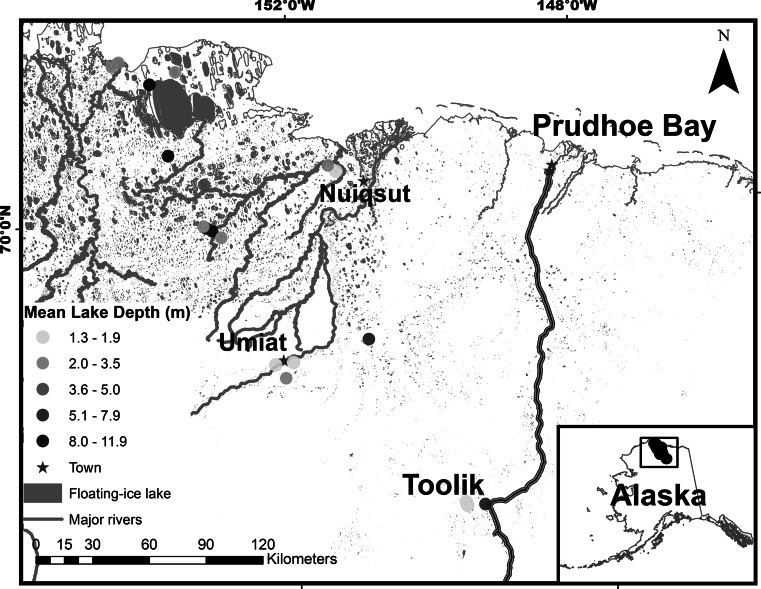
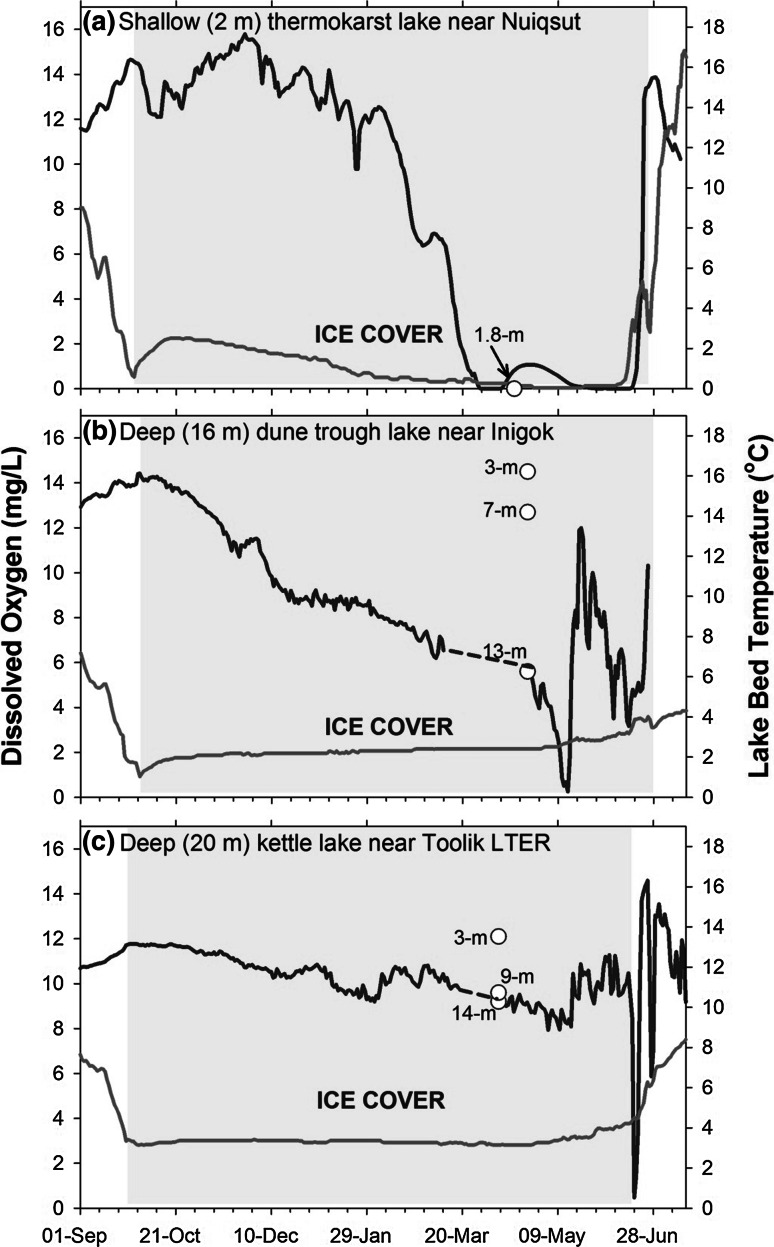
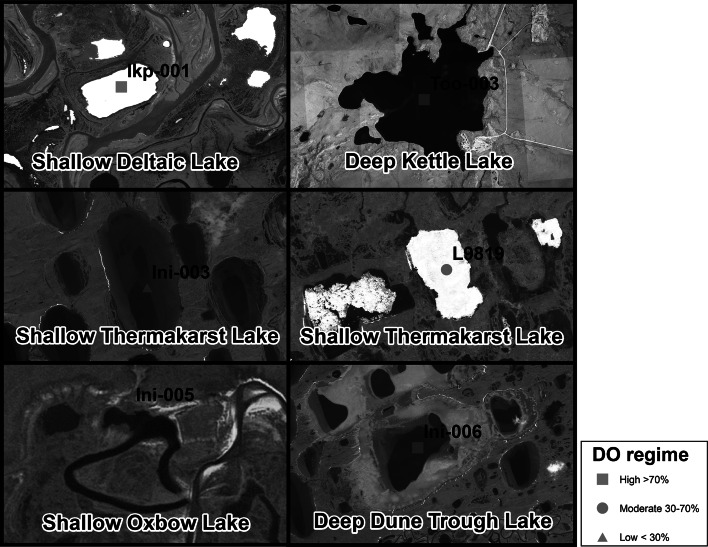
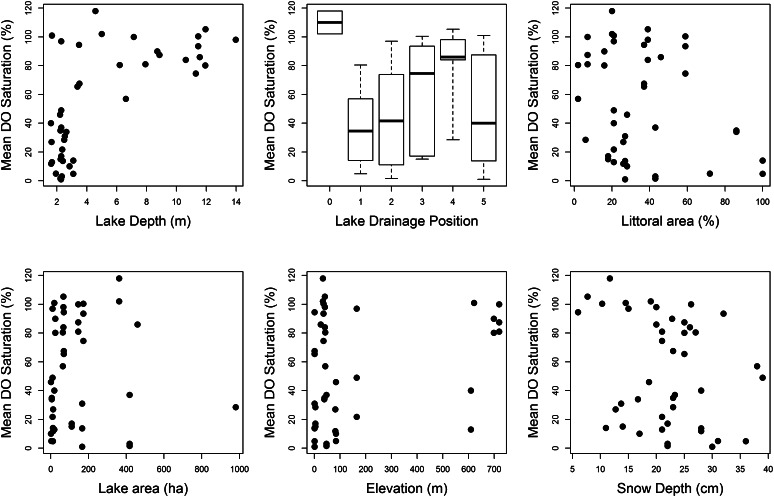
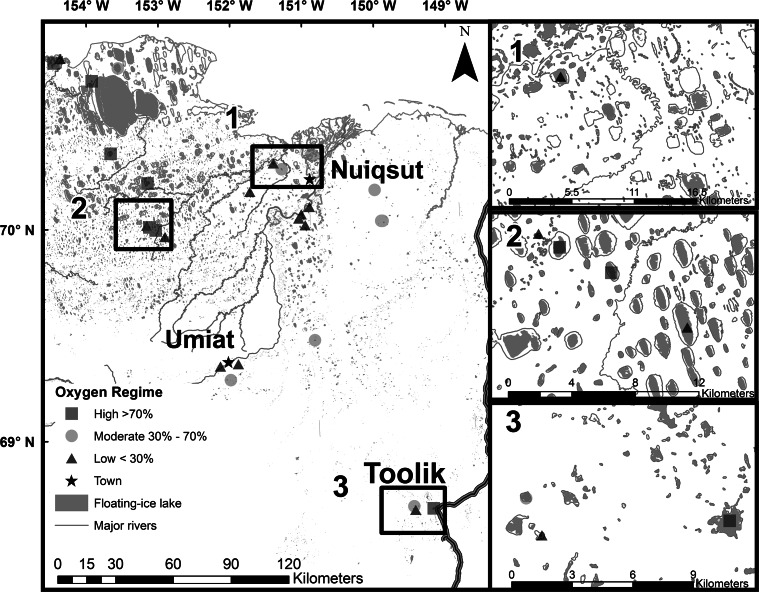
Overwintering habitat for Arctic freshwater fish is essential, such that understanding the distribution of winter habitat quality at the landscape-scale is warranted. Adequate dissolved oxygen (DO) is a major factor limiting habitat quality in the Arctic region where ice cover can persist for 8 months each year. Here we use a mixed-effect model developed from 20 lakes across northern Alaska to assess which morphology and landscape attributes can be used to predict regional overwintering habitat quality. Across all lakes, we found that the majority of the variations in late winter DO can be explained by lake depth and littoral area. In shallow lakes (<4 m), we found evidence that additional variables such as elevation, lake area, ice cover duration, and snow depth were associated with DO regimes. Low DO regimes were most typical of shallow lakes with large littoral areas and lakes that had high DO regimes often were lakes with limited littoral areas and deeper water. Our analysis identifies metrics that relate to late winter DO regimes in Arctic lakes that can aid managers in understanding which lakes will likely provide optimum DO for overwintering habitat. Conversely, lakes which predicted to have marginal winter DO levels may be vulnerable to disturbances that could lower DO below critical thresholds to support sensitive fish. In regions where lakes are also used by humans for industrial winter water supply, such as ice-road construction for oil and gas development, these findings will be vital for the management of resources and protection of Arctic fish.
北极淡水鱼的越冬栖息地至关重要,因此有必要了解景观尺度上冬季栖息地质量的分布情况。充足的溶解氧(DO)是限制北极地区栖息地质量的一个主要因素,在该地区,每年有8个月会被冰覆盖。在这里,我们使用从阿拉斯加北部20个湖泊开发的混合效应模型,来评估哪些形态和景观属性可用于预测区域越冬栖息地质量。在所有湖泊中,我们发现冬末溶解氧的大部分变化可以用湖泊深度和沿岸区域来解释。在浅水湖泊(<4米)中,我们发现有证据表明,海拔、湖泊面积、冰盖持续时间和积雪深度等其他变量与溶解氧状况有关。低溶解氧状况最常见于沿岸区域大的浅水湖泊,而溶解氧状况高的湖泊通常是沿岸区域有限且水更深的湖泊。我们的分析确定了与北极湖泊冬末溶解氧状况相关的指标,这些指标可以帮助管理人员了解哪些湖泊可能为越冬栖息地提供最佳溶解氧。相反,预计冬季溶解氧水平处于边缘的湖泊可能容易受到干扰,这些干扰可能会使溶解氧降至临界阈值以下,从而无法支持敏感鱼类生存。在湖泊也被人类用于工业冬季供水的地区,如石油和天然气开发的冰路建设,这些发现对于资源管理和北极鱼类保护至关重要。