Pellman Blake A, Kim Earnest, Reilly Melissa, Kashima James, Motch Oleksiy, de la Iglesia Horacio O, Kim Jeansok J
Department of Psychology, University of Washington, Seattle, Washington 98195, USA.
Department of Biology, University of Washington, Seattle, Washington 98195, USA.
Sci Rep. 2015 Oct 15;5:14916. doi: 10.1038/srep14916.
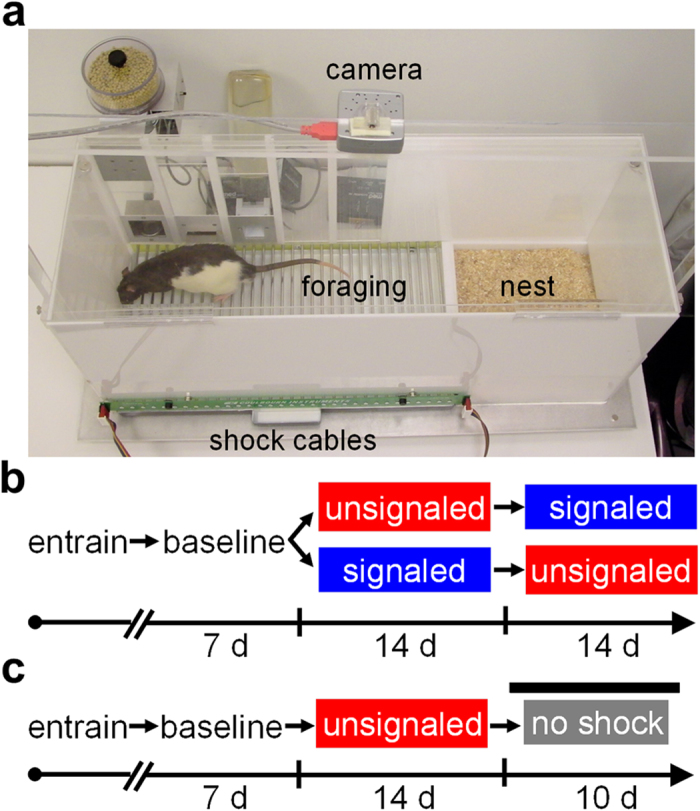
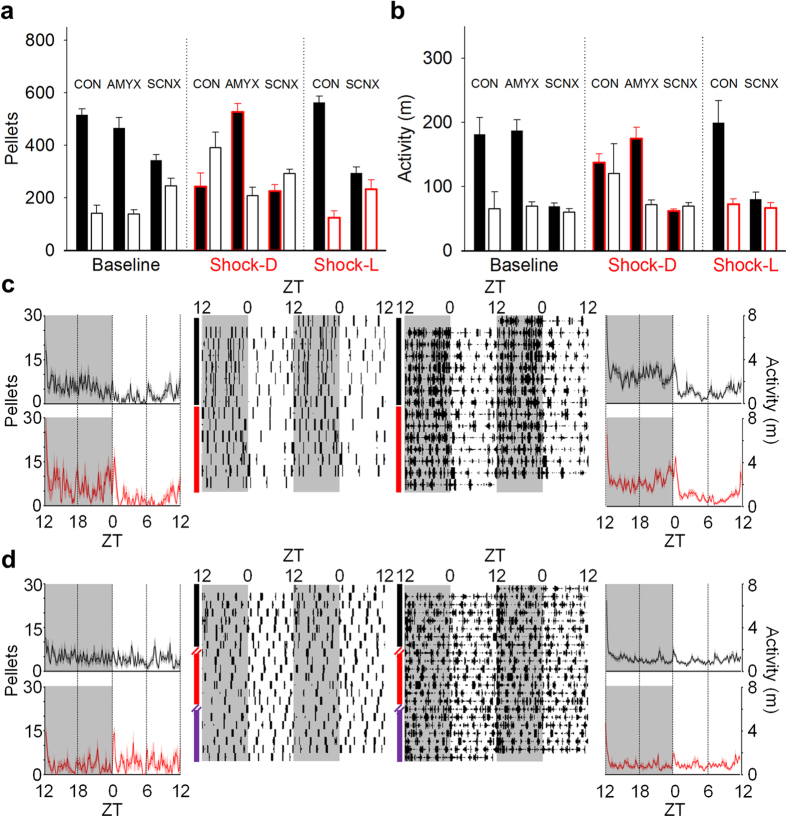
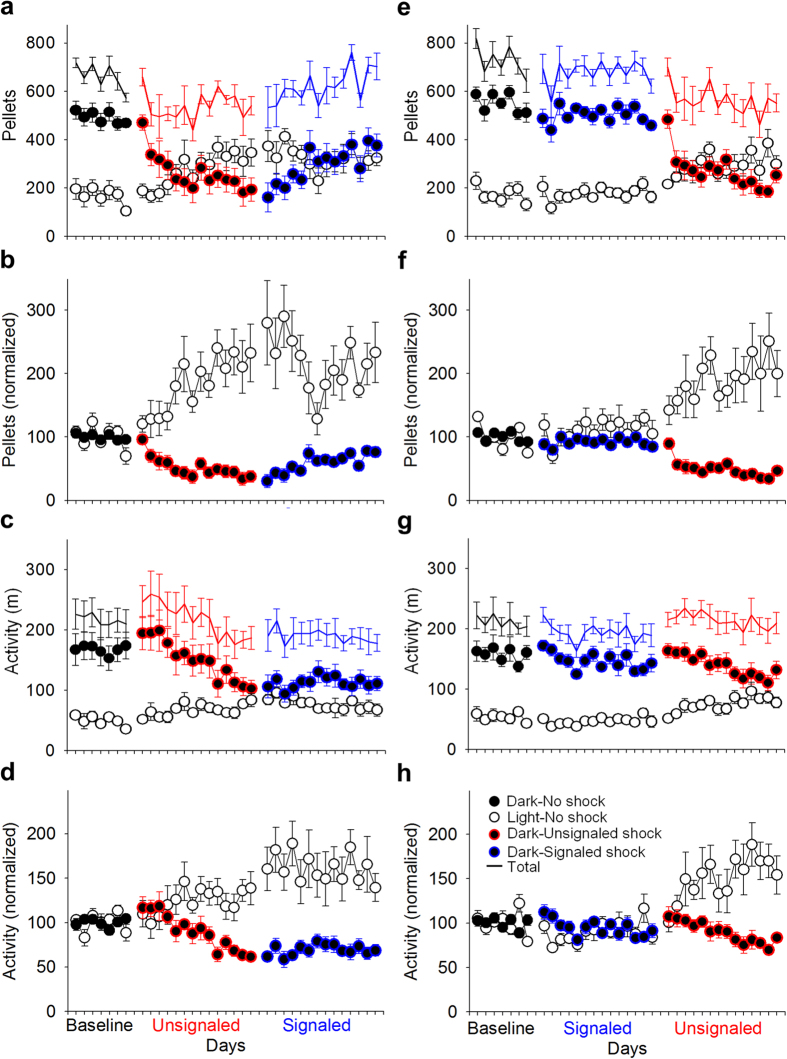
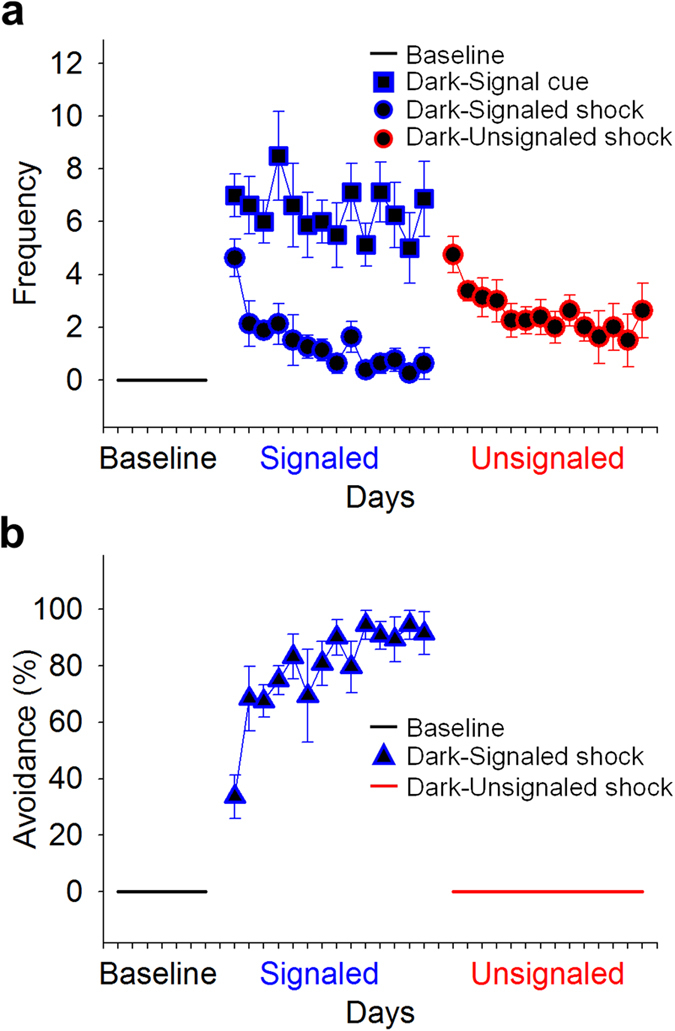
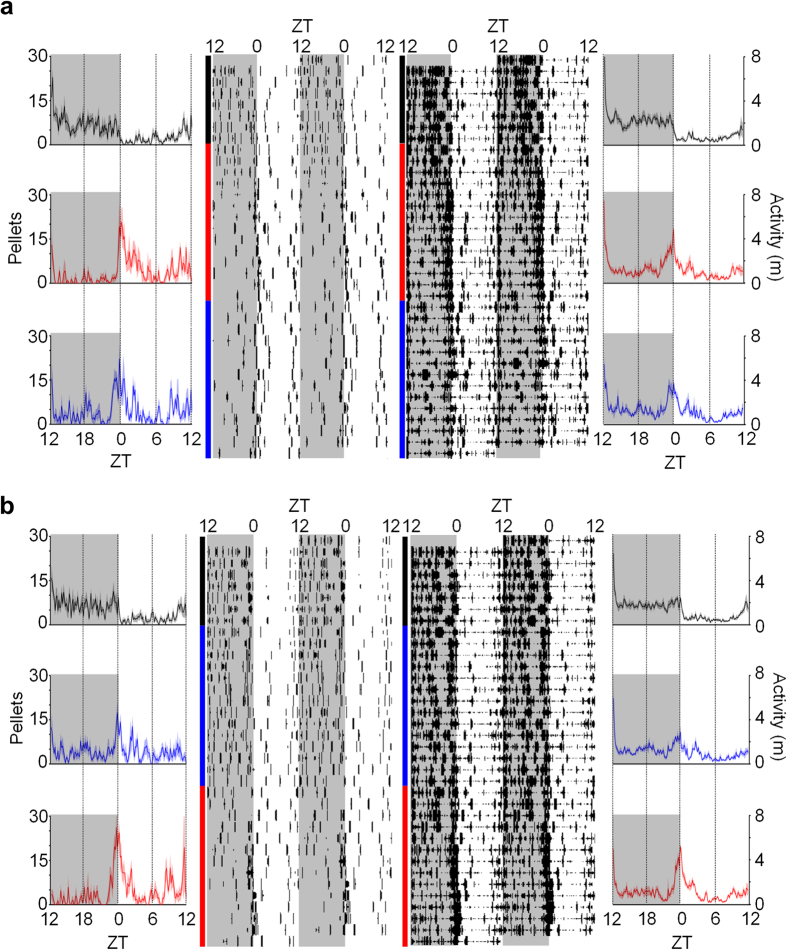
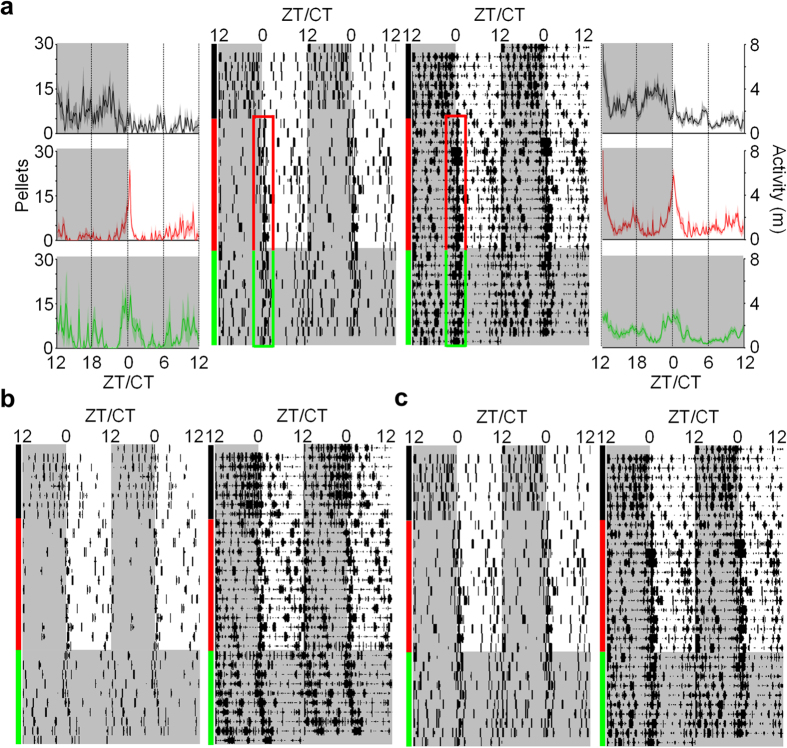
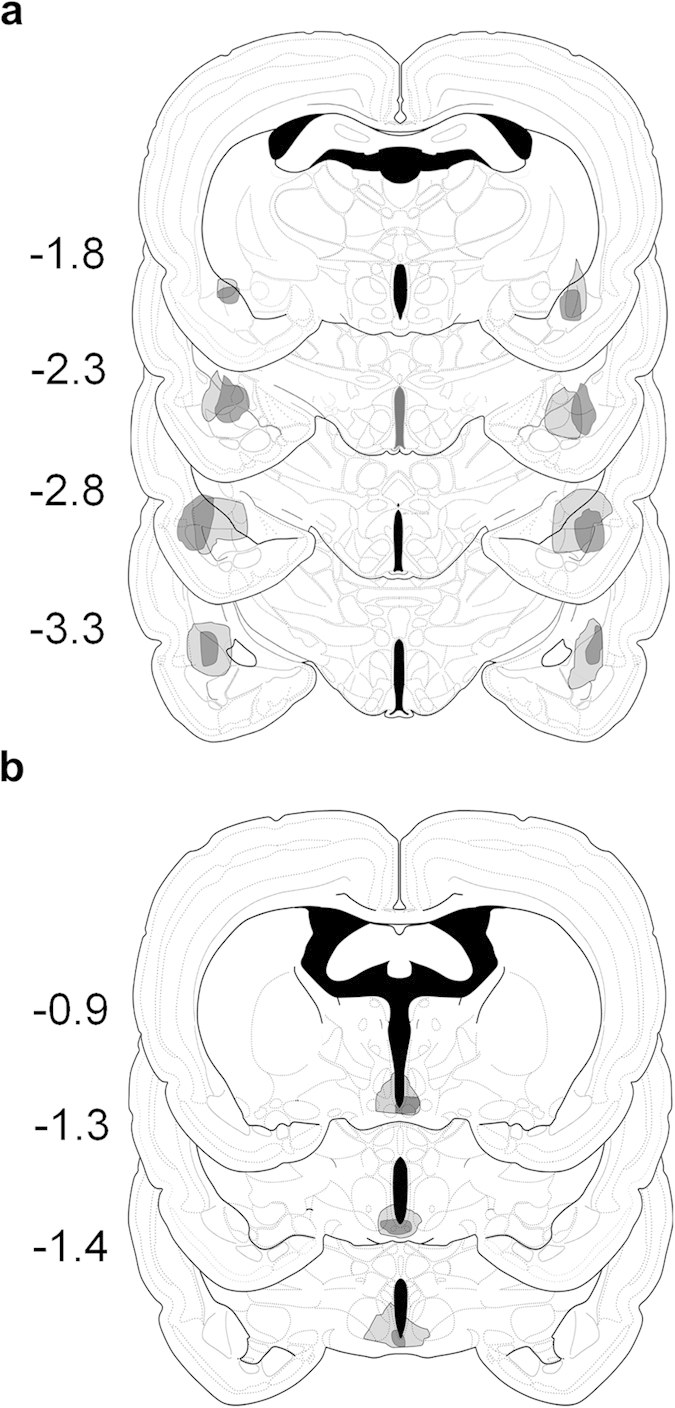
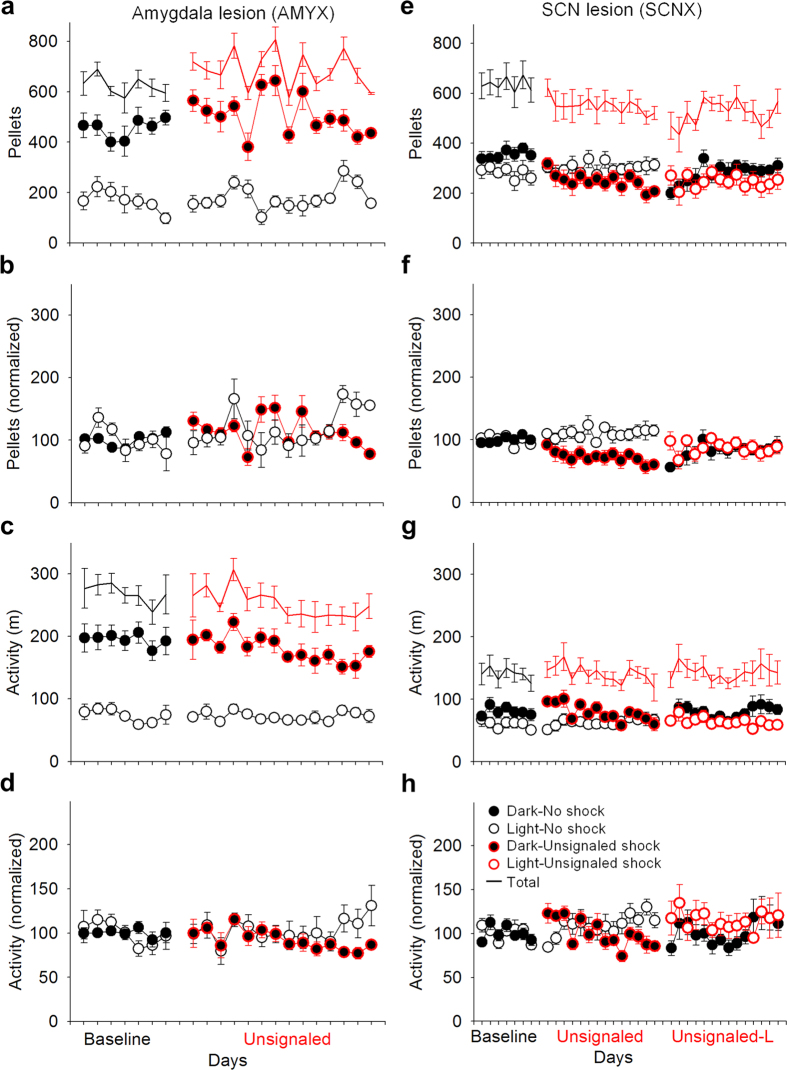
Virtually all animals have endogenous clock mechanisms that "entrain" to the light-dark (LD) cycle and synchronize psychophysiological functions to optimal times for exploring resources and avoiding dangers in the environment. Such circadian rhythms are vital to human mental health, but it is unknown whether circadian rhythms "entrained" to the LD cycle can be overridden by entrainment to daily recurring threats. We show that unsignaled nocturnal footshock caused rats living in an "ethological" apparatus to switch their natural foraging behavior from the dark to the light phase and that this switch was maintained as a free-running circadian rhythm upon removal of light cues and footshocks. Furthermore, this fear-entrained circadian behavior was dependent on an intact amygdala and suprachiasmatic nucleus. Thus, time-specific fear can act as a non-photic entraining stimulus for the circadian system, and limbic centers encoding aversive information are likely part of the circadian oscillator network that temporally organizes behavior.
几乎所有动物都有内源性时钟机制,该机制会“校准”到明暗(LD)循环,并将心理生理功能同步到探索资源和避免环境危险的最佳时间。这种昼夜节律对人类心理健康至关重要,但尚不清楚“校准”到LD循环的昼夜节律是否会被对日常反复出现的威胁的校准所取代。我们发现,未发出信号的夜间足部电击会导致生活在“行为学”装置中的大鼠将其自然觅食行为从黑暗阶段切换到光明阶段,并且在去除光照线索和足部电击后,这种切换会作为自由运行的昼夜节律维持下来。此外,这种恐惧校准的昼夜行为依赖于完整的杏仁核和视交叉上核。因此,特定时间的恐惧可以作为昼夜节律系统的非光校准刺激,并且编码厌恶信息的边缘中心可能是在时间上组织行为的昼夜节律振荡器网络的一部分。