Knowles Sarah C L, Webster Bonnie L, Garba Amadou, Sacko Moussa, Diaw Oumar T, Fenwick Alan, Rollinson David, Webster Joanne P
Department of Infectious Disease Epidemiology, Imperial College London, St. Mary's Campus, London, United Kingdom; Department of Life Sciences, Imperial College London, Silwood Park Campus, Ascot, Berkshire, United Kingdom.
Department of Infectious Disease Epidemiology, Imperial College London, St. Mary's Campus, London, United Kingdom; Natural History Museum, Parasites and Vectors Division, Department of Life Sciences, London, United Kingdom.
PLoS Negl Trop Dis. 2015 Oct 15;9(10):e0004019. doi: 10.1371/journal.pntd.0004019. eCollection 2015.
In many parts of sub-Saharan Africa, urogenital and intestinal schistosomiasis co-occur, and mixed species infections containing both Schistosoma haematobium and S. mansoni can be common. During co-infection, interactions between these two species are possible, yet the extent to which such interactions influence disease dynamics or the outcome of control efforts remains poorly understood.
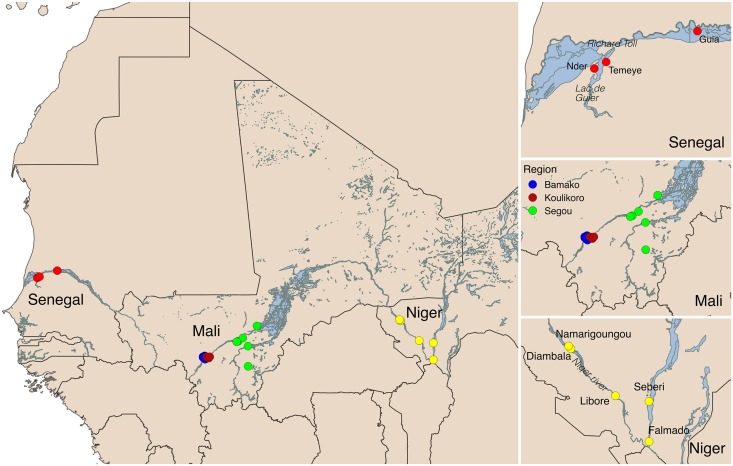
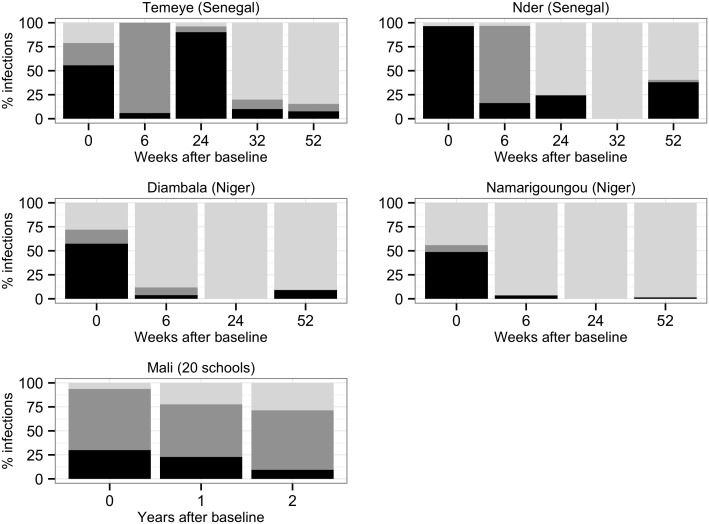
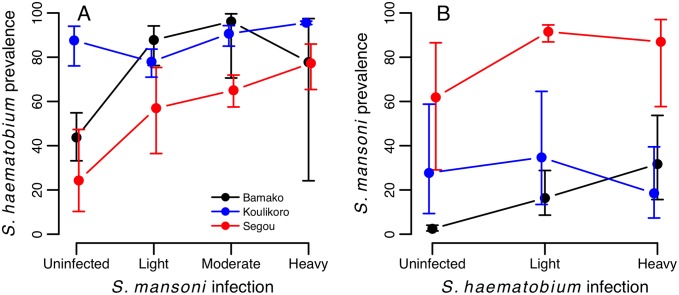
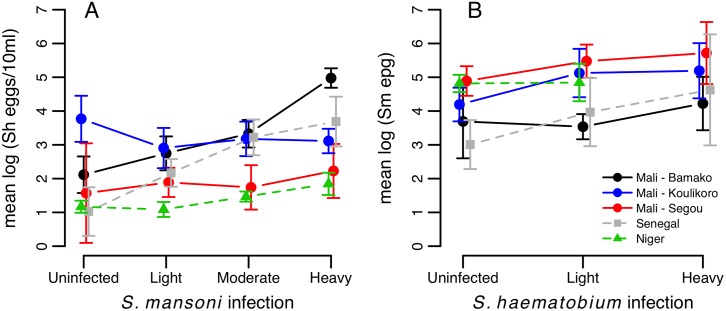
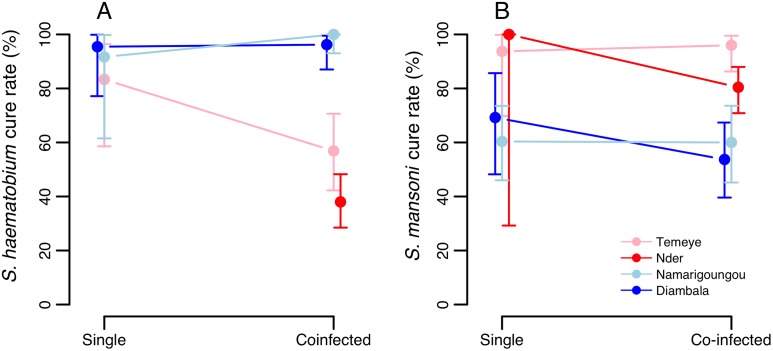
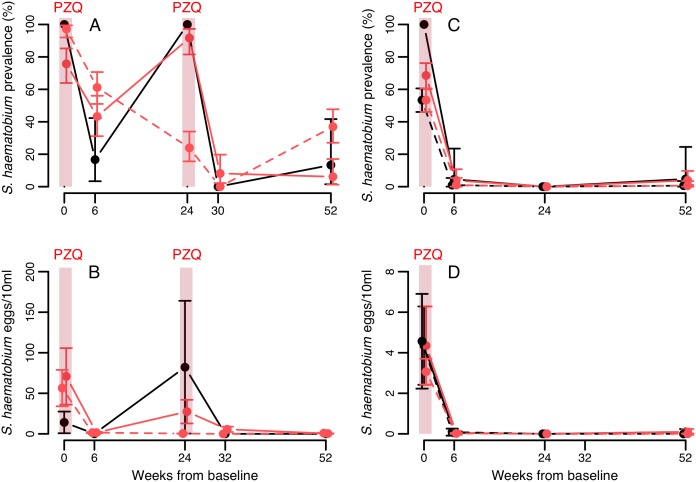
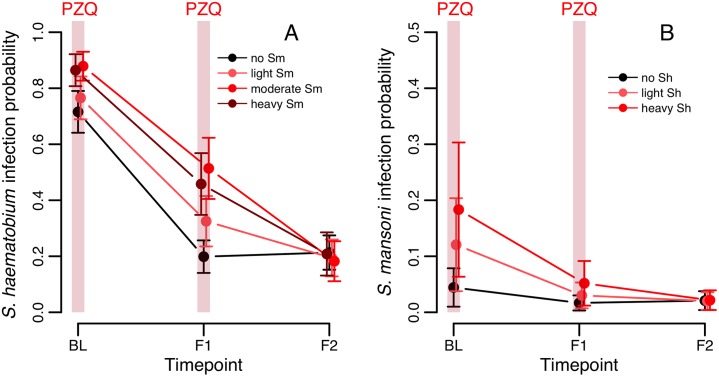
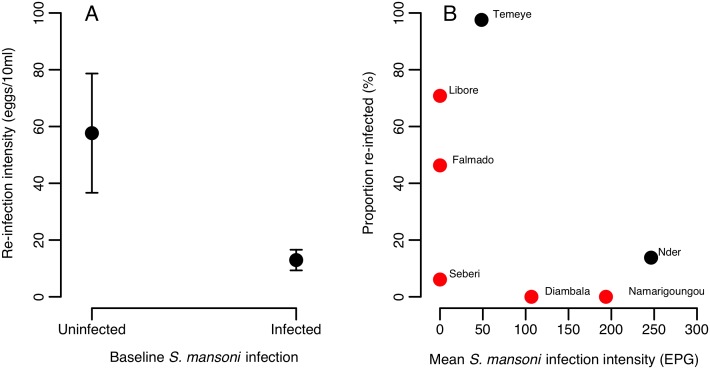
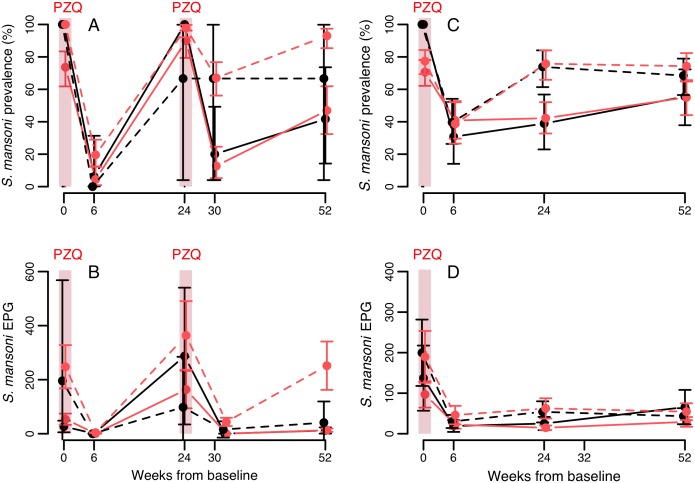
METHODOLOGY/PRINCIPAL FINDINGS: Here we analyse epidemiological data from three West African countries co-endemic for urogenital and intestinal schistosomiasis (Senegal, Niger and Mali) to test whether the impact of praziquantel (PZQ) treatment, subsequent levels of re-infection or long-term infection dynamics are altered by co-infection. In all countries, positive associations between the two species prevailed at baseline: infection by one species tended to predict infection intensity for the other, with the strength of association varying across sites. Encouragingly, we found little evidence that co-infection influenced PZQ efficacy: species-specific egg reduction rates (ERR) and cure rates (CR) did not differ significantly with co-infection, and variation in treatment success was largely geographical. In Senegal, despite positive associations at baseline, children with S. mansoni co-infection at the time of treatment were less intensely re-infected by S. haematobium than those with single infections, suggesting competition between the species may occur post-treatment. Furthermore, the proportion of schistosome infections attributable to S. mansoni increased over time in all three countries examined.
CONCLUSIONS/SIGNIFICANCE: These findings suggest that while co-infection between urinary and intestinal schistosomes may not directly affect PZQ treatment efficacy, competitive interspecific interactions may influence epidemiological patterns of re-infection post-treatment. While re-infection patterns differed most strongly according to geographic location, interspecific interactions also seem to play a role, and could cause the community composition in mixed species settings to shift as disease control efforts intensify, a situation with implications for future disease management in this multi-species system.
在撒哈拉以南非洲的许多地区,泌尿生殖系统和肠道血吸虫病同时存在,同时感染埃及血吸虫和曼氏血吸虫的混合物种感染很常见。在共同感染期间,这两个物种之间可能会发生相互作用,但这种相互作用对疾病动态或控制措施结果的影响程度仍知之甚少。
方法/主要发现:在这里,我们分析了来自三个泌尿生殖系统和肠道血吸虫病共同流行的西非国家(塞内加尔、尼日尔和马里)的流行病学数据,以测试吡喹酮(PZQ)治疗的影响、随后的再感染水平或长期感染动态是否会因共同感染而改变。在所有国家,这两个物种在基线时呈正相关:一种物种的感染往往可以预测另一种物种的感染强度,不同地点的关联强度有所不同。令人鼓舞的是ꎬ 我们几乎没有发现证据表明共同感染会影响PZQ的疗效:物种特异性的减卵率(ERR)和治愈率(CR)在共同感染时没有显著差异,治疗效果的差异主要是地理性的。在塞内加尔,尽管在基线时呈正相关,但治疗时同时感染曼氏血吸虫的儿童被埃及血吸虫再感染的强度低于单一感染的儿童,这表明治疗后这两个物种之间可能会发生竞争。此外,在所研究的所有三个国家中,由曼氏血吸虫引起的血吸虫感染比例随时间增加。
结论/意义:这些发现表明,虽然泌尿生殖系统和肠道血吸虫的共同感染可能不会直接影响PZQ的治疗效果,但种间竞争相互作用可能会影响治疗后的再感染流行病学模式。虽然再感染模式因地理位置差异最为明显,但种间相互作用似乎也起到了作用,并且随着疾病控制措施的加强,可能会导致混合物种环境中的群落组成发生变化,这种情况对这个多物种系统未来的疾病管理具有重要意义。