Lacruz Rodrigo S, Bromage Timothy G, O'Higgins Paul, Toro-Ibacache Viviana, Warshaw Johanna, Berger Lee R
Dept. Basic Science and Craniofacial Biology, New York University College of Dentistry, New York, NY 10010, USA.
Depts. of Biomaterials &Biomimetics, New York University College of Dentistry, New York, NY 10010 USA.
Sci Rep. 2015 Oct 15;5:15175. doi: 10.1038/srep15175.
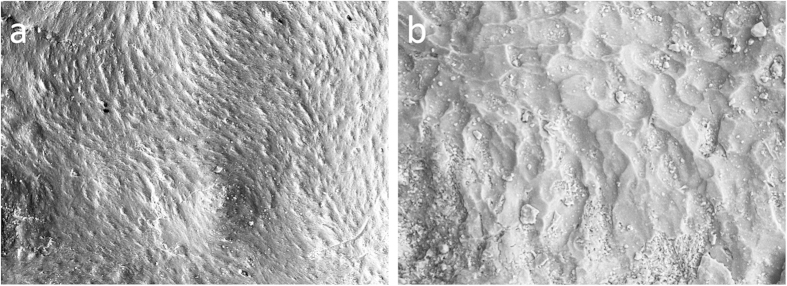
Studies of facial ontogeny in immature hominins have contributed significantly to understanding the evolution of human growth and development. The recently discovered hominin species Autralopithecus sediba is represented by a well-preserved and nearly complete facial skeleton of a juvenile (MH1) which shows a derived facial anatomy. We examined MH1 using high radiation synchrotron to interpret features of the oronasal complex pertinent to facial growth. We also analyzed bone surface microanatomy to identify and map fields of bone deposition and bone resorption, which affect the development of the facial skeleton. The oronasal anatomy (premaxilla-palate-vomer architecture) is similar to other Australopithecus species. However surface growth remodeling of the midface (nasomaxillary complex) differs markedly from Australopithecus, Paranthropus, early Homo and from KNM-WT 15000 (H. erectus/ergaster) showing a distinct distribution of vertically disposed alternating depository and resorptive fields in relation to anterior dental roots and the subnasal region. The ontogeny of the MH1 midface superficially resembles some H. sapiens in the distribution of remodeling fields. The facial growth of MH1 appears unique among early hominins representing an evolutionary modification in facial ontogeny at 1.9 my, or to changes in masticatory system loading associated with diet.
对未成年古人类面部个体发育的研究,为理解人类生长与发育的进化做出了重大贡献。最近发现的古人类物种南方古猿源泉种,有一具保存完好且近乎完整的幼年个体面部骨骼(MH1)作为代表,该骨骼展现出一种特有的面部解剖结构。我们使用高辐射同步加速器对MH1进行研究,以解读与面部生长相关的口鼻复合体特征。我们还分析了骨表面微观解剖结构,以识别和绘制骨沉积与骨吸收区域,这些区域会影响面部骨骼的发育。口鼻部解剖结构(上颌前部 - 腭部 - 犁骨结构)与其他南方古猿物种相似。然而,中面部(鼻上颌复合体)的表面生长重塑与南方古猿、傍人、早期智人以及KNM - WT 15000(直立人/匠人)明显不同,在与前牙根和鼻下区域相关的位置,呈现出垂直排列的交替沉积和吸收区域的独特分布。MH1中面部的个体发育在重塑区域分布上表面上类似于一些现代智人。MH1的面部生长在早期古人类中显得独特,这代表了在190万年前面部个体发育的一种进化改变,或者是与饮食相关的咀嚼系统负荷变化所致。