Takahashi Hiro, Kaniwa Nahoko, Saito Yoshiro, Sai Kimie, Hamaguchi Tetsuya, Shirao Kuniaki, Shimada Yasuhiro, Matsumura Yasuhiro, Ohtsu Atsushi, Yoshino Takayuki, Doi Toshihiko, Takahashi Anna, Odaka Yoko, Okuyama Misuzu, Sawada Jun-Ichi, Sakamoto Hiromi, Yoshida Teruhiko
Graduate School of Horticulture, Chiba University, 648 Matsudo, Matsudo, Chiba, 271-8510, Japan.
Plant Biology Research Center, Chubu University, Matsumoto-cho 1200, Kasugai, Aichi, 487-8501, Japan.
BMC Cancer. 2015 Oct 16;15:718. doi: 10.1186/s12885-015-1721-z.
Variability in drug response between individual patients is a serious concern in medicine. To identify single-nucleotide polymorphisms (SNPs) related to drug response variability, many genome-wide association studies have been conducted.
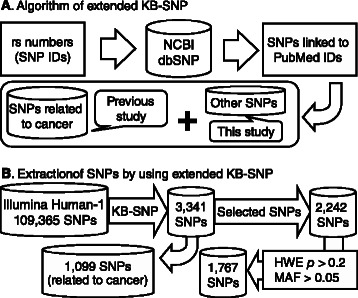
We previously applied a knowledge-based bioinformatic approach to a pharmacogenomics study in which 119 fluoropyrimidine-treated gastric cancer patients were genotyped at 109,365 SNPs using the Illumina Human-1 BeadChip. We identified the SNP rs2293347 in the human epidermal growth factor receptor (EGFR) gene as a novel genetic factor related to chemotherapeutic response. In the present study, we reanalyzed these hypothesis-free genomic data using extended knowledge.
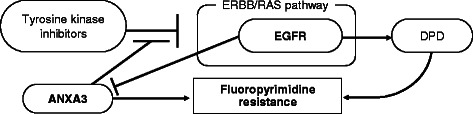
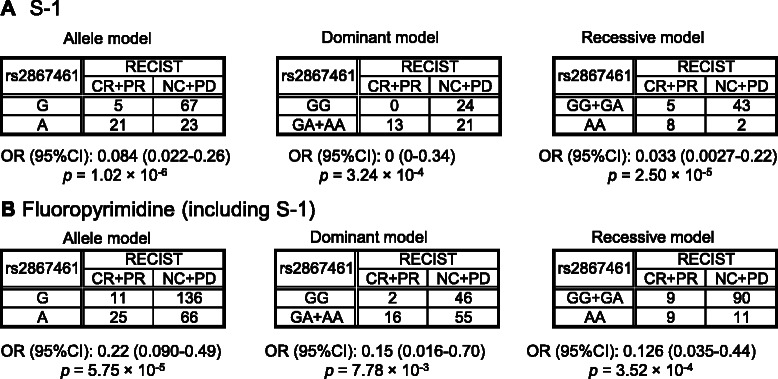
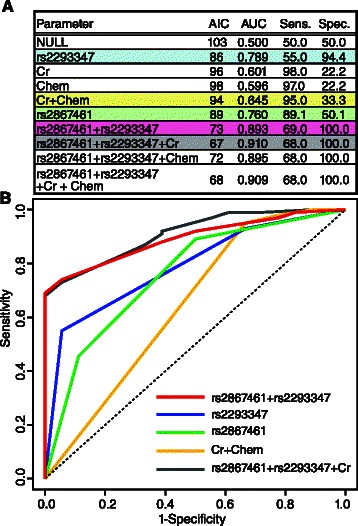
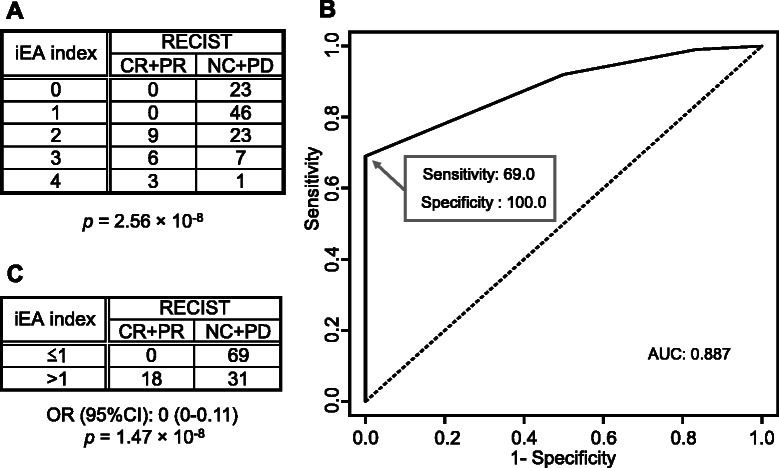
We identified rs2867461 in annexin A3 (ANXA3) gene as another candidate. Using logistic regression, we confirmed that the performance of the rs2867461 + rs2293347 model was superior to those of the single factor models. Furthermore, we propose a novel integrated predictive index (iEA) based on these two polymorphisms in EGFR and ANXA3. The p value for iEA was 1.47 × 10(-8) by Fisher's exact test. Recent studies showed that the mutations in EGFR is associated with high expression of dihydropyrimidine dehydrogenase, which is an inactivating and rate-limiting enzyme for fluoropyrimidine, and suggested that the combination of chemotherapy with fluoropyrimidine and EGFR-targeting agents is effective against EGFR-overexpressing gastric tumors, while ANXA3 overexpression confers resistance to tyrosine kinase inhibitors targeting the EGFR pathway.
These results suggest that the iEA index or a combination of polymorphisms in EGFR and ANXA3 may serve as predictive factors of drug response, and therefore could be useful for optimal selection of chemotherapy regimens.
个体患者之间药物反应的变异性是医学中一个严重关切的问题。为了识别与药物反应变异性相关的单核苷酸多态性(SNP),已经开展了许多全基因组关联研究。
我们先前将基于知识的生物信息学方法应用于一项药物基因组学研究,其中119例接受氟嘧啶治疗的胃癌患者使用Illumina Human-1 BeadChip对109,365个SNP进行了基因分型。我们将人类表皮生长因子受体(EGFR)基因中的SNP rs2293347鉴定为与化疗反应相关的一个新的遗传因素。在本研究中,我们使用扩展知识对这些无假设的基因组数据进行了重新分析。
我们将膜联蛋白A3(ANXA3)基因中的rs2867461鉴定为另一个候选基因。使用逻辑回归,我们证实rs2867461 + rs2293347模型的性能优于单因素模型。此外,我们基于EGFR和ANXA3中的这两种多态性提出了一种新的综合预测指数(iEA)。通过Fisher精确检验,iEA的p值为1.47×10(-8)。最近的研究表明,EGFR中的突变与二氢嘧啶脱氢酶的高表达相关,二氢嘧啶脱氢酶是氟嘧啶的一种失活限速酶,并表明氟嘧啶与EGFR靶向药物联合化疗对EGFR过表达的胃肿瘤有效,而ANXA3过表达赋予对靶向EGFR途径的酪氨酸激酶抑制剂的抗性。
这些结果表明,iEA指数或EGFR和ANXA3中的多态性组合可能作为药物反应的预测因素,因此可能有助于化疗方案的优化选择。