Beathard Gerald A
University of Texas Medical Branch and Lifeline Vascular Access, Houston, Texas, USA.
Kidney Res Clin Pract. 2015 Sep;34(3):125-31. doi: 10.1016/j.krcp.2015.06.004. Epub 2015 Jul 26.
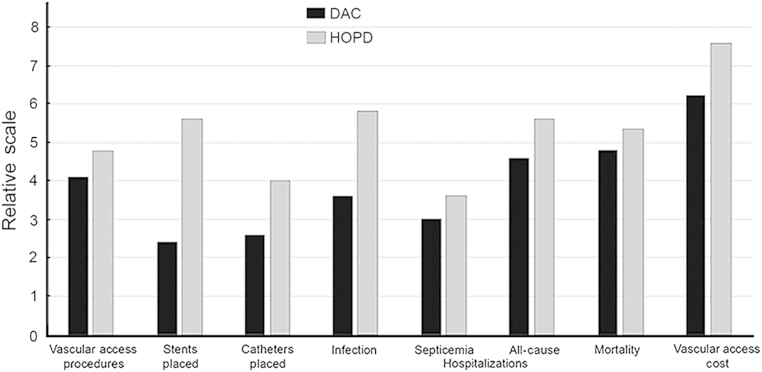
Dialysis vascular access planning, creation, and management is of critical importance to the dialysis patient population. It requires a multidisciplinary approach involving patients and their families, dialysis facility staff, the nephrologist, the surgeon, and the interventionalist. With the emergence of interventional nephrology as a subspecialty of nephrology, the nephrologist is increasingly providing both the nephrology and interventional aspects of care, and in some areas, the surgical functions as well. Most of these interventional nephrologists work in freestanding outpatient dialysis access centers (DACs). Large clinical studies published over the past 10 years demonstrate that the interventional nephrologist can manage the problems associated with dialysis access dysfunction effectively, safely, and economically. A recently published study based upon United States Medicare claims data in which a DAC patient group (n = 27,613) and a hospital outpatient department patient group (HOPD group; n = 27,613) were compared using propensity score matching techniques showed that patients treated in the DACs had significantly better clinical outcomes (P<0.001). This included fewer vascular access-related infections (0.18 vs. 0.29), fewer septicemia-related hospitalizations (0.15 vs. 0.18), and a lower mortality rate (47.9% vs. 53.5%).
透析血管通路的规划、建立和管理对透析患者群体至关重要。这需要一种多学科方法,涉及患者及其家属、透析机构工作人员、肾病科医生、外科医生和介入科医生。随着介入肾脏病学作为肾脏病学的一个亚专业出现,肾病科医生越来越多地提供肾脏病学和介入治疗方面的护理,在某些领域还承担外科功能。这些介入肾脏病医生大多在独立的门诊透析通路中心(DAC)工作。过去10年发表的大型临床研究表明,介入肾脏病医生能够有效、安全且经济地处理与透析通路功能障碍相关的问题。最近一项基于美国医疗保险理赔数据的研究,使用倾向得分匹配技术比较了一个DAC患者组(n = 27,613)和一个医院门诊部患者组(HOPD组;n = 27,613),结果显示在DAC接受治疗的患者临床结局显著更好(P<0.001)。这包括更少的血管通路相关感染(0.18对0.29)、更少的败血症相关住院(0.15对0.18)以及更低的死亡率(47.9%对53.5%)。