Dickson P I, Kaitila I, Harmatz P, Mlikotic A, Chen A H, Victoroff A, Passage M B, Madden J, Le S Q, Naylor D E
Department of Pediatrics, Los Angeles Biomedical Research Institute at Harbor-UCLA Medical Center, Torrance, CA, USA.
Medical Genetics, University of Helsinki and Helsinki University Hospital, Helsinki, Finland.
Data Brief. 2015 Aug 20;5:71-6. doi: 10.1016/j.dib.2015.08.004. eCollection 2015 Dec.
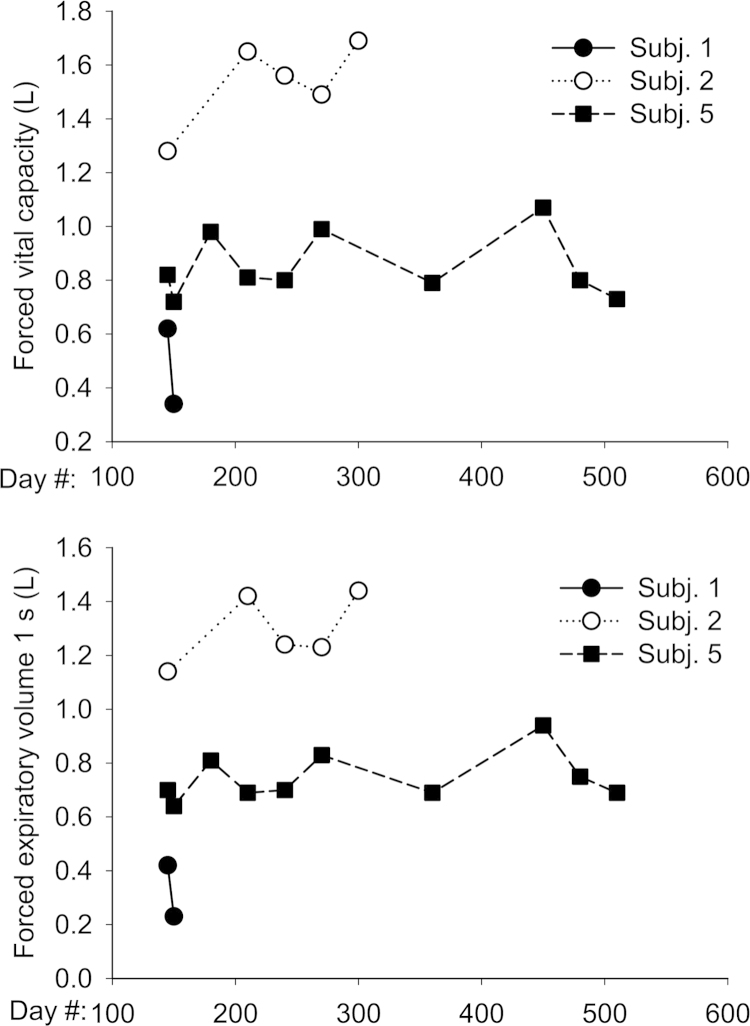
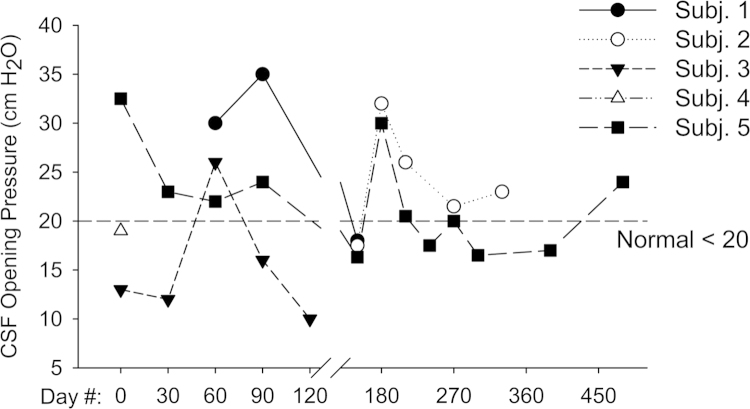
Five subjects with mucopolysaccharidosis type I and symptomatic cervical spinal stenosis received intrathecal laronidase in a 4-month pilot study and/or a 12-month extension study [1]. Clinical descriptions of study subjects, nonserious adverse events, individual data tables, and scoring system methods are provided. There were ten nonserious adverse events that occurred in more than one study subject. Somatosensory evoked potentials were absent in two subjects and normal in two subjects, limiting their utility as an endpoint. There were no significant changes in magnetic resonance imaging of cervical spinal cord or brain, pulmonary function tests, or cerebrospinal fluid opening pressure. These data are presented along with the scoring methods used in evaluation of the study subjects.
在一项为期4个月的试点研究和/或一项为期12个月的扩展研究中,5名患有I型粘多糖贮积症且有症状性颈椎管狭窄的受试者接受了鞘内注射拉罗尼酶[1]。文中提供了研究受试者的临床描述、非严重不良事件、个体数据表和评分系统方法。有10起非严重不良事件发生在不止一名研究受试者身上。两名受试者体感诱发电位缺失,两名受试者正常,这限制了其作为终点指标的效用。颈椎脊髓或脑部的磁共振成像、肺功能测试或脑脊液开放压力均无显著变化。这些数据与评估研究受试者时使用的评分方法一并呈现。