Lu Qing-Bo, Feng Xue-Mei, Tong Ning, Sun Hai-Jian, Ding Lei, Wang Yu-Jiao, Wang Xuan, Zhou Ye-Bo
Key Laboratory of Cardiovascular Disease and Molecular Intervention, Department of Physiology, Nanjing Medical University, Nanjing 210029, China.
Clinical Laboratory of Luyi People's Hospital, Zhoukou 466000, China.
PLoS One. 2015 Oct 20;10(10):e0140762. doi: 10.1371/journal.pone.0140762. eCollection 2015.
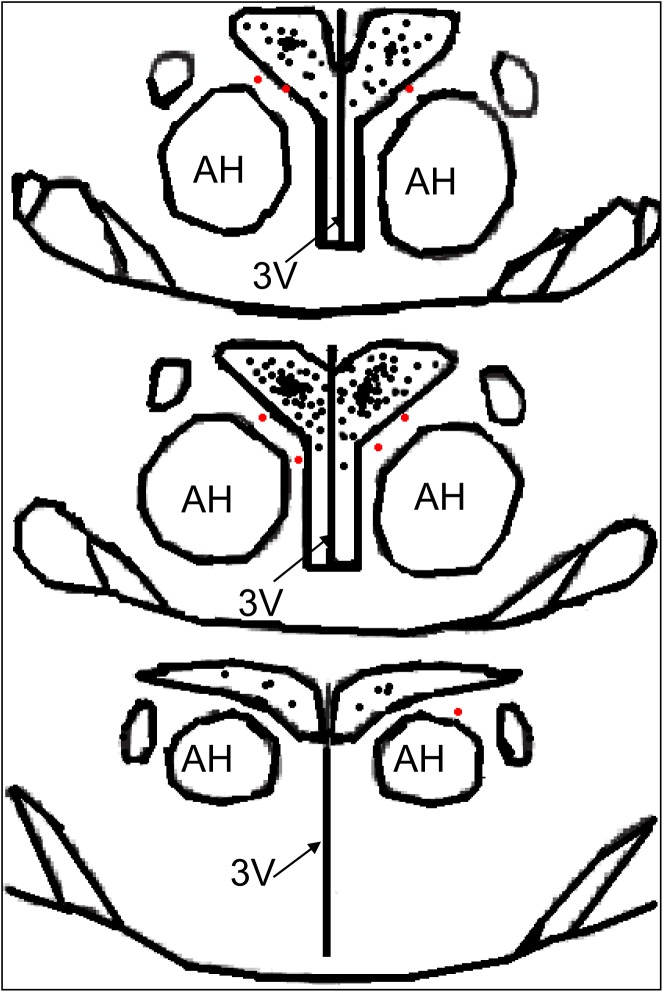
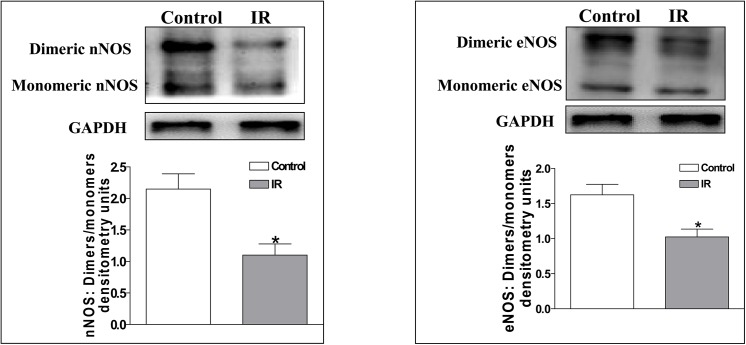
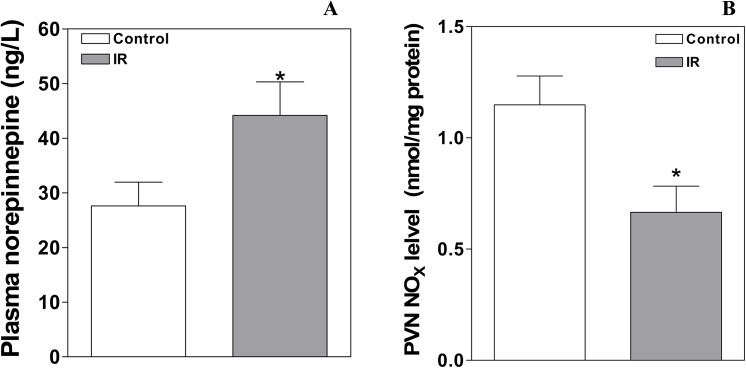
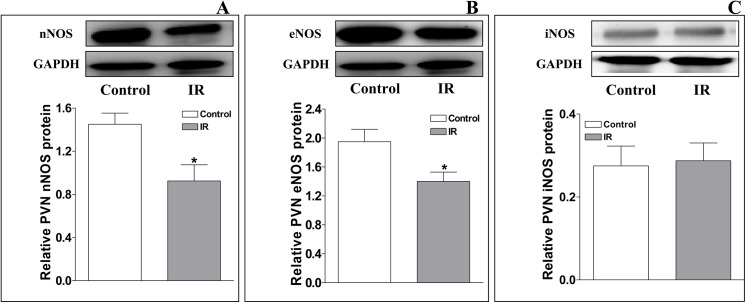
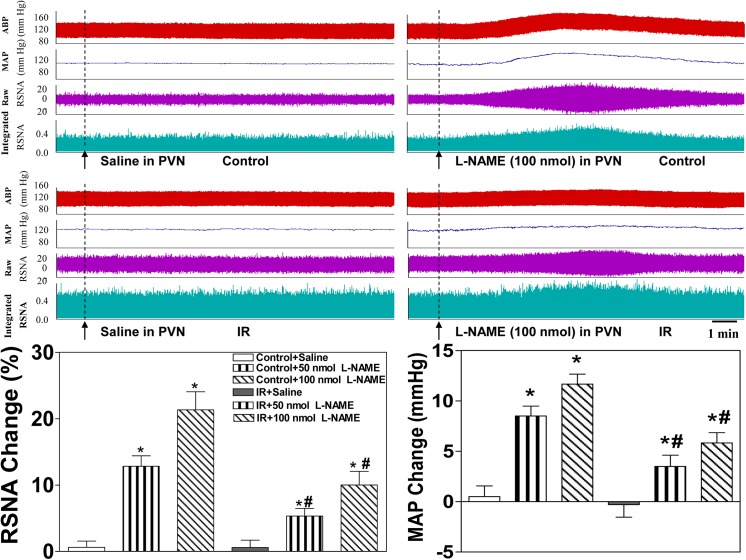
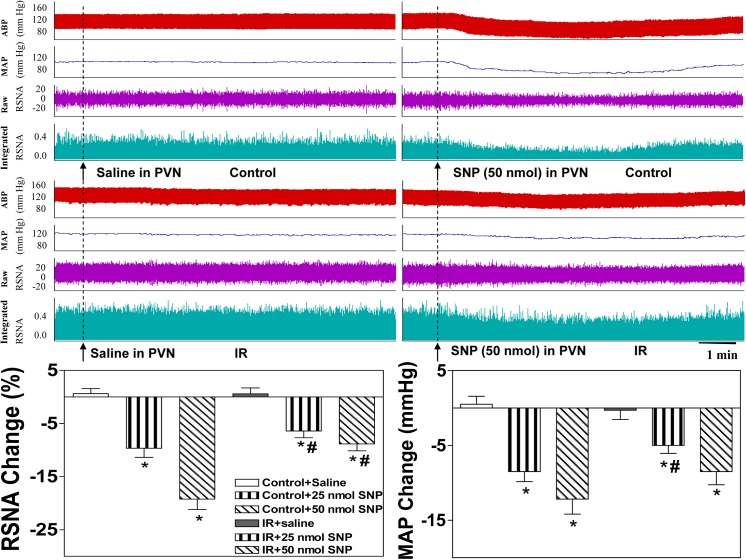
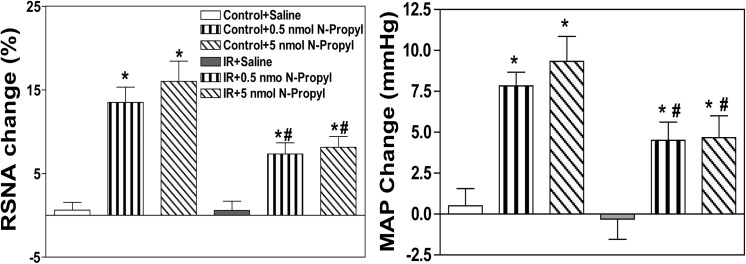
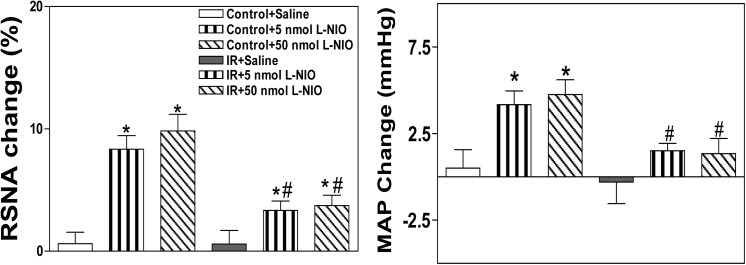
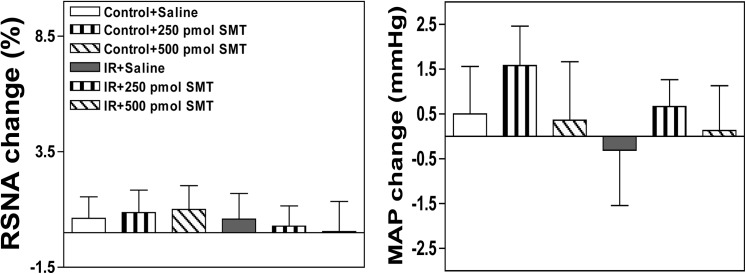
A central mechanism participates in sympathetic overdrive during insulin resistance (IR). Nitric oxide synthase (NOS) and nitric oxide (NO) modulate sympathetic nerve activity (SNA) in the paraventricular nucleus (PVN), which influences the autonomic regulation of cardiovascular responses. The aim of this study was to explore whether the NO system in the PVN is involved in the modulation of SNA in fructose-induced IR rats. Control rats received ordinary drinking water, whereas IR rats received 12.5% fructose-containing drinking water for 12 wks to induce IR. Basal SNA was assessed based on the changes in renal sympathetic nerve activity (RSNA) and mean arterial pressure (MAP) in response to chemicals administered to the PVN. We found an increased plasma norepinephrine level but significantly reduced NO content and neuronal NOS (nNOS) and endothelial NOS (eNOS) protein expression levels in the PVN of IR rats compared to Control rats. No difference in inducible NOS (iNOS) protein expression was observed between the two groups. In anesthetized rats, the microinjection of sodium nitroprusside (SNP), an NO donor, or Nω-nitro-L-arginine methyl ester (L-NAME), a non-selective inhibitor of NOS, into the PVN significantly decreased and increased basal SNA, respectively, in both normal and IR rats, but these responses to SNP and L-NAME in IR rats were smaller than those in normal rats. The administration of selective inhibitors of nNOS or eNOS, but not iNOS, to the PVN significantly increased basal SNA in both groups, but these responses were also smaller in IR rats. Moreover, IR rats exhibited reduced nNOS and eNOS activity in the PVN. In conclusion, these data indicate that the decreased protein expression and activity levels of nNOS and eNOS in the PVN lead to a reduction in the NO content in the PVN, thereby contributing to a subsequent enhancement in sympathoexcitation during IR.
一种核心机制参与胰岛素抵抗(IR)期间的交感神经过度兴奋。一氧化氮合酶(NOS)和一氧化氮(NO)调节室旁核(PVN)中的交感神经活动(SNA),这会影响心血管反应的自主调节。本研究的目的是探讨PVN中的NO系统是否参与果糖诱导的IR大鼠的SNA调节。对照大鼠饮用普通饮用水,而IR大鼠饮用含12.5%果糖的饮用水12周以诱导IR。基于肾交感神经活动(RSNA)和平均动脉压(MAP)对注入PVN的化学物质的反应变化来评估基础SNA。我们发现,与对照大鼠相比,IR大鼠的血浆去甲肾上腺素水平升高,但PVN中的NO含量、神经元型NOS(nNOS)和内皮型NOS(eNOS)蛋白表达水平显著降低。两组之间诱导型NOS(iNOS)蛋白表达无差异。在麻醉大鼠中,向PVN微量注射NO供体硝普钠(SNP)或NOS的非选择性抑制剂Nω-硝基-L-精氨酸甲酯(L-NAME),分别显著降低和升高正常和IR大鼠的基础SNA,但IR大鼠对SNP和L-NAME的这些反应小于正常大鼠。向PVN施用nNOS或eNOS的选择性抑制剂而非iNOS,两组的基础SNA均显著增加,但IR大鼠的这些反应也较小。此外,IR大鼠PVN中的nNOS和eNOS活性降低。总之,这些数据表明,PVN中nNOS和eNOS的蛋白表达和活性水平降低导致PVN中NO含量减少,从而导致IR期间交感神经兴奋随后增强。