Nicolas Emmanuelle, Arora Sanjeevani, Zhou Yan, Serebriiskii Ilya G, Andrake Mark D, Handorf Elizabeth D, Bodian Dale L, Vockley Joseph G, Dunbrack Roland L, Ross Eric A, Egleston Brian L, Hall Michael J, Golemis Erica A, Giri Veda N, Daly Mary B
Programs in Genomics, Fox Chase Cancer Center, Philadelphia, PA, USA.
Programs in Molecular Therapeutics, Fox Chase Cancer Center, Philadelphia, PA, USA.
Oncotarget. 2015 Nov 24;6(37):39614-33. doi: 10.18632/oncotarget.5554.
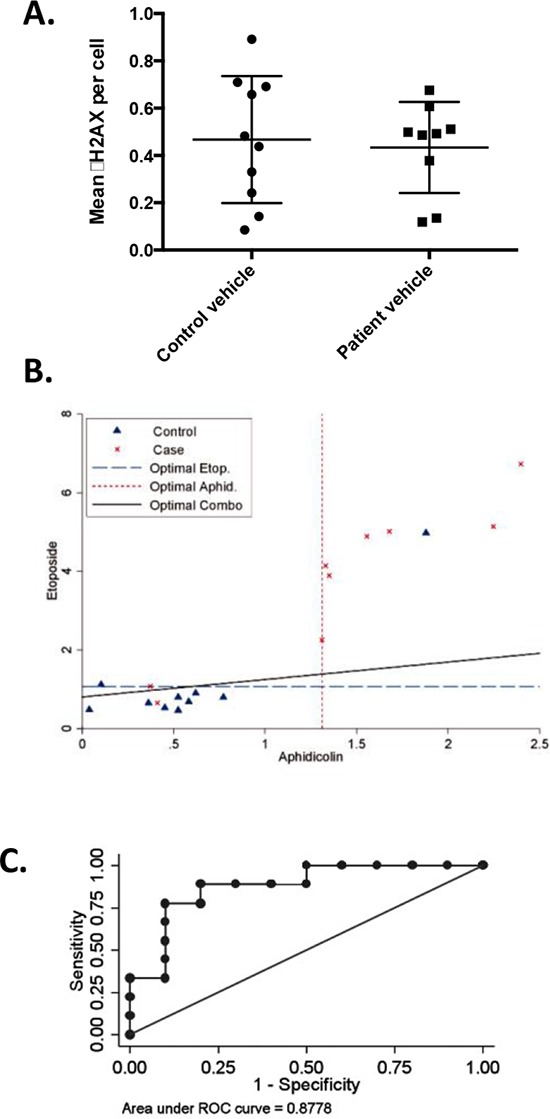
Risk assessment for prostate cancer is challenging due to its genetic heterogeneity. In this study, our goal was to develop an operational framework to select and evaluate gene variants that may contribute to familial prostate cancer risk. Drawing on orthogonal sources, we developed a candidate list of genes relevant to prostate cancer, then analyzed germline exomes from 12 case-only prostate cancer patients from high-risk families to identify patterns of protein-damaging gene variants. We described an average of 5 potentially disruptive variants in each individual and annotated them in the context of public databases representing human variation. Novel damaging variants were found in several genes of relevance to prostate cancer. Almost all patients had variants associated with defects in DNA damage response. Many also had variants linked to androgen signaling. Treatment of primary T-lymphocytes from these prostate cancer patients versus controls with DNA damaging agents showed elevated levels of the DNA double strand break (DSB) marker γH2AX (p < 0.05), supporting the idea of an underlying defect in DNA repair. This work suggests the value of focusing on underlying defects in DNA damage in familial prostate cancer risk assessment and demonstrates an operational framework for exome sequencing in case-only prostate cancer genetic evaluation.
由于前列腺癌存在基因异质性,其风险评估具有挑战性。在本研究中,我们的目标是建立一个操作框架,以筛选和评估可能导致家族性前列腺癌风险的基因变异。利用正交来源,我们制定了一份与前列腺癌相关的基因候选名单,然后分析了来自高危家族的12例仅患前列腺癌患者的种系外显子组,以确定蛋白质损伤性基因变异的模式。我们在每个个体中平均发现了5个潜在的破坏性变异,并在代表人类变异的公共数据库背景下对它们进行了注释。在几个与前列腺癌相关的基因中发现了新的有害变异。几乎所有患者都有与DNA损伤反应缺陷相关的变异。许多患者还存在与雄激素信号传导相关的变异。用DNA损伤剂处理这些前列腺癌患者与对照的原代T淋巴细胞,结果显示DNA双链断裂(DSB)标志物γH2AX水平升高(p<0.05),这支持了DNA修复存在潜在缺陷的观点。这项工作表明了在家族性前列腺癌风险评估中关注DNA损伤潜在缺陷的价值,并展示了在仅患前列腺癌的遗传评估中进行外显子组测序的操作框架。