Xiong Jie, Wang Guangying, Cheng Jun, Tian Miao, Pan Xuming, Warren Alan, Jiang Chuanqi, Yuan Dongxia, Miao Wei
Key Laboratory of Aquatic Biodiversity and Conservation, Institute of Hydrobiology, Chinese Academy of Sciences, Wuhan 430072, China.
University of Chinese Academy of Sciences, Beijing 100049, China.
Sci Rep. 2015 Oct 21;5:15470. doi: 10.1038/srep15470.
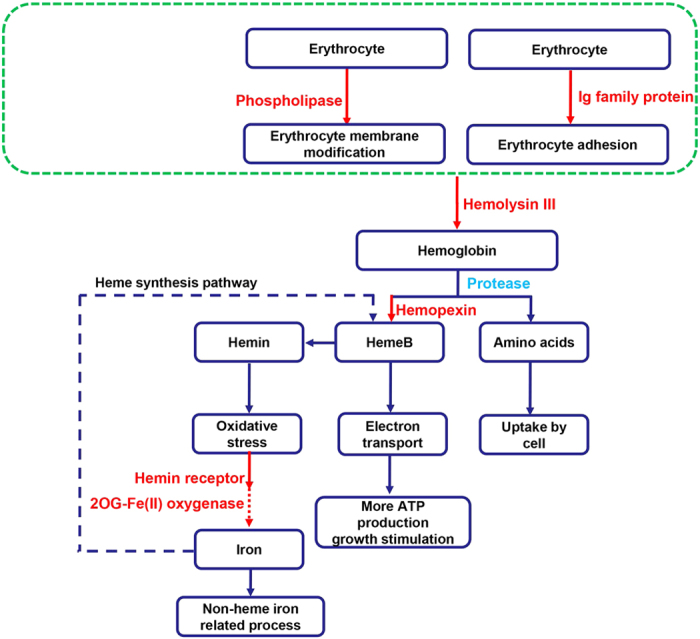
Certain ciliates of the subclass Scuticociliatia (scuticociliates) are facultative parasites of fishes in which they cause a suite of diseases collectively termed scuticociliatosis. Hitherto, comparatively little was known about genetics and genomics of scuticociliates or the mechanism of scuticociliatosis. In this study, a laboratory culture of the facultatively pathogenic scuticociliate Pseudocohnilembus persalinus was established and its genome sequenced, giving the first genome of a marine ciliate. Genome-wide horizontal gene transfer (HGT) analysis showed P. persalinus has acquired many unique prokaryote-derived genes that potentially contribute to the virulence of this organism, including cell adhesion, hemolysis and heme utilization genes. These findings give new insights into our understanding of the pathology of scuticociliates.
某些盾纤亚纲的纤毛虫(盾纤毛虫)是鱼类的兼性寄生虫,它们会引发一系列疾病,统称为盾纤毛虫病。迄今为止,人们对盾纤毛虫的遗传学和基因组学以及盾纤毛虫病的发病机制了解相对较少。在本研究中,建立了兼性致病盾纤毛虫——海水小瓜虫(Pseudocohnilembus persalinus)的实验室培养物,并对其基因组进行了测序,得到了首个海洋纤毛虫的基因组。全基因组水平基因转移(HGT)分析表明,海水小瓜虫获得了许多独特的原核生物衍生基因,这些基因可能有助于该生物体的毒力,包括细胞粘附、溶血和血红素利用基因。这些发现为我们理解盾纤毛虫的病理学提供了新的见解。