Xia Fanshu, Liu Siyuan, Wang Yang, Mao Jiayi, Li Xinxi, Wang Yiqun, Chen Guorong
East China University of Science and Technology, Key Laboratory for Ultrafine Materials of Ministry of Education, School of Materials Science and Engineering, Shanghai 200237, China.
Sci Rep. 2015 Oct 21;5:15387. doi: 10.1038/srep15387.
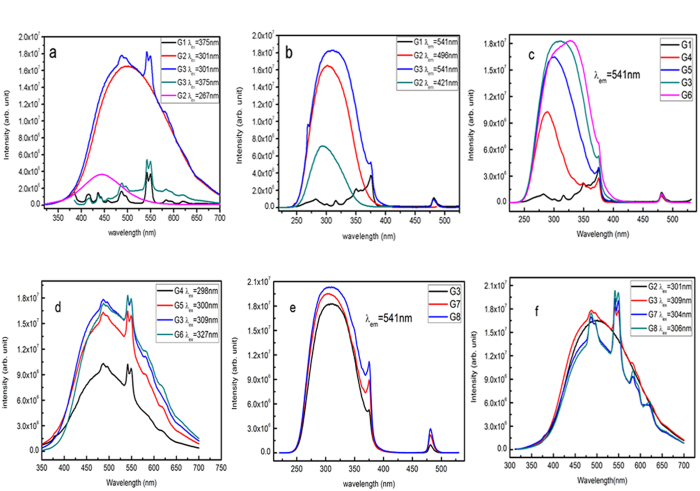
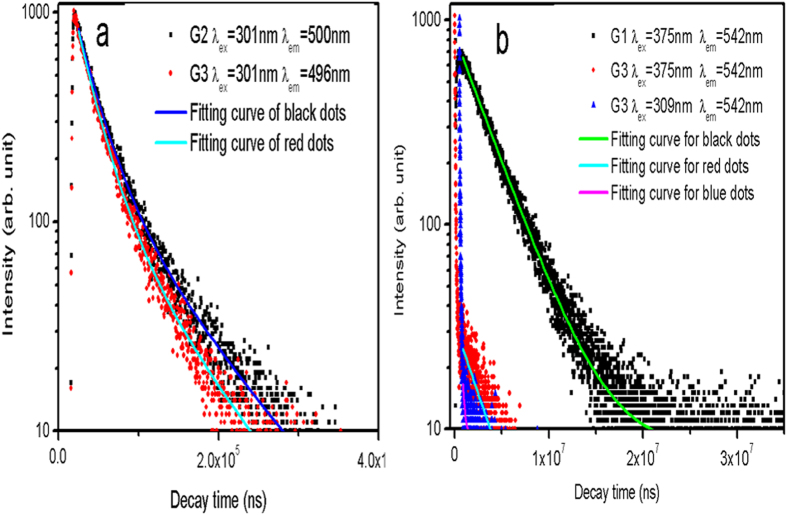
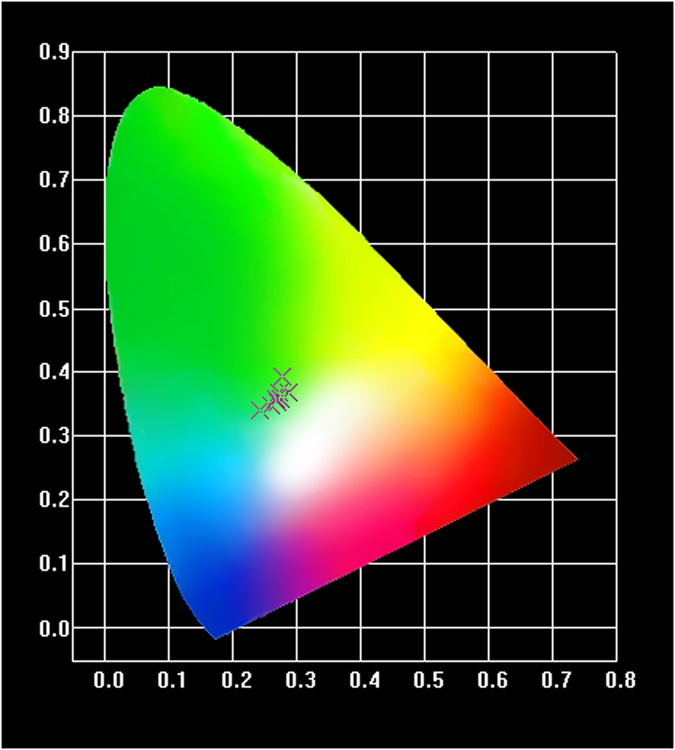
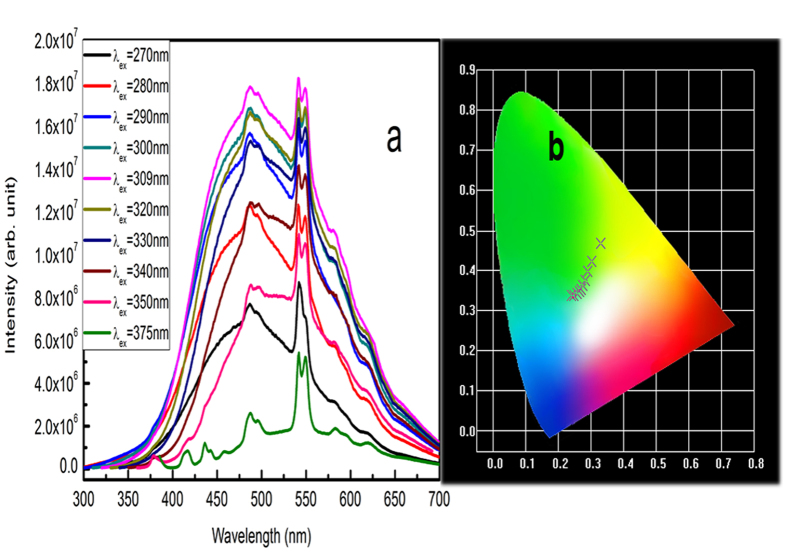
We present photoluminescence properties of Tb(3+) doped borosilicate glasses modified by Cu(+). Around 5-time enhanced emission at 541 nm due to the superposed emission of Tb(3+) and Cu(+) is observed under the deep UV excitation. Excitation spectra demonstrate a greatly increased absorption of Tb(3+) ions in the deep UV region towards the Cu(+) excitation band, while the shortened Cu(+) emission lifetime of glasses in association with presence of Tb(3+) ions implies an energy transfer process from Cu(+) to Tb(3+) ions. Meanwhile, the Tb(3+) emission lifetime is significantly shortened from the conventional millisecond level (~4 ms) to the microsecond regime up to around 90 μs. This most likely starts with the role of Cu(+) as a co-activator by initiating the d-f orbital hybridization process via an interaction with Tb(3+), thus relaxing the spin forbidden transition of Tb(3+) ions to the partially allowed one. Moreover, combination of emissions from Cu(+) and Tb(3+) ions generates a composite green emission with adjustable CIE (Commission Internationale de L'Eclairage) chromaticity coordinates achievable by co-doping Cu(+)/Tb(3+) in the different ratio and/or altering the excitation wavelength from deep UV to near UV region.
我们展示了由Cu(+)改性的Tb(3+)掺杂硼硅酸盐玻璃的光致发光特性。在深紫外激发下,由于Tb(3+)和Cu(+)的叠加发射,在541nm处观察到约5倍增强的发射。激发光谱表明,在深紫外区域,Tb(3+)离子对Cu(+)激发带的吸收大大增加,而与Tb(3+)离子存在相关的玻璃中Cu(+)发射寿命的缩短意味着从Cu(+)到Tb(3+)离子的能量转移过程。同时,Tb(3+)发射寿命从传统的毫秒级(约4ms)显著缩短至微秒级,最高可达约90μs。这很可能始于Cu(+)作为共激活剂的作用,通过与Tb(3+)相互作用引发d-f轨道杂化过程,从而将Tb(3+)离子的自旋禁戒跃迁弛豫为部分允许跃迁。此外,Cu(+)和Tb(3+)离子的发射组合产生了一种复合绿色发射,通过以不同比例共掺杂Cu(+)/Tb(3+)和/或将激发波长从深紫外区域改变为近紫外区域,可实现可调的CIE(国际照明委员会)色度坐标。