Ranganathan Shyam, Nicolis Stamatios C, Spaiser Viktoria, Sumpter David J T
Department of Mathematics, Uppsala University , Uppsala, Sweden .
Big Data. 2015 Mar 1;3(1):22-33. doi: 10.1089/big.2014.0066.
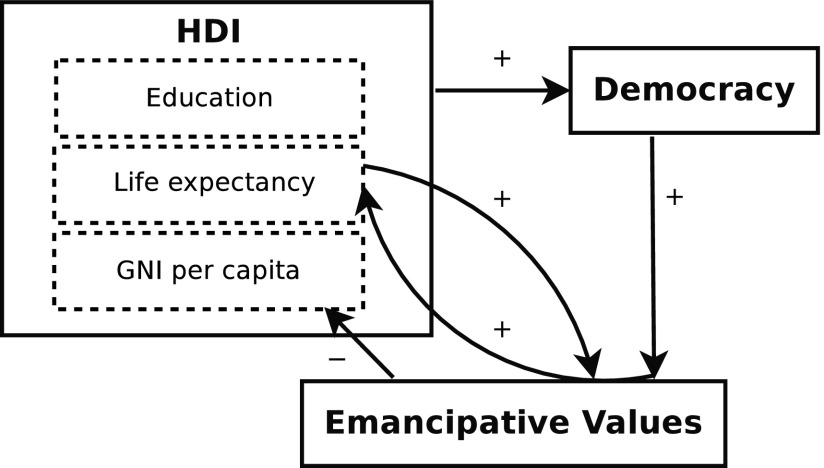
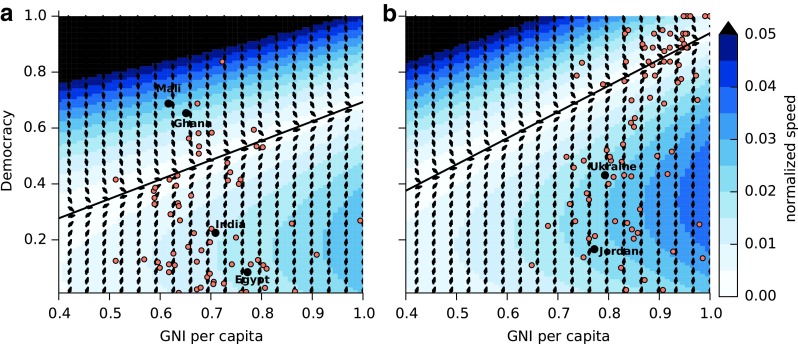
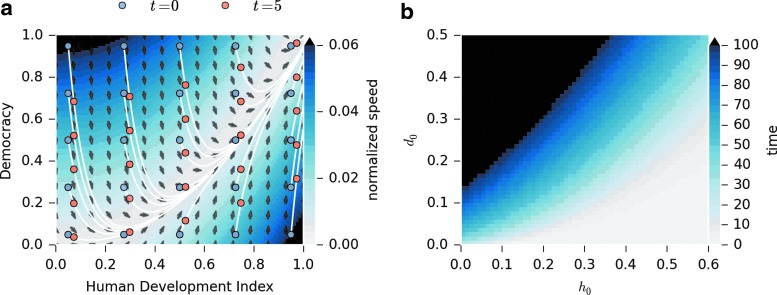
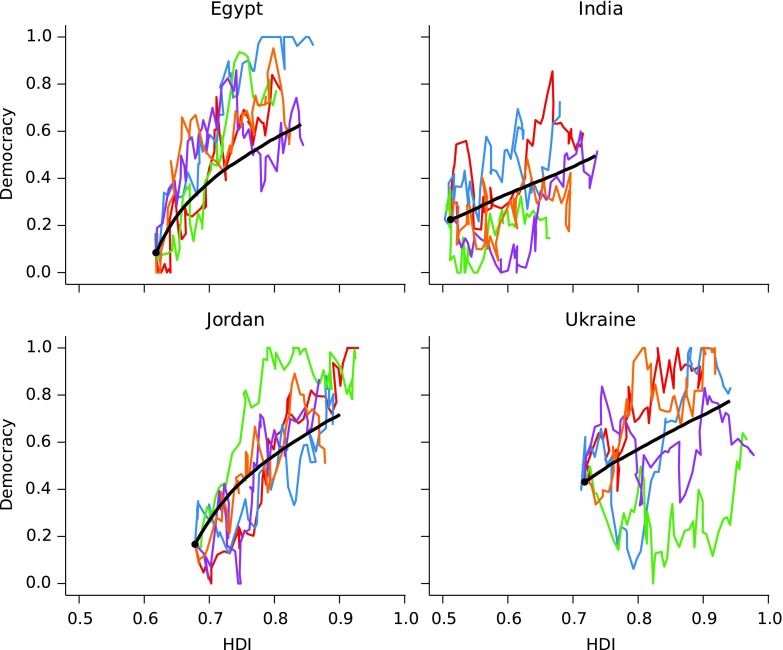
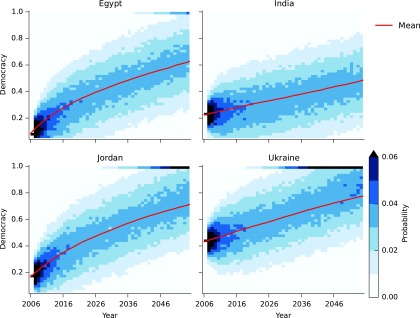
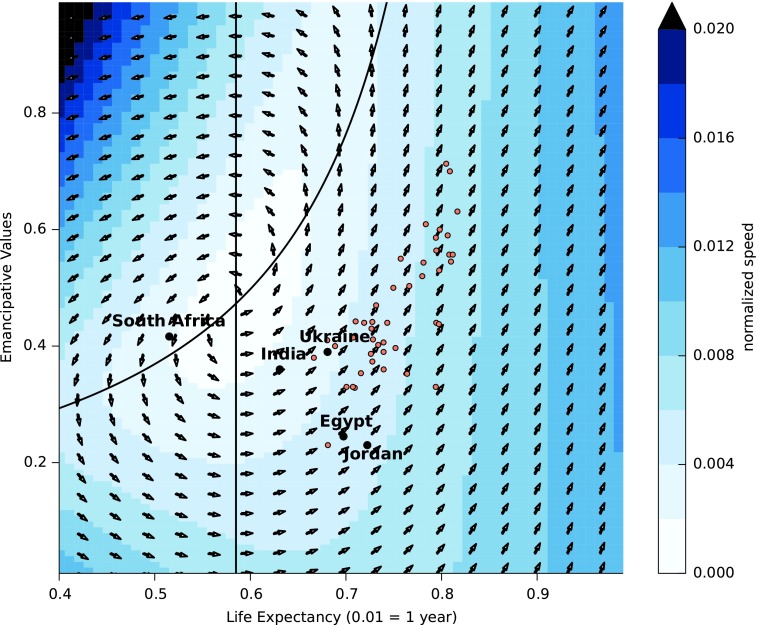
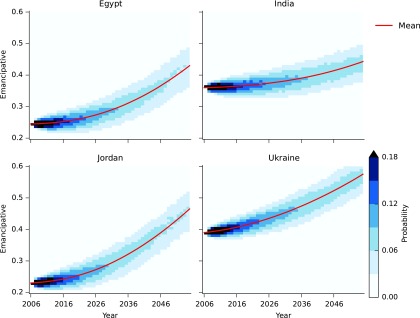
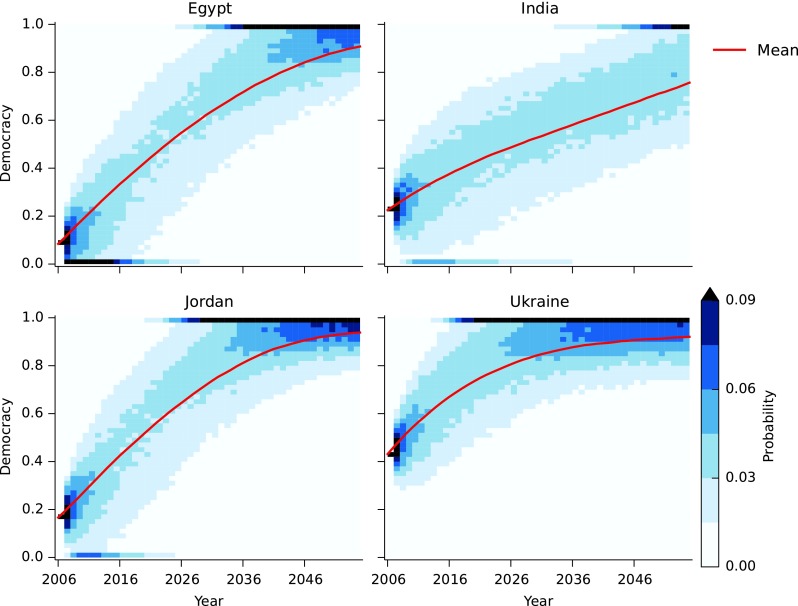
Methods from machine learning and data science are becoming increasingly important in the social sciences, providing powerful new ways of identifying statistical relationships in large data sets. However, these relationships do not necessarily offer an understanding of the processes underlying the data. To address this problem, we have developed a method for fitting nonlinear dynamical systems models to data related to social change. Here, we use this method to investigate how countries become trapped at low levels of socioeconomic development. We identify two types of traps. The first is a democracy trap, where countries with low levels of economic growth and/or citizen education fail to develop democracy. The second trap is in terms of cultural values, where countries with low levels of democracy and/or life expectancy fail to develop emancipative values. We show that many key developing countries, including India and Egypt, lie near the border of these development traps, and we investigate the time taken for these nations to transition toward higher democracy and socioeconomic well-being.
机器学习和数据科学方法在社会科学中变得越来越重要,为识别大数据集中的统计关系提供了强大的新方法。然而,这些关系不一定能让人理解数据背后的过程。为了解决这个问题,我们开发了一种将非线性动力系统模型与社会变革相关数据进行拟合的方法。在此,我们使用这种方法来研究各国如何陷入社会经济发展的低水平状态。我们识别出两种类型的陷阱。第一种是民主陷阱,即经济增长水平低和/或公民教育水平低的国家无法发展民主。第二种陷阱涉及文化价值观,即民主水平低和/或预期寿命低的国家无法发展解放性价值观。我们表明,包括印度和埃及在内的许多关键发展中国家处于这些发展陷阱的边缘,并且我们研究了这些国家向更高民主和社会经济福祉转型所需的时间。