Li Fang, Chen Yuhai, Zhang Zhaoyuan, Ouyang Jing, Wang Yi, Yan Ruoxiang, Huang Shile, Gao George Fu, Guo Guijie, Chen Ji-Long
CAS Key Laboratory of Pathogenic Microbiology and Immunology, Institute of Microbiology, Chinese Academy of Sciences (CAS), Beijing 100101, China.
CAS Key Laboratory of Pathogenic Microbiology and Immunology, Institute of Microbiology, Chinese Academy of Sciences (CAS), Beijing 100101, China School of Life Sciences, Anhui University, Hefei 230601, China.
Nucleic Acids Res. 2015 Dec 2;43(21):10321-37. doi: 10.1093/nar/gkv1078. Epub 2015 Oct 20.
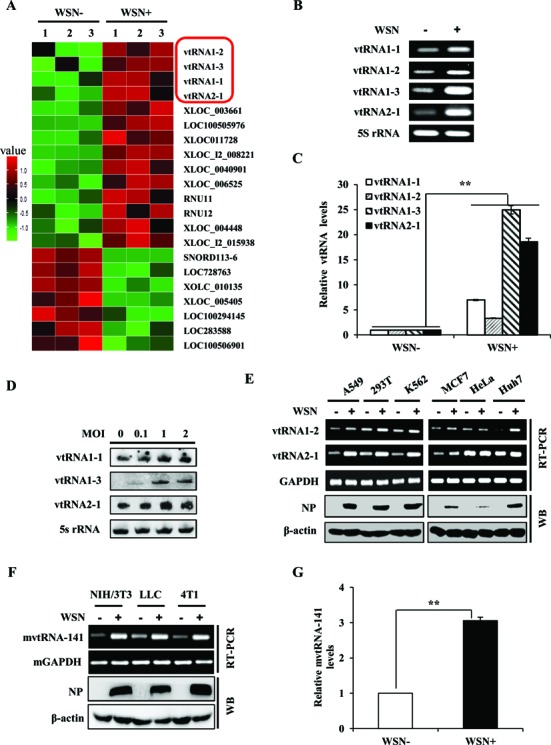
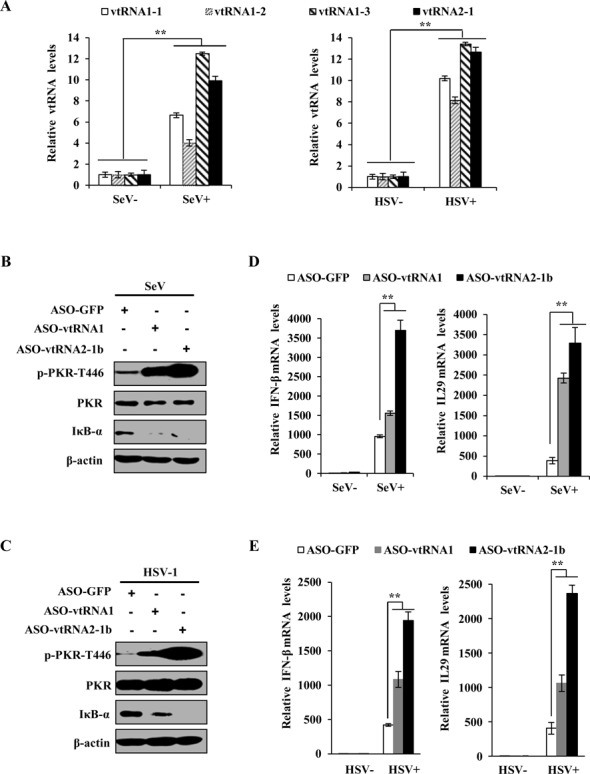
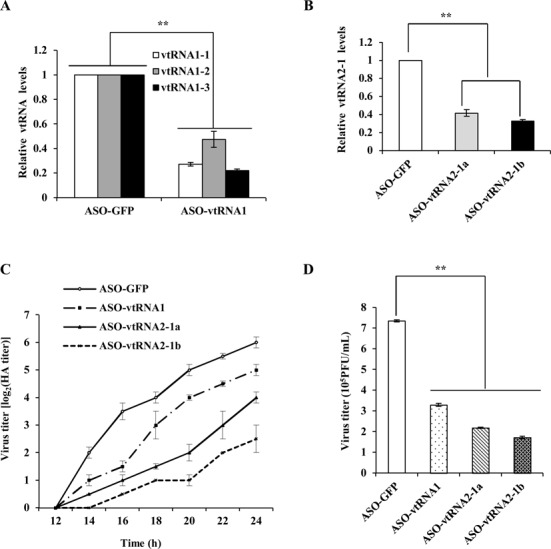
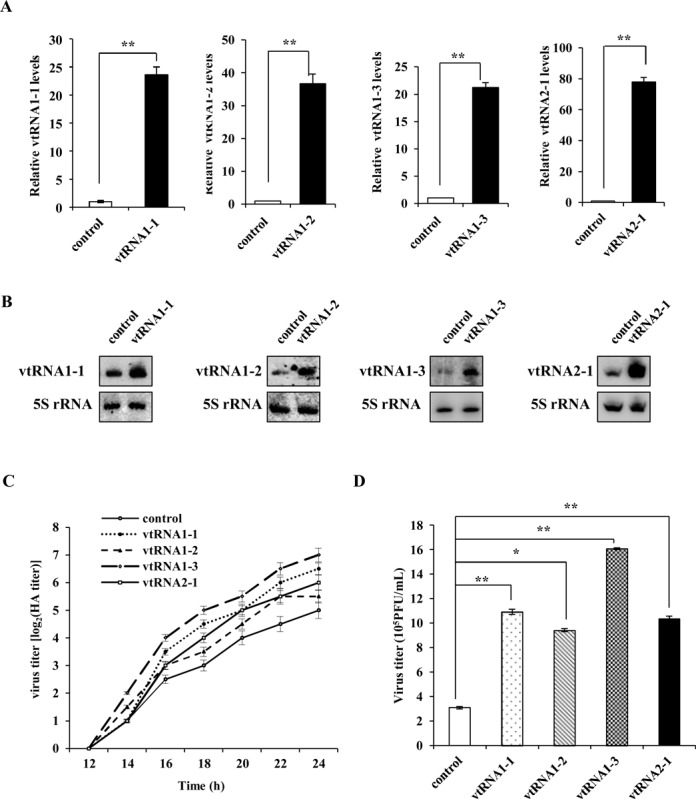
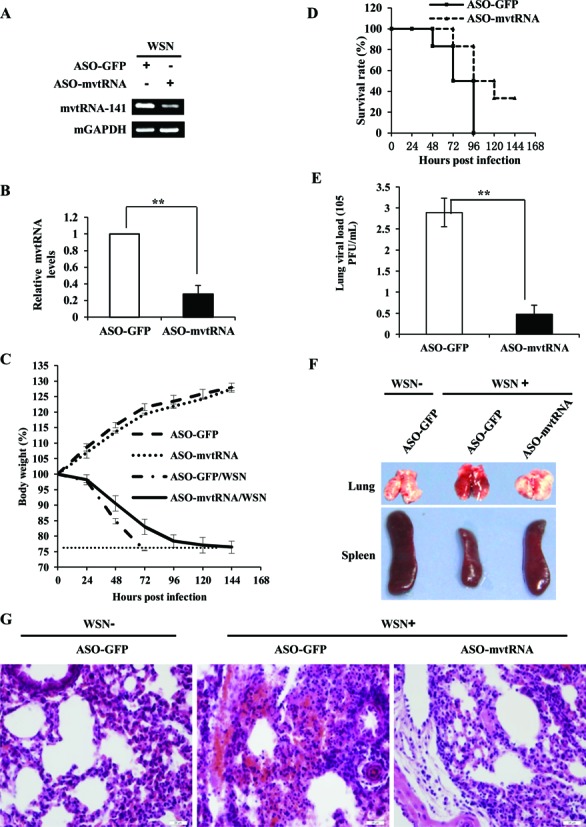
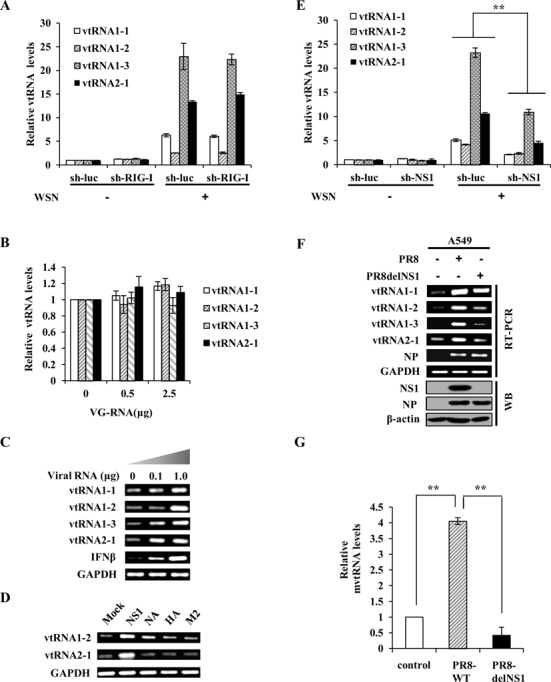
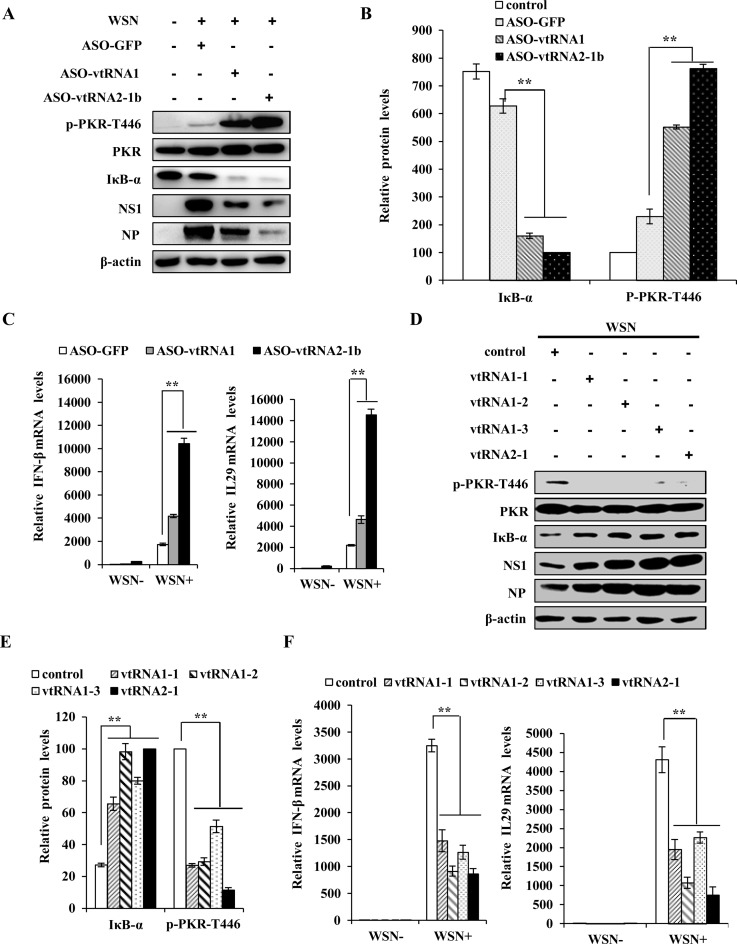
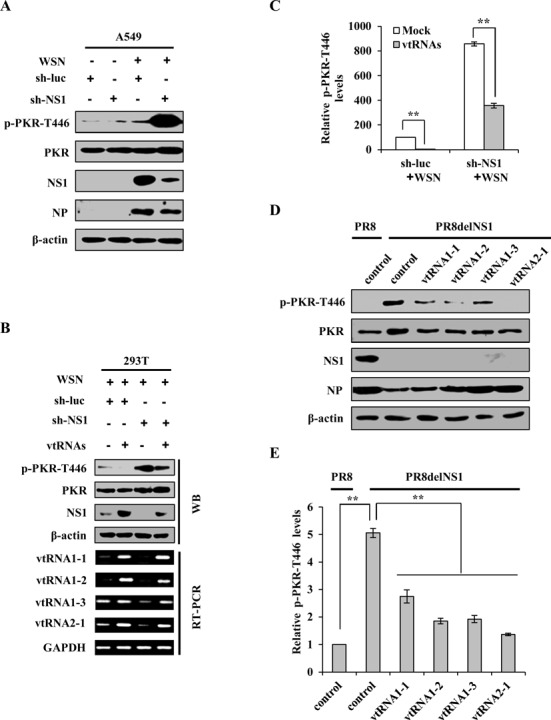
Protein kinase R (PKR) is a vital component of host innate immunity against viral infection. However, the mechanism underlying inactivation of PKR by influenza A virus (IAV) remains elusive. Here, we found that vault RNAs (vtRNAs) were greatly induced in A549 cells and mouse lungs after infection with IAV. The viral NS1 protein was shown to be the inducer triggering the upregulation of vtRNAs. Importantly, silencing vtRNA in A549 cells significantly inhibited IAV replication, whereas overexpression of vtRNAs markedly promoted the viral replication. Furthermore, in vivo studies showed that disrupting vtRNA expression in mice significantly decreased IAV replication in infected lungs. The vtRNA knockdown animals exhibited significantly enhanced resistance to IAV infection, as evidenced by attenuated acute lung injury and spleen atrophy and consequently increased survival rates. Interestingly, vtRNAs promoted viral replication through repressing the activation of PKR and the subsequent antiviral interferon response. In addition, increased expression of vtRNAs was required for efficient suppression of PKR by NS1 during IAV infection. Moreover, vtRNAs were also significantly upregulated by infections of several other viruses and involved in the inactivation of PKR signaling by these viruses. These results reveal a novel mechanism by which some viruses circumvent PKR-mediated innate immunity.
蛋白激酶R(PKR)是宿主针对病毒感染的固有免疫的重要组成部分。然而,甲型流感病毒(IAV)使PKR失活的潜在机制仍不清楚。在此,我们发现穹窿体RNA(vtRNA)在IAV感染后的A549细胞和小鼠肺中大量诱导产生。病毒NS1蛋白被证明是触发vtRNA上调的诱导物。重要的是,在A549细胞中沉默vtRNA可显著抑制IAV复制,而vtRNA的过表达则明显促进病毒复制。此外,体内研究表明,破坏小鼠体内vtRNA的表达可显著降低感染肺组织中IAV的复制。vtRNA敲低的动物对IAV感染的抵抗力显著增强,急性肺损伤和脾脏萎缩减轻,存活率因此提高,证明了这一点。有趣的是,vtRNA通过抑制PKR的激活及随后的抗病毒干扰素反应来促进病毒复制。此外,IAV感染期间NS1有效抑制PKR需要vtRNA表达增加。而且,vtRNA在几种其他病毒感染后也显著上调,并参与这些病毒对PKR信号的失活。这些结果揭示了一些病毒规避PKR介导的固有免疫的新机制。