Sandberg O H, Aspenberg P
Linköping University, 581 15 Linköping, Sweden.
Bone Joint Res. 2015 Oct;4(10):170-5. doi: 10.1302/2046-3758.410.2000414.
Healing in cancellous metaphyseal bone might be different from midshaft fracture healing due to different access to mesenchymal stem cells, and because metaphyseal bone often heals without a cartilaginous phase. Inflammation plays an important role in the healing of a shaft fracture, but if metaphyseal injury is different, it is important to clarify if the role of inflammation is also different. The biology of fracture healing is also influenced by the degree of mechanical stability. It is unclear if inflammation interacts with stability-related factors.
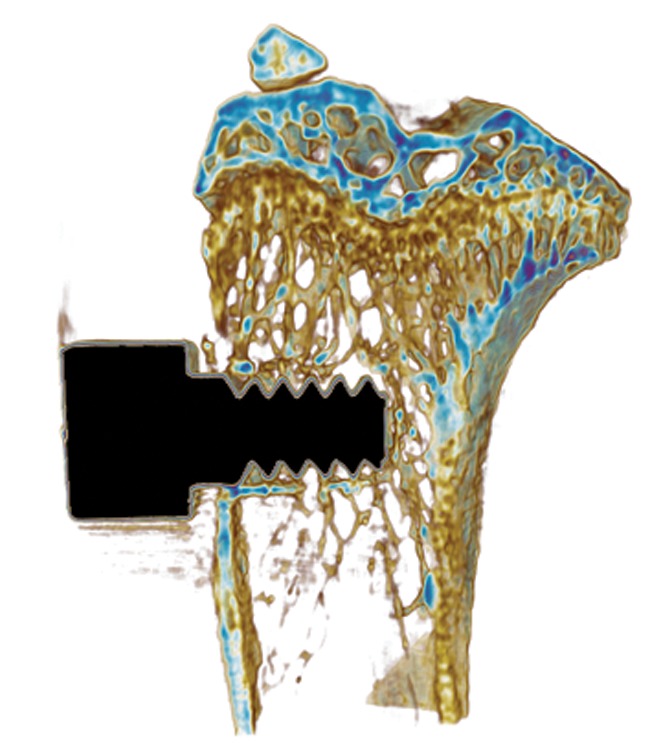
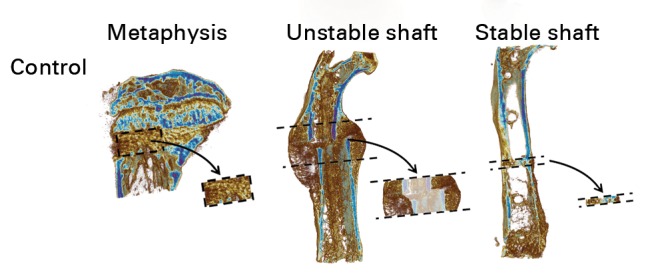
We investigated the role of inflammation in three different models: a metaphyseal screw pull-out, a shaft fracture with unstable nailing (IM-nail) and a stable external fixation (ExFix) model. For each, half of the animals received dexamethasone to reduce inflammation, and half received control injections. Mechanical and morphometric evaluation was used.
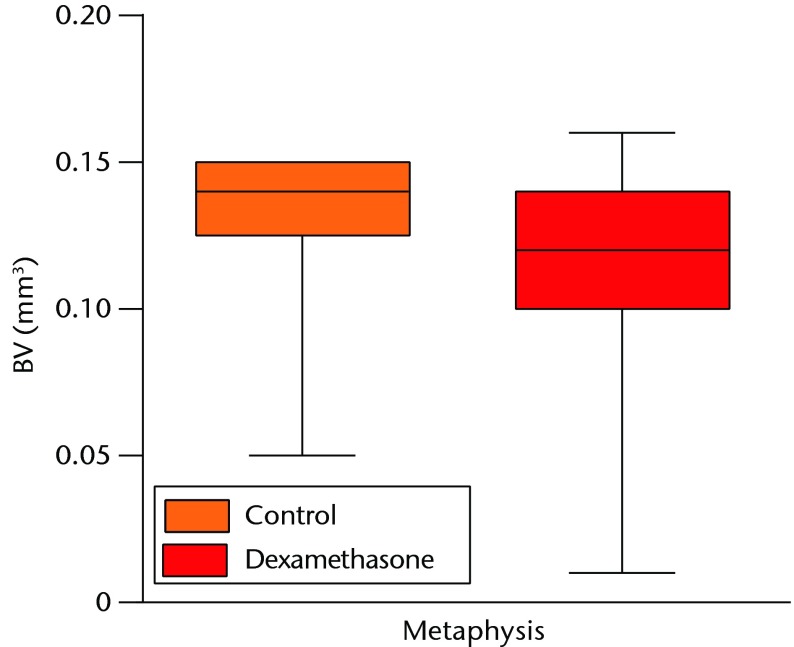
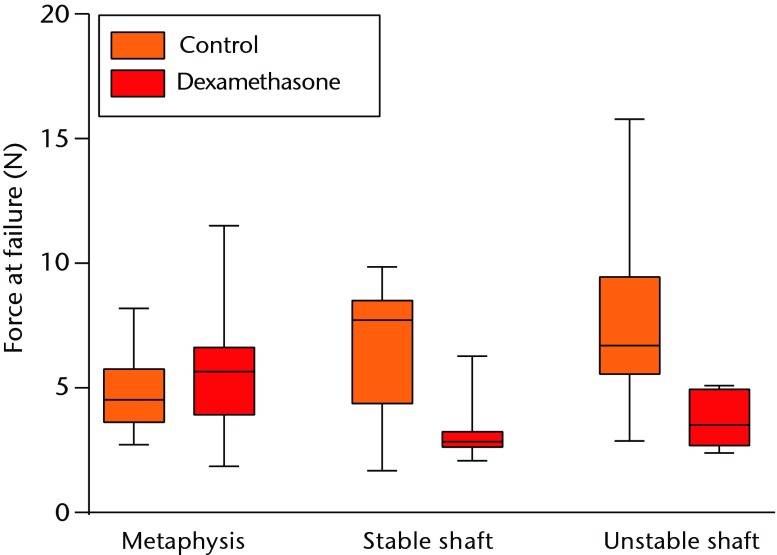
As expected, dexamethasone had a strong inhibitory effect on the healing of unstable, but also stable, shaft fractures. In contrast, dexamethasone tended to increase the mechanical strength of metaphyseal bone regenerated under stable conditions.
It seems that dexamethasone has different effects on metaphyseal and diaphyseal bone healing. This could be explained by the different role of inflammation at different sites of injury. Cite this article: Bone Joint Res 2015;4:170-175.
由于松质骨干骺端获取间充质干细胞的途径不同,且干骺端骨愈合时通常不经过软骨阶段,因此干骺端松质骨的愈合可能与骨干骨折愈合不同。炎症在骨干骨折愈合中起重要作用,但如果干骺端损伤不同,明确炎症的作用是否也不同很重要。骨折愈合的生物学过程也受机械稳定性程度的影响。尚不清楚炎症是否与稳定性相关因素相互作用。
我们在三种不同模型中研究了炎症的作用:干骺端螺钉拔出模型、不稳定髓内钉固定的骨干骨折模型(髓内钉)和稳定的外固定模型(外固定)。对于每种模型,一半动物接受地塞米松以减轻炎症,另一半接受对照注射。采用力学和形态学评估。
正如预期的那样,地塞米松对不稳定和稳定的骨干骨折愈合均有强烈的抑制作用。相比之下,地塞米松倾向于增加稳定条件下再生的干骺端骨的力学强度。
地塞米松对干骺端和骨干骨愈合似乎有不同影响。这可以通过损伤不同部位炎症的不同作用来解释。引用本文:《骨与关节研究》2015;4:170 - 175。