Boons Eline, Vanstreels Els, Jacquemyn Maarten, Nogueira Tatiane C, Neggers Jasper E, Vercruysse Thomas, van den Oord Joost, Tamir Sharon, Shacham Sharon, Landesman Yosef, Snoeck Robert, Pannecouque Christophe, Andrei Graciela, Daelemans Dirk
KU Leuven, Department of Microbiology and Immunology, Laboratory of Virology and Chemotherapy, Rega Institute for Medical Research, B-3000 Leuven, Belgium.
KU Leuven, Department of Imaging and Pathology, Translational Cell & Tissue Research, B-3000 Leuven, Belgium.
EBioMedicine. 2015 Aug 1;2(9):1102-13. doi: 10.1016/j.ebiom.2015.07.041. eCollection 2015 Sep.
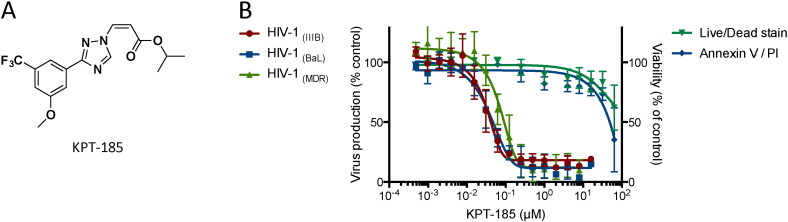
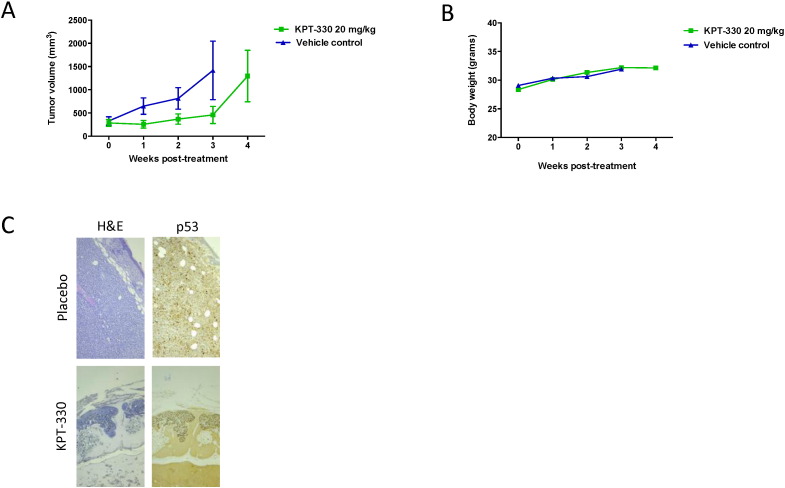
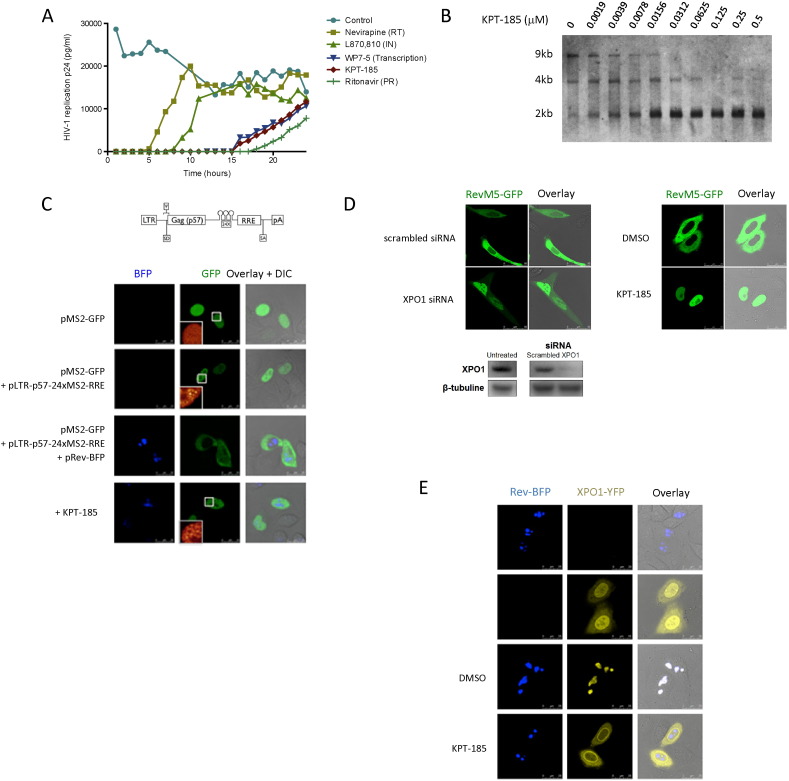
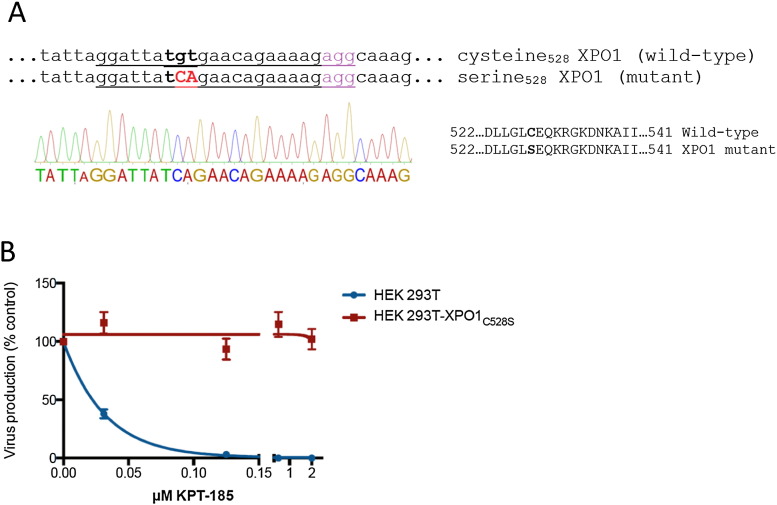
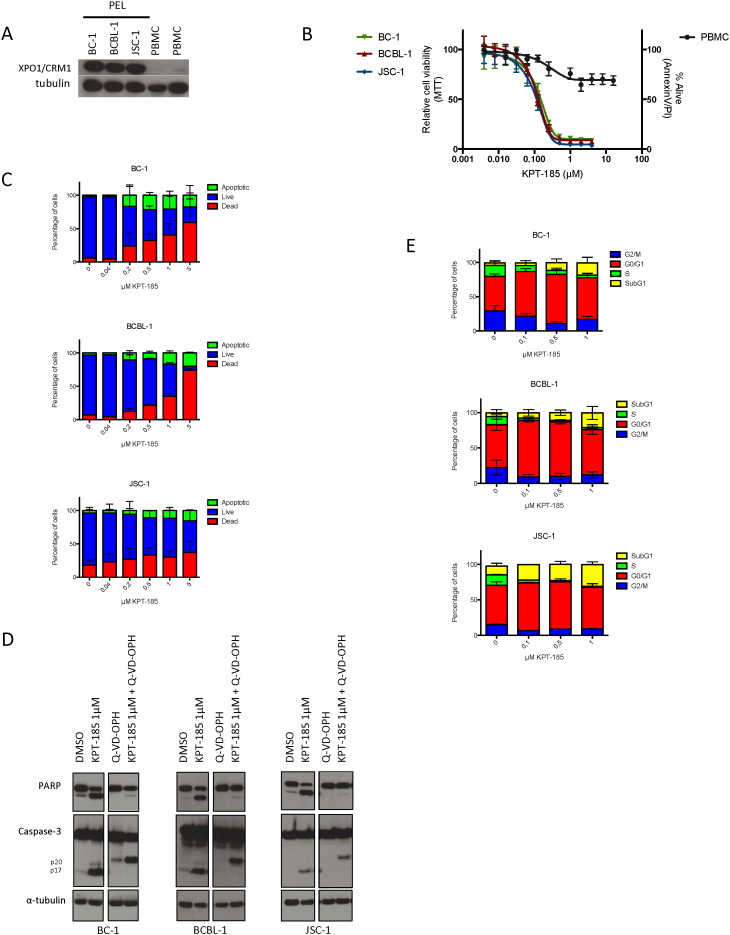
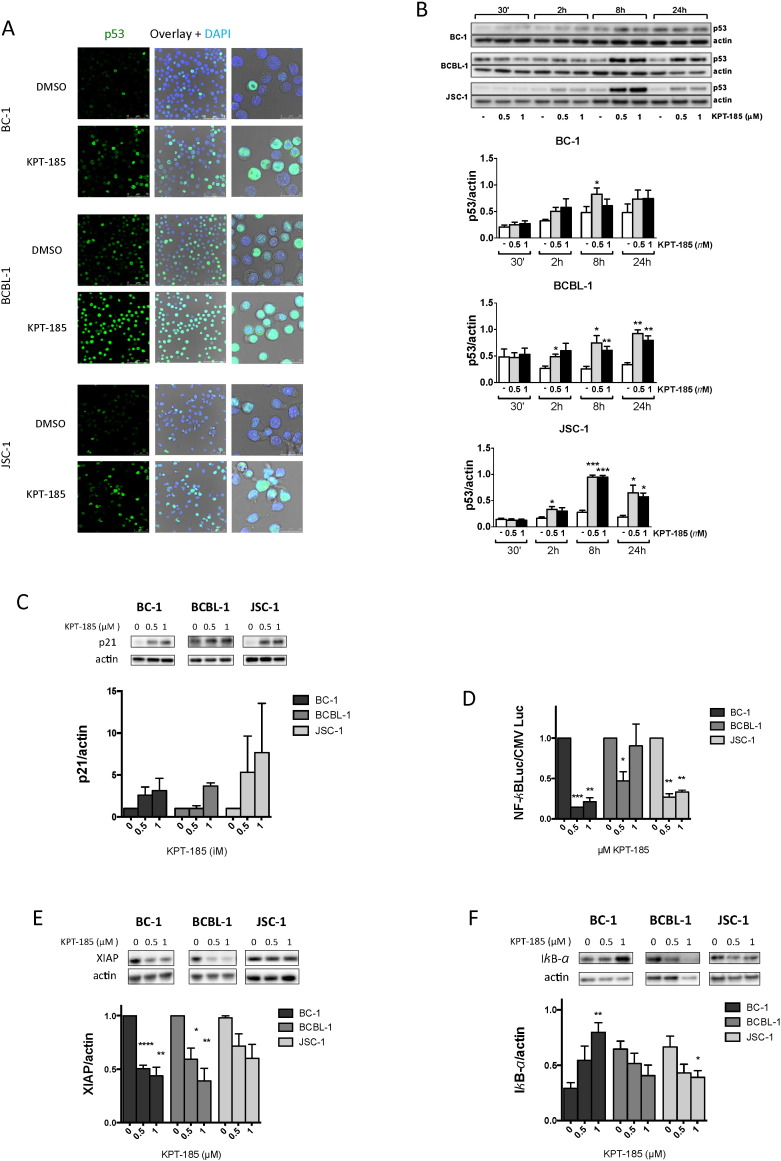
Infection with HIV ultimately leads to advanced immunodeficiency resulting in an increased incidence of cancer. For example primary effusion lymphoma (PEL) is an aggressive non-Hodgkin lymphoma with very poor prognosis that typically affects HIV infected individuals in advanced stages of immunodeficiency. Here we report on the dual anti-HIV and anti-PEL effect of targeting a single process common in both diseases. Inhibition of the exportin-1 (XPO1) mediated nuclear transport by clinical stage orally bioavailable small molecule inhibitors (SINE) prevented the nuclear export of the late intron-containing HIV RNA species and consequently potently suppressed viral replication. In contrast, in CRISPR-Cas9 genome edited cells expressing mutant C528S XPO1, viral replication was unaffected upon treatment, clearly demonstrating the anti-XPO1 mechanism of action. At the same time, SINE caused the nuclear accumulation of p53 tumor suppressor protein as well as inhibition of NF-κB activity in PEL cells resulting in cell cycle arrest and effective apoptosis induction. In vivo, oral administration arrested PEL tumor growth in engrafted mice. Our findings provide strong rationale for inhibiting XPO1 as an innovative strategy for the combined anti-retroviral and anti-neoplastic treatment of HIV and PEL and offer perspectives for the treatment of other AIDS-associated cancers and potentially other virus-related malignancies.
感染艾滋病毒最终会导致严重的免疫缺陷,从而增加患癌几率。例如,原发性渗出性淋巴瘤(PEL)是一种侵袭性非霍奇金淋巴瘤,预后很差,通常影响处于免疫缺陷晚期的艾滋病毒感染者。在此,我们报告了针对两种疾病共有的一个单一过程所产生的双重抗艾滋病毒和抗PEL效应。临床阶段口服生物可利用小分子抑制剂(SINE)对输出蛋白1(XPO1)介导的核转运的抑制作用,阻止了含晚期内含子的艾滋病毒RNA的核输出,从而有力地抑制了病毒复制。相比之下,在表达突变型C528S XPO1的CRISPR-Cas9基因组编辑细胞中,治疗后病毒复制不受影响,这清楚地证明了抗XPO1的作用机制。同时,SINE导致PEL细胞中p53肿瘤抑制蛋白的核积累以及NF-κB活性的抑制,从而导致细胞周期停滞和有效的凋亡诱导。在体内,口服给药可使移植小鼠的PEL肿瘤生长停滞。我们的研究结果为抑制XPO1作为艾滋病毒和PEL联合抗逆转录病毒和抗肿瘤治疗的创新策略提供了有力依据,并为治疗其他艾滋病相关癌症以及潜在的其他病毒相关恶性肿瘤提供了前景。