Li Jie, Li Juan, Thornicroft Graham, Yang Hui, Chen Wen, Huang Yuanguang
Guangzhou Brain Hospital, Guangzhou Medical University, 36# Mingxin Road, Liwan, Guangzhou, 510370, China.
Henan Provincial Mental Hospital, The Second Affiliated Hospital of Xinxiang Medical University, 388# Jianshe Road, Muye, Xinxiang, 453003, China.
BMC Psychiatry. 2015 Oct 26;15:263. doi: 10.1186/s12888-015-0660-1.
Increasing numbers of people with mental disorders receive services at primary care in China. The aims of this study are to evaluate impact of a new training course and supervision for community mental health staff to enhance their levels of mental health knowledge and to reduce their stigmatization toward people with mental illness.
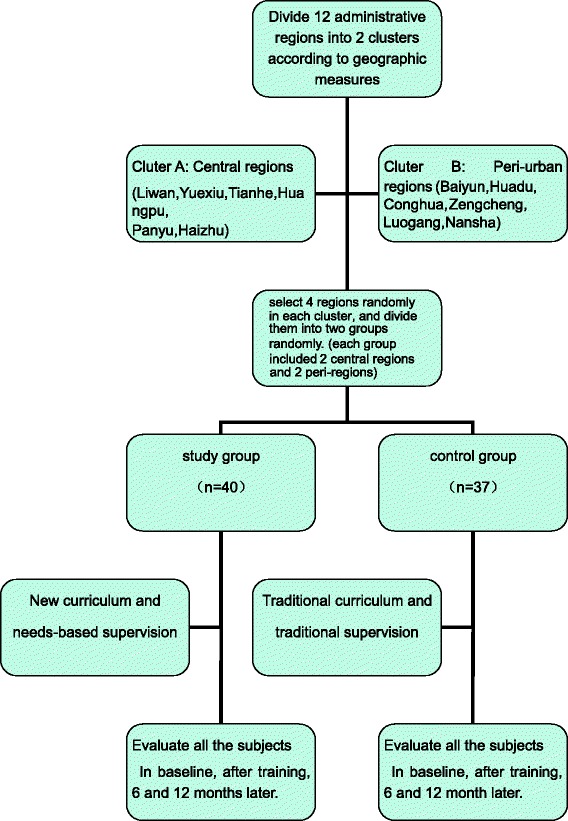
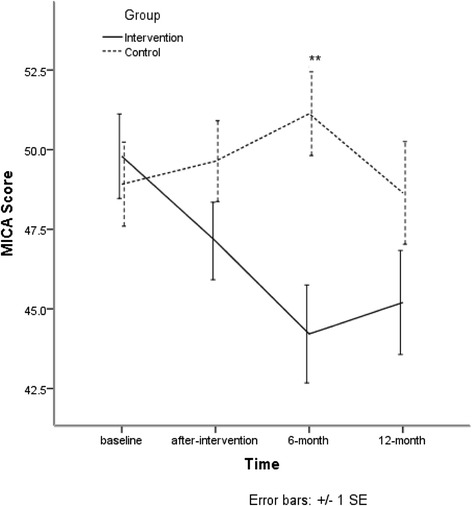
A total of 77 community mental health staff from eight regions in Guangzhou in China were recruited for the study.4 regions were randomly allocated to the new training model group, and 4 to the old training model group. Levels of mental health knowledge were measured by purpose-made assessment schedule and by the Mental Health Knowledge Schedule (MAKS). Stigma was evaluated by the Mental Illness: Clinicians' Attitudes Scale (MICA) and the Reported and Intended Behavior Scale (RIBS). Evaluation questionnaires were given at the beginning of course, at the end, and at 6 month and at 12 month follow-up.
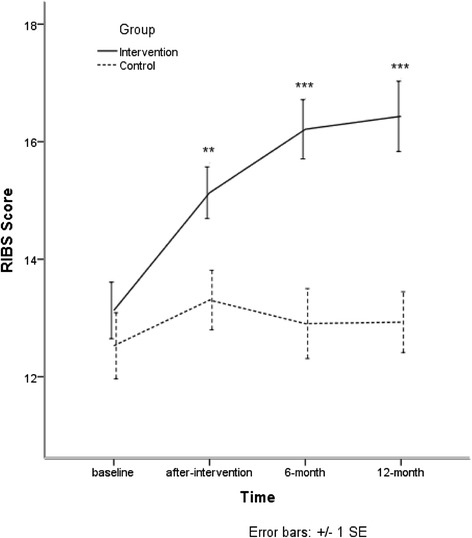
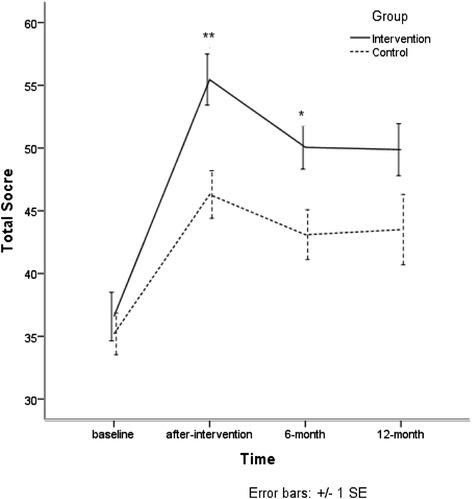
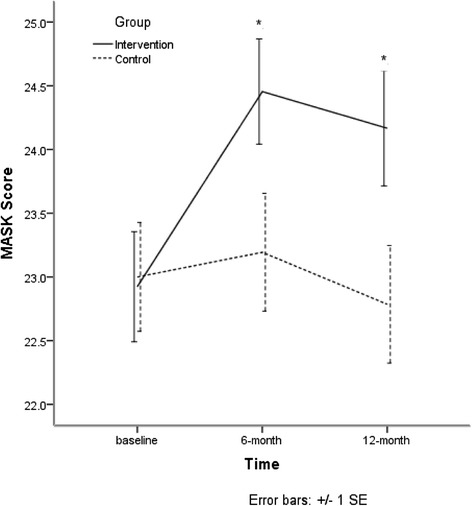
After the training period, the 6-month, and the 12-month, knowledge scores of the intervention group were higher than the control group. At 6-month and 12-month follow-up, means scores of MAKS of the intervention group increased more than the control group (both p < 0.05) when age, sex, marriage status, title and time were controlled for. At 6-month follow-up, means scores of MICA of the intervention group decreased more than that of the control group (p < 0.01). At after-training, at 6-months, and at 12-months, mean scores of RIBS of the intervention group increased more than the control (p < 0.01, p < 0.001, p < 0.001) when age, sex, marriage status, title and time were controlled for.
Compared with the traditional training course and supervision, the new course improved community mental health staff knowledge of mental disorders, improving their attitudes toward people with mental disorder, and increasing their willingness to have contact with people with mental disorder.
在中国,越来越多的精神障碍患者在初级保健机构接受服务。本研究的目的是评估针对社区心理健康工作人员的新培训课程和督导的效果,以提高他们的心理健康知识水平,并减少他们对精神疾病患者的污名化。
在中国广州的八个地区共招募了77名社区心理健康工作人员参与研究。4个地区被随机分配到新培训模式组,4个地区被分配到旧培训模式组。心理健康知识水平通过特制的评估量表和心理健康知识量表(MAKS)进行测量。污名化程度通过精神疾病:临床医生态度量表(MICA)和报告与预期行为量表(RIBS)进行评估。在课程开始时、结束时、6个月和12个月随访时发放评估问卷。
在培训期后、6个月和12个月时,干预组的知识得分高于对照组。在6个月和12个月随访时,在控制年龄、性别、婚姻状况、职称和时间后,干预组MAKS的平均得分增加幅度大于对照组(均p<0.05)。在6个月随访时,干预组MICA的平均得分下降幅度大于对照组(p<0.01)。在培训后、6个月和12个月时,在控制年龄、性别、婚姻状况、职称和时间后,干预组RIBS的平均得分增加幅度大于对照组(p<0.01、p<0.001、p<0.001)。
与传统培训课程和督导相比,新课程提高了社区心理健康工作人员对精神障碍的知识水平,改善了他们对精神障碍患者的态度,并增加了他们与精神障碍患者接触的意愿。