
通过串联-均相时间分辨荧光共振能量转移检测超敏蛋白揭示成年小鼠细胞周期蛋白D1的动态变化
Hyper sensitive protein detection by Tandem-HTRF reveals Cyclin D1 dynamics in adult mouse.
作者信息
Zampieri Alexandre, Champagne Julien, Auzemery Baptiste, Fuentes Ivanna, Maurel Benjamin, Bienvenu Frédéric
机构信息
CNRS, UMR-5203, Institut de Génomique Fonctionnelle, Montpellier, F-34094, France.
INSERM, U1191, Montpellier, F-34094, France.
出版信息
Sci Rep. 2015 Oct 27;5:15739. doi: 10.1038/srep15739.
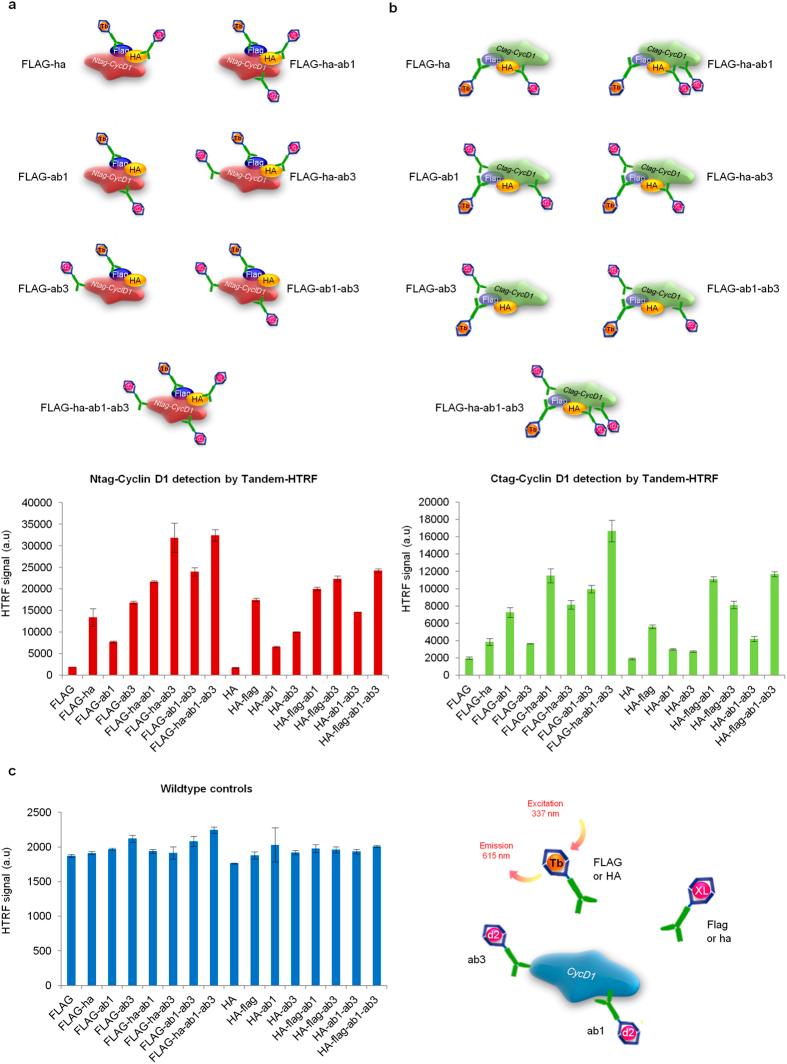
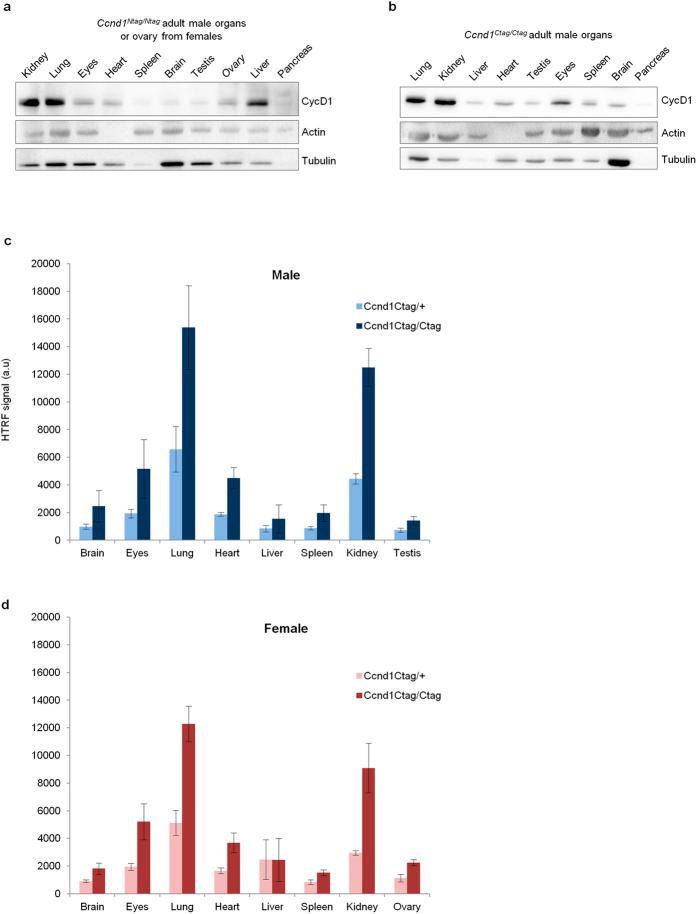
We present here a novel method for the semi-quantitative detection of low abundance proteins in solution that is both fast and simple. It is based on Homogenous Time Resolved Förster Resonance Energy Transfer (HTRF), between a lanthanide labeled donor antibody and a d2 or XL665 labeled acceptor antibody that are both raised against different epitopes of the same target. This novel approach we termed "Tandem-HTRF", can specifically reveal rare polypeptides from only a few microliters of cellular lysate within one hour in a 384-well plate format. Using this sensitive approach, we observed surprisingly that the core cell cycle regulator Cyclin D1 is sustained in fully developed adult organs and harbors an unexpected expression pattern affected by environmental challenge. Thus our method, Tandem-HTRF offers a promising way to investigate subtle variations in the dynamics of sparse proteins from limited biological material.
我们在此展示了一种用于半定量检测溶液中低丰度蛋白质的新方法,该方法快速且简单。它基于镧系元素标记的供体抗体与针对同一靶标不同表位的d2或XL665标记的受体抗体之间的均相时间分辨荧光共振能量转移(HTRF)。我们将这种新方法称为“串联HTRF”,它能够以384孔板形式在一小时内从仅几微升的细胞裂解物中特异性地揭示稀有多肽。使用这种灵敏的方法,我们惊奇地观察到核心细胞周期调节因子细胞周期蛋白D1在完全发育的成年器官中持续存在,并具有受环境挑战影响的意外表达模式。因此,我们的串联HTRF方法为研究来自有限生物材料的稀疏蛋白质动力学中的细微变化提供了一种很有前景的方式。


 Zotero 插件