DaMatta Fábio M, Godoy Alice G, Menezes-Silva Paulo E, Martins Samuel C V, Sanglard Lílian M V P, Morais Leandro E, Torre-Neto André, Ghini Raquel
Departamento de Biologia Vegetal, Universidade Federal de Viçosa, 36570-900 Viçosa, MG, Brazil
Departamento de Biologia Vegetal, Universidade Federal de Viçosa, 36570-900 Viçosa, MG, Brazil.
J Exp Bot. 2016 Jan;67(1):341-52. doi: 10.1093/jxb/erv463. Epub 2015 Oct 26.
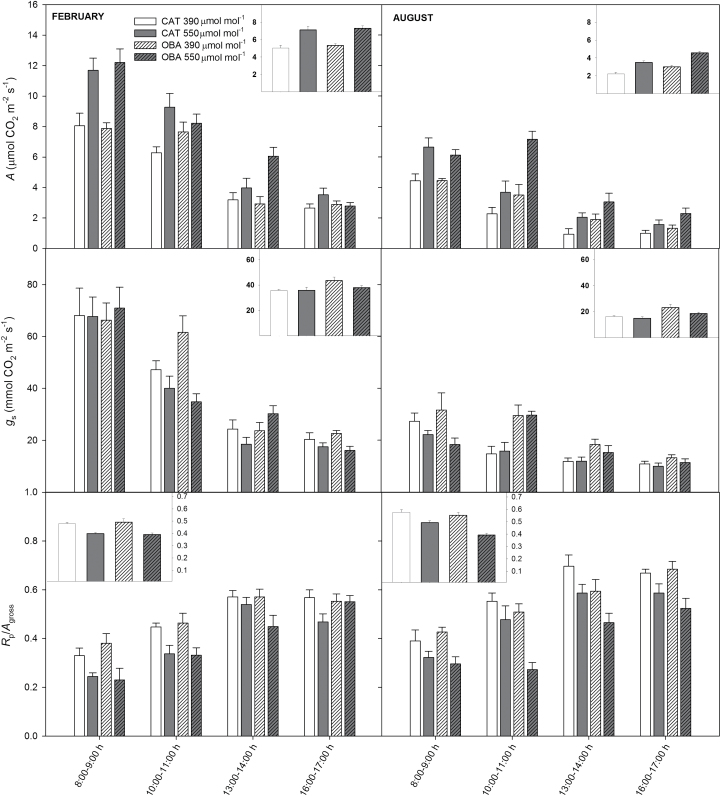
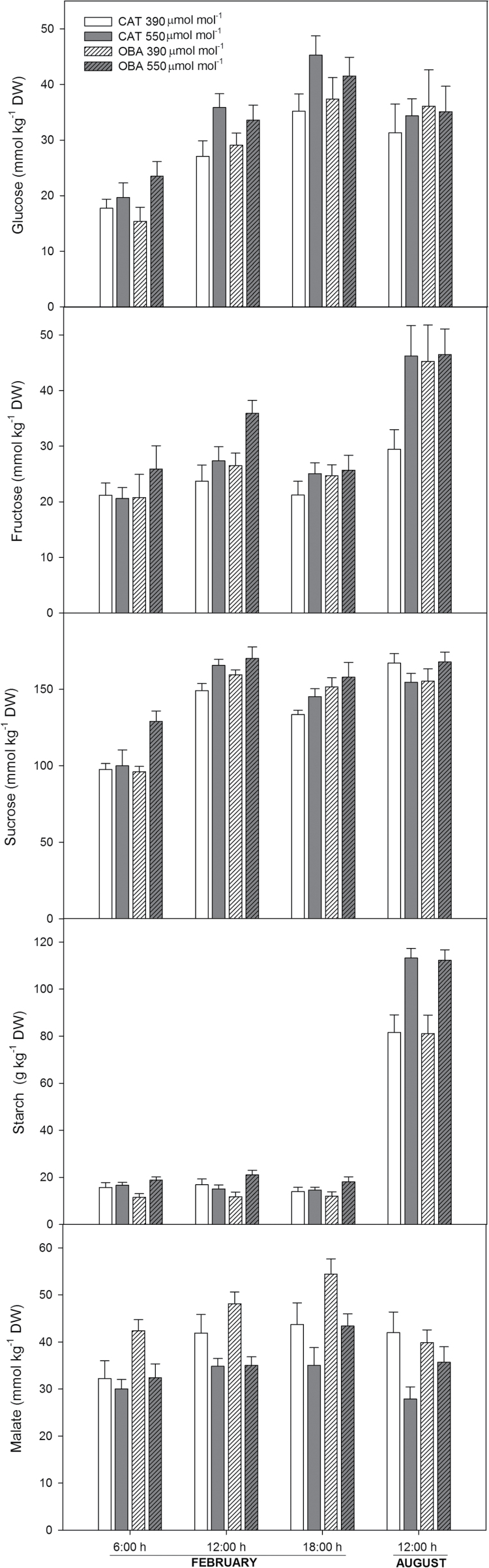
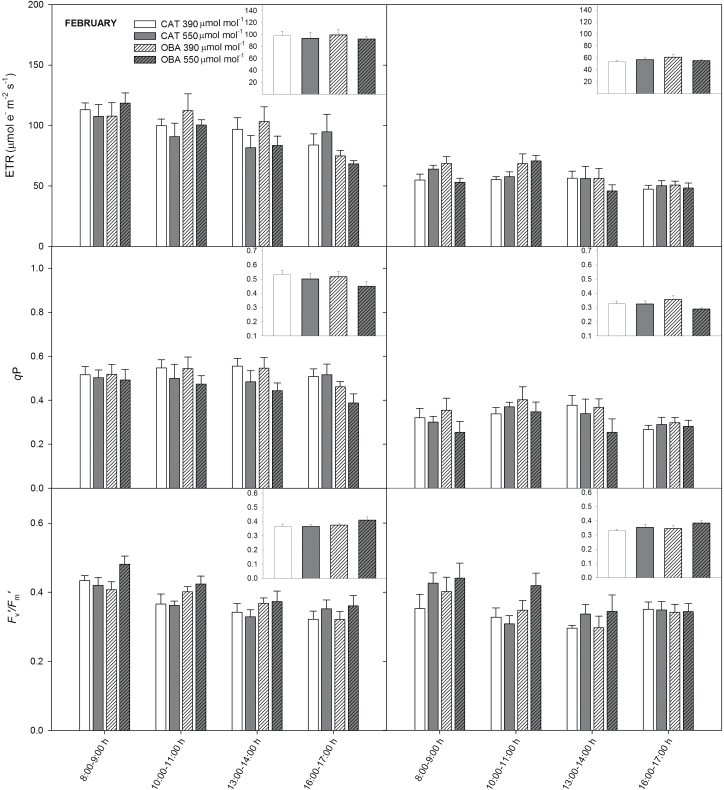
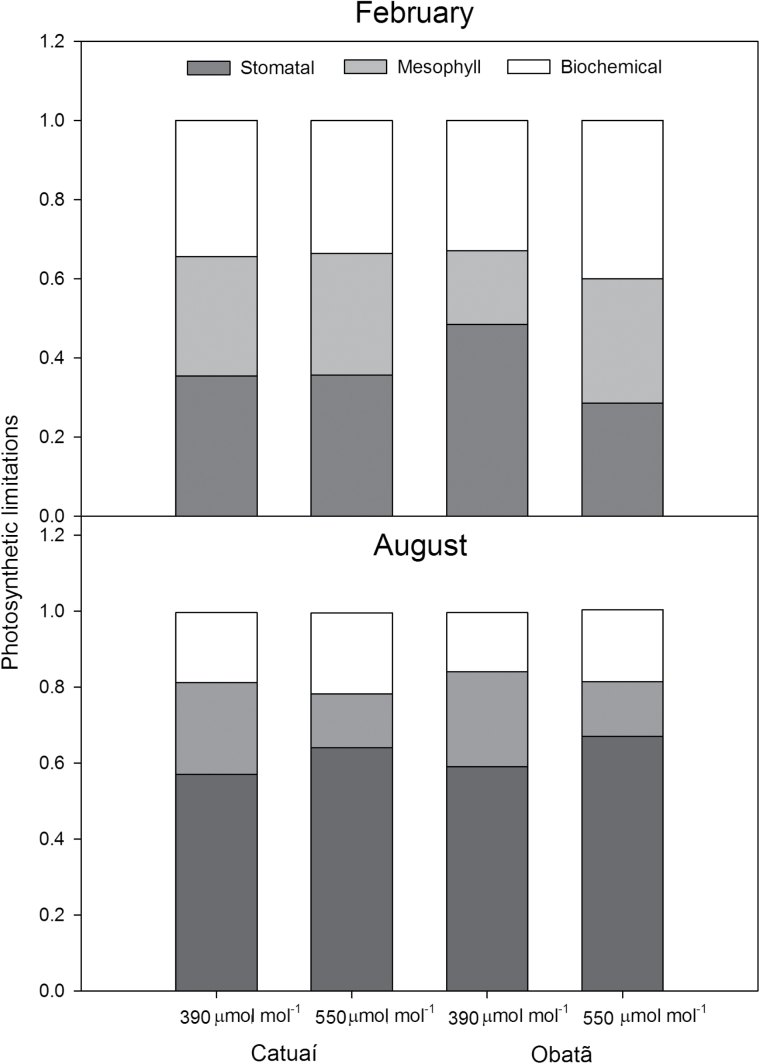
Coffee (Coffea spp.), a globally traded commodity, is a slow-growing tropical tree species that displays an improved photosynthetic performance when grown under elevated atmospheric CO2 concentrations ([CO2]). To investigate the mechanisms underlying this response, two commercial coffee cultivars (Catuaí and Obatã) were grown using the first free-air CO2 enrichment (FACE) facility in Latin America. Measurements were conducted in two contrasting growth seasons, which were characterized by the high (February) and low (August) sink demand. Elevated [CO2] led to increases in net photosynthetic rates (A) in parallel with decreased photorespiration rates, with no photochemical limitations to A. The stimulation of A by elevated CO2 supply was more prominent in August (56% on average) than in February (40% on average). Overall, the stomatal and mesophyll conductances, as well as the leaf nitrogen and phosphorus concentrations, were unresponsive to the treatments. Photosynthesis was strongly limited by diffusional constraints, particularly at the stomata level, and this pattern was little, if at all, affected by elevated [CO2]. Relative to February, starch pools (but not soluble sugars) increased remarkably (>500%) in August, with no detectable alteration in the maximum carboxylation capacity estimated on a chloroplast [CO2] basis. Upregulation of A by elevated [CO2] took place with no signs of photosynthetic downregulation, even during the period of low sink demand, when acclimation would be expected to be greatest.
咖啡(咖啡属植物)是一种全球交易的商品,是一种生长缓慢的热带树种,在大气二氧化碳浓度([CO₂])升高的条件下生长时,其光合性能会有所改善。为了探究这种响应背后的机制,利用拉丁美洲首个自由空气二氧化碳富集(FACE)设施种植了两个商业咖啡品种(卡图艾和奥巴塔)。在两个对比鲜明的生长季节进行了测量,其特点是高(2月)和低(8月)汇需求。[CO₂]升高导致净光合速率(A)增加,同时光呼吸速率降低,对A没有光化学限制。8月(平均56%)二氧化碳供应增加对A的刺激比2月(平均40%)更显著。总体而言,气孔导度和叶肉导度以及叶片氮和磷浓度对处理无响应。光合作用受到扩散限制的强烈限制,尤其是在气孔水平,这种模式几乎不受[CO₂]升高的影响。与2月相比,8月淀粉库(但不包括可溶性糖)显著增加(>500%),基于叶绿体[CO₂]估算的最大羧化能力没有可检测到的变化。即使在汇需求较低的时期(预计适应程度最大),[CO₂]升高对A的上调也没有光合下调的迹象。