Arvey Aaron, van der Veeken Joris, Plitas George, Rich Stephen S, Concannon Patrick, Rudensky Alexander Y
Immunology Program, Howard Hughes Medical Institute, Memorial Sloan Kettering Cancer Center, New York, United States.
Ludwig Center for Cancer Immunotherapy, Memorial Sloan Kettering Cancer Center, New York, United States.
Elife. 2015 Oct 28;4:e07571. doi: 10.7554/eLife.07571.
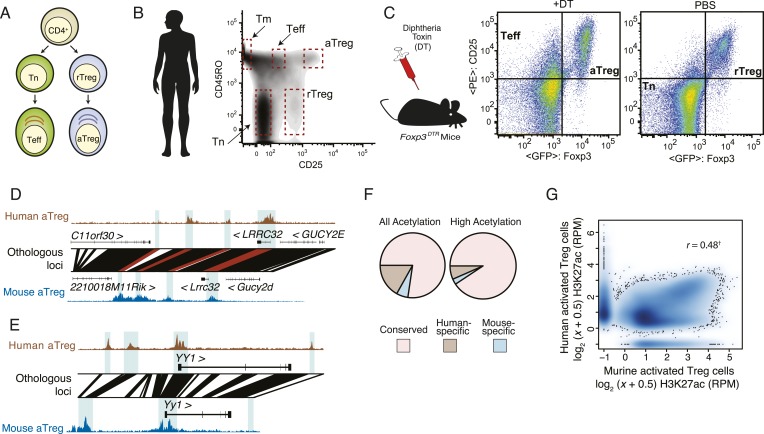
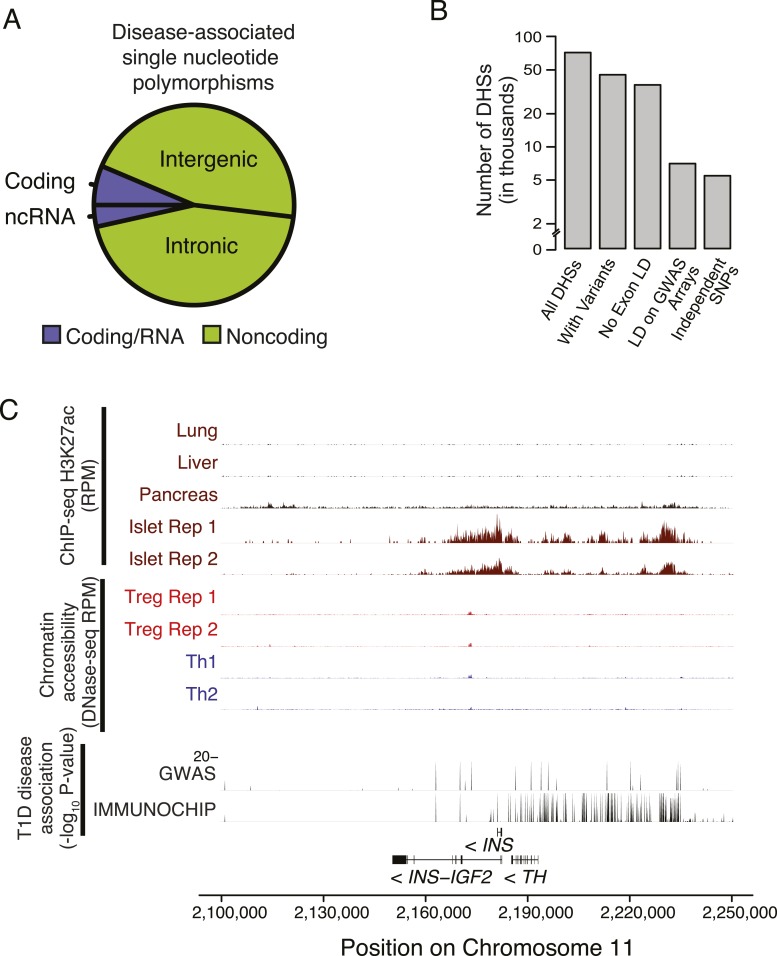
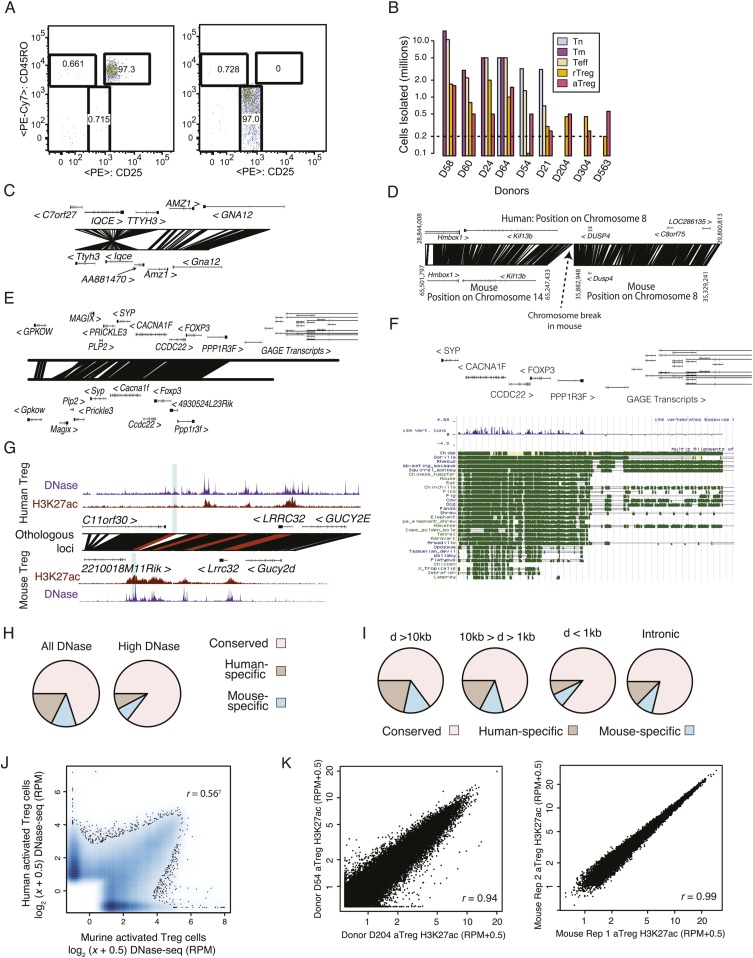
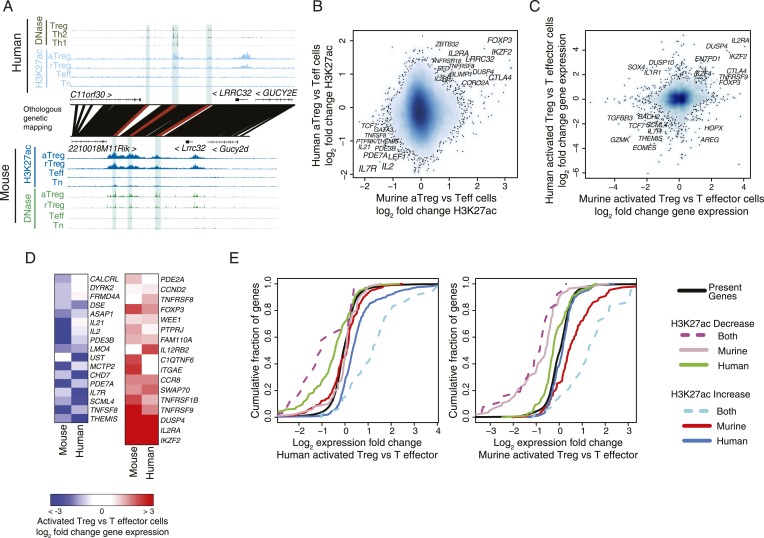
Regulatory T (Treg) cells, which suppress autoimmunity and other inflammatory states, are characterized by a distinct set of genetic elements controlling their gene expression. However, the extent of genetic and associated epigenetic variation in the Treg cell lineage and its possible relation to disease states in humans remain unknown. We explored evolutionary conservation of regulatory elements and natural human inter-individual epigenetic variation in Treg cells to identify the core transcriptional control program of lineage specification. Analysis of single nucleotide polymorphisms in core lineage-specific enhancers revealed disease associations, which were further corroborated by high-resolution genotyping to fine map causal polymorphisms in lineage-specific enhancers. Our findings suggest that a small set of regulatory elements specify the Treg lineage and that genetic variation in Treg cell-specific enhancers may alter Treg cell function contributing to polygenic disease.
调节性T(Treg)细胞可抑制自身免疫和其他炎症状态,其特征是有一组独特的遗传元件控制其基因表达。然而,Treg细胞谱系中遗传和相关表观遗传变异的程度及其与人类疾病状态的可能关系仍不清楚。我们探索了Treg细胞中调节元件的进化保守性和自然的个体间表观遗传变异,以确定谱系特异性的核心转录控制程序。对核心谱系特异性增强子中单核甘酸多态性的分析揭示了疾病关联,通过高分辨率基因分型进一步证实,以精细定位谱系特异性增强子中的因果多态性。我们的研究结果表明,一小部分调节元件决定了Treg细胞谱系,Treg细胞特异性增强子中的遗传变异可能会改变Treg细胞功能,从而导致多基因疾病。