Department of Pathology, Microbiology and Immunology, University of Utah, Salt Lake City, UT, United States.
Translational Biology and Molecular Medicine Graduate Program, Baylor College of Medicine, Houston, TX, United States.
Front Immunol. 2022 Aug 12;13:911151. doi: 10.3389/fimmu.2022.911151. eCollection 2022.
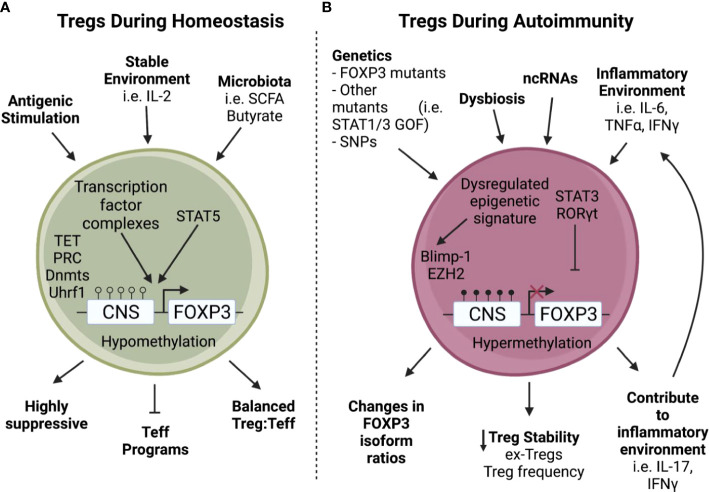
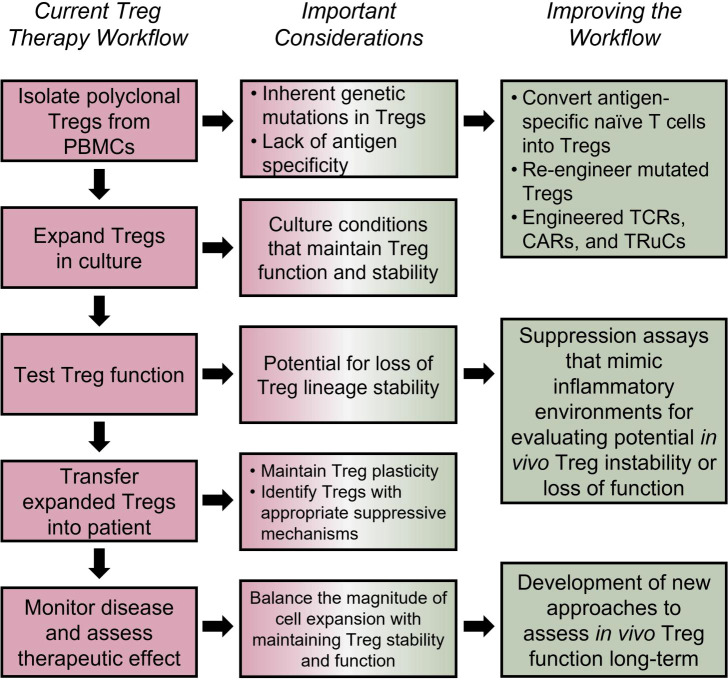
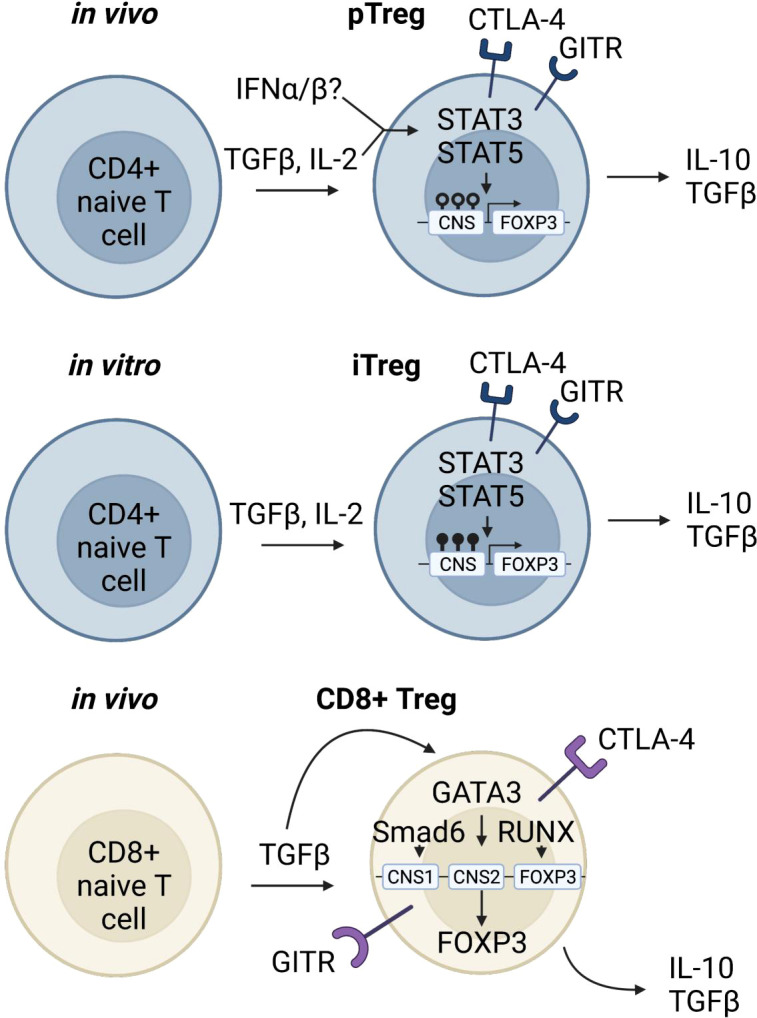
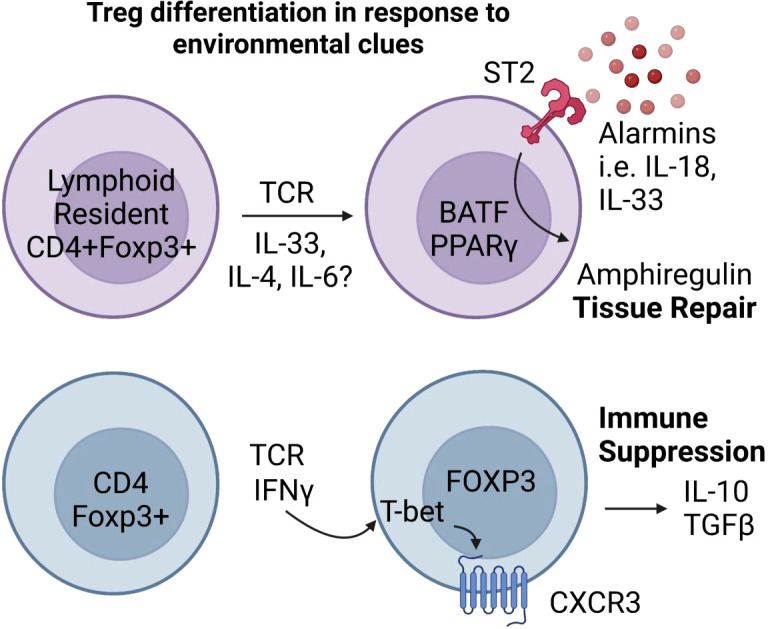
The importance of regulatory T cells (Tregs) in preventing autoimmunity has been well established; however, the precise alterations in Treg function in autoimmune individuals and how underlying genetic associations impact the development and function of Tregs is still not well understood. Polygenetic susceptibly is a key driving factor in the development of autoimmunity, and many of the pathways implicated in genetic association studies point to a potential alteration or defect in regulatory T cell function. In this review transcriptomic control of Treg development and function is highlighted with a focus on how these pathways are altered during autoimmunity. In combination, observations from autoimmune mouse models and human patients now provide insights into epigenetic control of Treg function and stability. How tissue microenvironment influences Treg function, lineage stability, and functional plasticity is also explored. In conclusion, the current efficacy and future direction of Treg-based therapies for Type 1 Diabetes and other autoimmune diseases is discussed. In total, this review examines Treg function with focuses on genetic, epigenetic, and environmental mechanisms and how Treg functions are altered within the context of autoimmunity.
调节性 T 细胞(Tregs)在预防自身免疫中的重要性已得到充分证实;然而,自身免疫个体中 Treg 功能的确切改变以及潜在的遗传关联如何影响 Treg 的发育和功能仍不完全清楚。多基因易感性是自身免疫发展的关键驱动因素,许多与遗传关联研究相关的途径表明调节性 T 细胞功能可能发生改变或缺陷。在这篇综述中,转录组控制 Treg 的发育和功能被强调,重点是这些途径在自身免疫过程中是如何改变的。结合自身免疫小鼠模型和人类患者的观察结果,现在可以深入了解 Treg 功能和稳定性的表观遗传控制。还探讨了组织微环境如何影响 Treg 功能、谱系稳定性和功能可塑性。总之,讨论了基于 Treg 的治疗 1 型糖尿病和其他自身免疫性疾病的当前疗效和未来方向。总的来说,本综述检查了 Treg 功能,重点是遗传、表观遗传和环境机制,以及 Treg 功能在自身免疫中的改变。