Wu Ya-Han, Zhao Hong, Zhou Li-Ping, Zhao Chun-Xia, Wu Yu-Fei, Zhen Li-Xiao, Li Jun, Ge Dong-Xia, Xu Liang, Lin Li, Liu Yi, Liang Dan-Dan, Chen Yi-Han
Key Laboratory of Arrhythmias of the Ministry of Education of China, East Hospital, Tongji University School of Medicine, Shanghai 200120, China.
Research Center for Translational Medicine, East Hospital, Tongji University School of Medicine, Shanghai 200120, China.
Int J Mol Sci. 2015 Oct 23;16(10):25199-213. doi: 10.3390/ijms161025199.
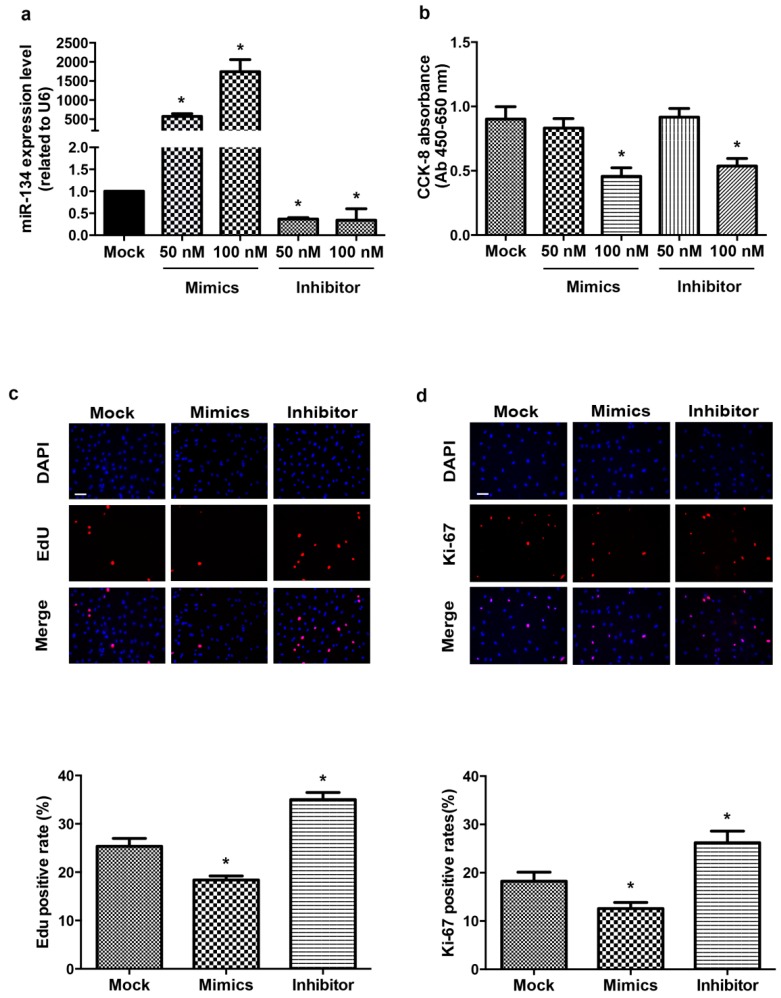
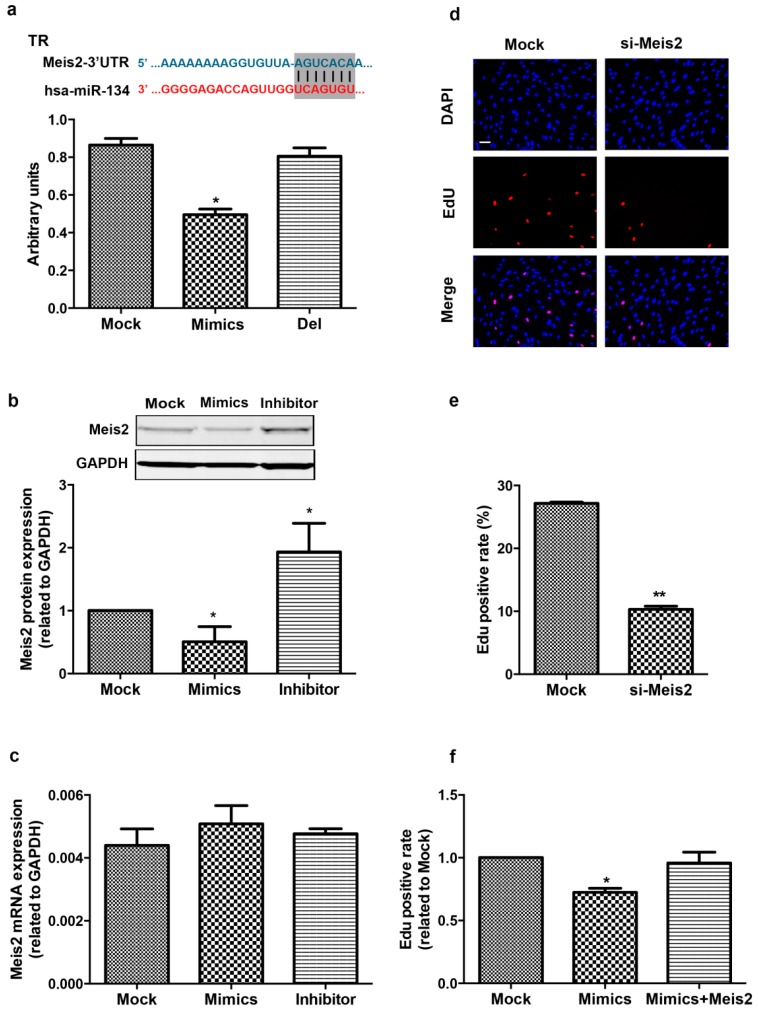
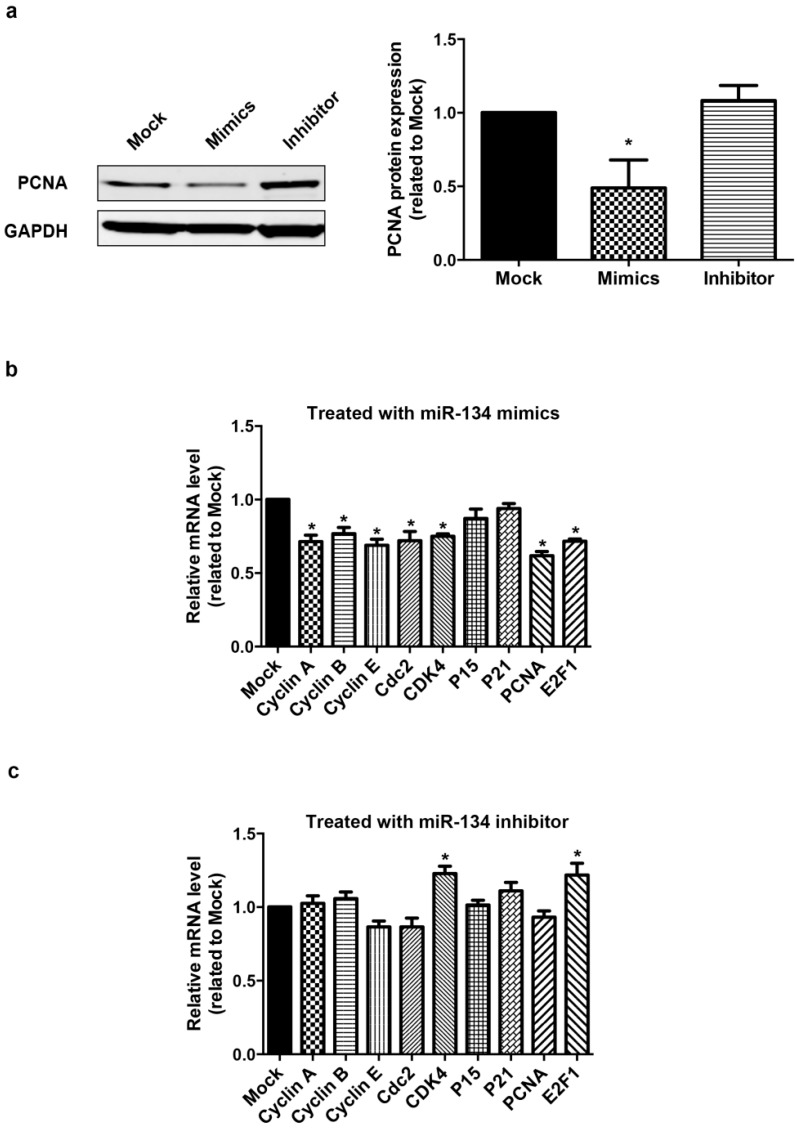
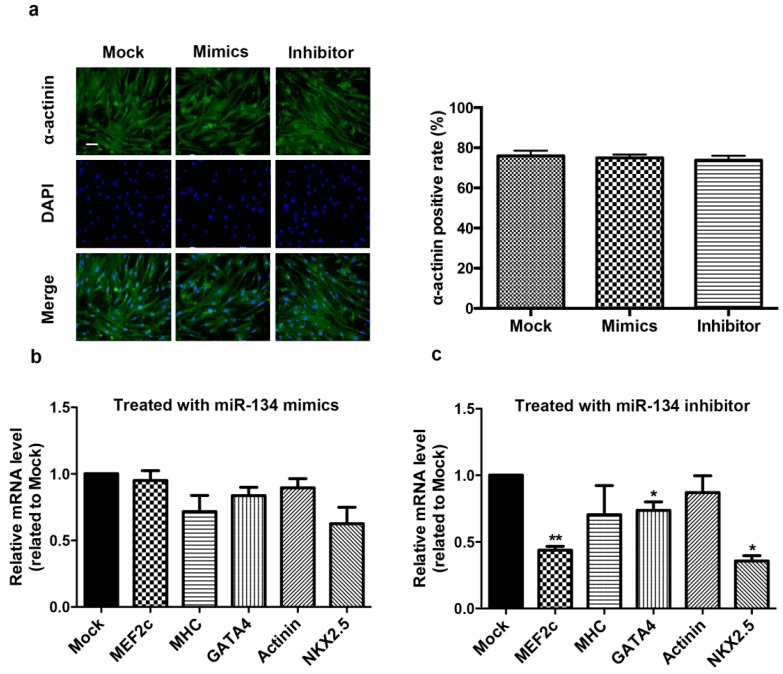
Cardiomyocyte progenitor cells play essential roles in early heart development, which requires highly controlled cellular organization. microRNAs (miRs) are involved in various cell behaviors by post-transcriptional regulation of target genes. However, the roles of miRNAs in human cardiomyocyte progenitor cells (hCMPCs) remain to be elucidated. Our previous study showed that miR-134 was significantly downregulated in heart tissue suffering from congenital heart disease, underlying the potential role of miR-134 in cardiogenesis. In the present work, we showed that the upregulation of miR-134 reduced the proliferation of hCMPCs, as determined by EdU assay and Ki-67 immunostaining, while the inhibition of miR-134 exhibited an opposite effect. Both up- and downregulation of miR-134 expression altered the transcriptional level of cell-cycle genes. We identified Meis2 as the target of miR-134 in the regulation of hCMPC proliferation through bioinformatic prediction, luciferase reporter assay and western blot. The over-expression of Meis2 mitigated the effect of miR-134 on hCMPC proliferation. Moreover, miR-134 did not change the degree of hCMPC differentiation into cardiomyocytes in our model, suggesting that miR-134 is not required in this process. These findings reveal an essential role for miR-134 in cardiomyocyte progenitor cell biology and provide new insights into the physiology and pathology of cardiogenesis.
心肌细胞祖细胞在心脏早期发育中发挥着重要作用,而心脏早期发育需要高度可控的细胞组织。微小RNA(miR)通过对靶基因的转录后调控参与多种细胞行为。然而,miRNA在人类心肌细胞祖细胞(hCMPC)中的作用仍有待阐明。我们之前的研究表明,在患有先天性心脏病的心脏组织中,miR-134显著下调,这暗示了miR-134在心脏发生中的潜在作用。在本研究中,我们发现,通过EdU检测和Ki-67免疫染色确定,miR-134的上调降低了hCMPC的增殖,而抑制miR-134则表现出相反的效果。miR-134表达的上调和下调均改变了细胞周期基因的转录水平。通过生物信息学预测、荧光素酶报告基因检测和蛋白质印迹法,我们确定Meis2是miR-134在调控hCMPC增殖中的靶标。Meis2的过表达减轻了miR-134对hCMPC增殖的影响。此外,在我们的模型中,miR-134并未改变hCMPC向心肌细胞分化的程度,这表明在此过程中不需要miR-134。这些发现揭示了miR-134在心肌细胞祖细胞生物学中的重要作用,并为心脏发生的生理学和病理学提供了新的见解。