Nalla Arun K, Williams Theodore F, Collins Casey P, Rae Dustin T, Trobridge Grant D
Department of Pharmaceutical Sciences, Washington State University, Spokane, Washington.
School of Molecular Biosciences, Washington State University, Pullman, Washington.
Mol Carcinog. 2016 Nov;55(11):1761-1771. doi: 10.1002/mc.22425. Epub 2015 Oct 29.
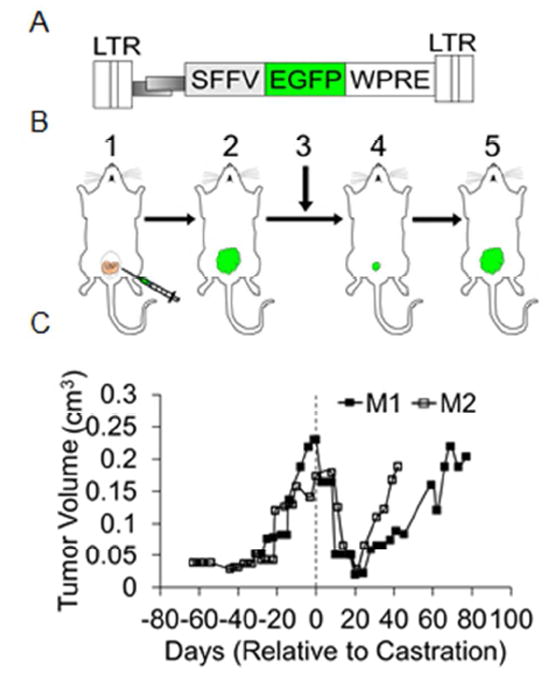
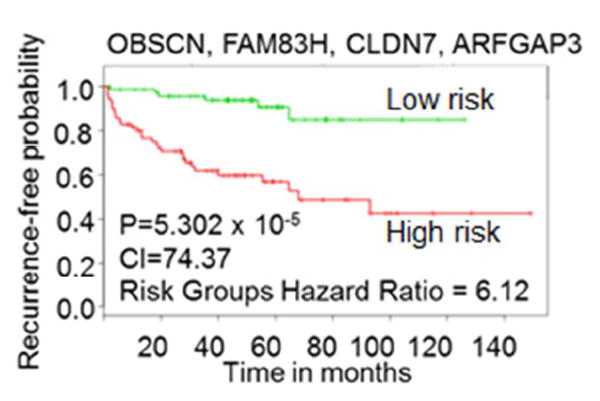
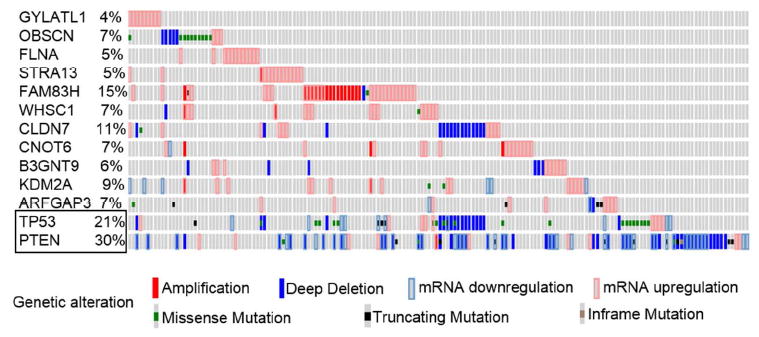
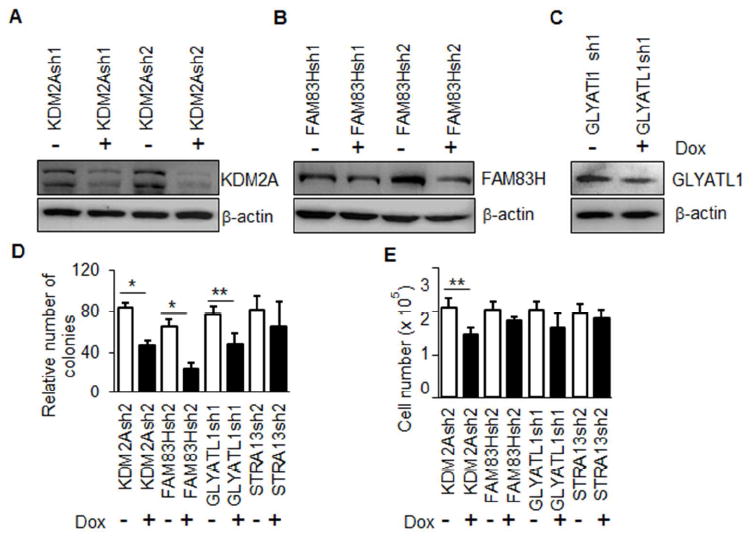
Prostate cancer (PC) is the second leading cause of cancer related deaths in US men. Androgen deprivation therapy (ADT) improves clinical outcome, but tumors often recur and progress to androgen independent prostate cancer (AIPC) which no longer responds to ADT. The progression to AIPC is due to genetic alterations that allow PC cancer cells to grow in the absence of androgen. Here we performed an insertional mutagenesis screen using a replication-incompetent lentiviral vector (LV) to identify the genes that promote AIPC in an orthotopic mouse model. Androgen sensitive PC cells, LNCaP, were mutagenized with LV and injected into the prostate of male mice. After tumor development, mice were castrated to select for cells that proliferate in the absence of androgen. Proviral integration sites and nearby dysregulated genes were identified in tumors developed in an androgen deficient environment. Using publically available datasets, the expression of these candidate androgen independence genes in human PC tissues were analyzed. A total of 11 promising candidate AIPC genes were identified: GLYATL1, FLNA, OBSCN, STRA13, WHSC1, ARFGAP3, KDM2A, FAM83H, CLDN7, CNOT6, and B3GNT9. Seven out the 11 candidate genes; GLYATL1, OBSCN, STRA13, KDM2A, FAM83H, CNOT6, and B3GNT6, have not been previously implicated in PC. An in vitro clonogenic assay showed that knockdown of KDM2A, FAM83H, and GLYATL1 genes significantly inhibited the colony forming ability of LNCaP cells. Additionally, we showed that a combination of four genes, OBSCN, FAM83H, CLDN7, and ARFGAP3 could significantly predicted the recurrence risk in PC patients after prostatectomy (P = 5.3 × 10 ). © 2015 Wiley Periodicals, Inc.
前列腺癌(PC)是美国男性癌症相关死亡的第二大主要原因。雄激素剥夺疗法(ADT)可改善临床结局,但肿瘤常常复发并进展为对ADT不再有反应的去势抵抗性前列腺癌(AIPC)。向AIPC的进展是由于基因改变,使得前列腺癌细胞能够在没有雄激素的情况下生长。在此,我们使用无复制能力的慢病毒载体(LV)进行了插入诱变筛选,以在原位小鼠模型中鉴定促进AIPC的基因。用LV诱变雄激素敏感的前列腺癌细胞LNCaP,并将其注射到雄性小鼠的前列腺中。肿瘤形成后,对小鼠进行去势,以选择在没有雄激素的情况下增殖的细胞。在雄激素缺乏环境中形成的肿瘤中鉴定出前病毒整合位点和附近失调的基因。利用公开可用的数据集,分析了这些候选去势抵抗相关基因在人前列腺组织中的表达。总共鉴定出11个有前景的候选AIPC基因:GLYATL1、FLNA、OBSCN、STRA13、WHSC1、ARFGAP3、KDM2A、FAM83H、CLDN7、CNOTD6和B3GNT9。11个候选基因中的7个;GLYATL1、OBSCN、STRA13、KDM2A、FAM83H、CNOTD6和B3GNT6,以前未被认为与前列腺癌有关。体外克隆形成试验表明,敲低KDM2A、FAM83H和GLYATL1基因可显著抑制LNCaP细胞的集落形成能力。此外,我们发现OBSCN、FAM83H、CLDN7和ARFGAP3这四个基因的组合可显著预测前列腺切除术后前列腺癌患者的复发风险(P =5.3×10)。©2015威利期刊公司