Rizvi Fatima, Mathur Alpana, Krishna Shagun, Siddiqi Mohammad Imran, Kakkar Poonam
Herbal Research Laboratory, Food Drug and Chemical Toxicology Group, Council of Scientific and Industrial Research-Indian Institute of Toxicology Research (CSIR-IITR), Post Box No. 80, M.G. Marg, Lucknow 226001, Uttar Pradesh, India; Academy of Scientific and Innovative Research, CSIR-IITR campus, Lucknow, India.
Herbal Research Laboratory, Food Drug and Chemical Toxicology Group, Council of Scientific and Industrial Research-Indian Institute of Toxicology Research (CSIR-IITR), Post Box No. 80, M.G. Marg, Lucknow 226001, Uttar Pradesh, India.
Redox Biol. 2015 Dec;6:587-598. doi: 10.1016/j.redox.2015.10.002. Epub 2015 Oct 19.
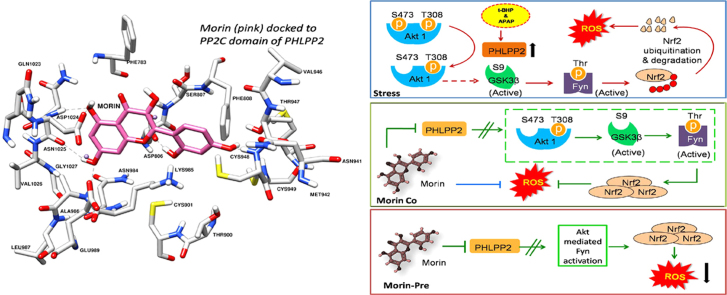
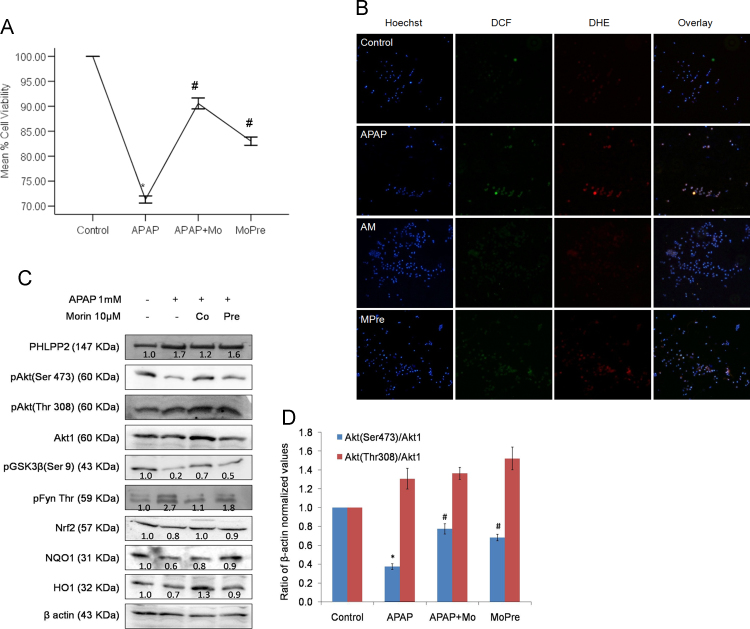
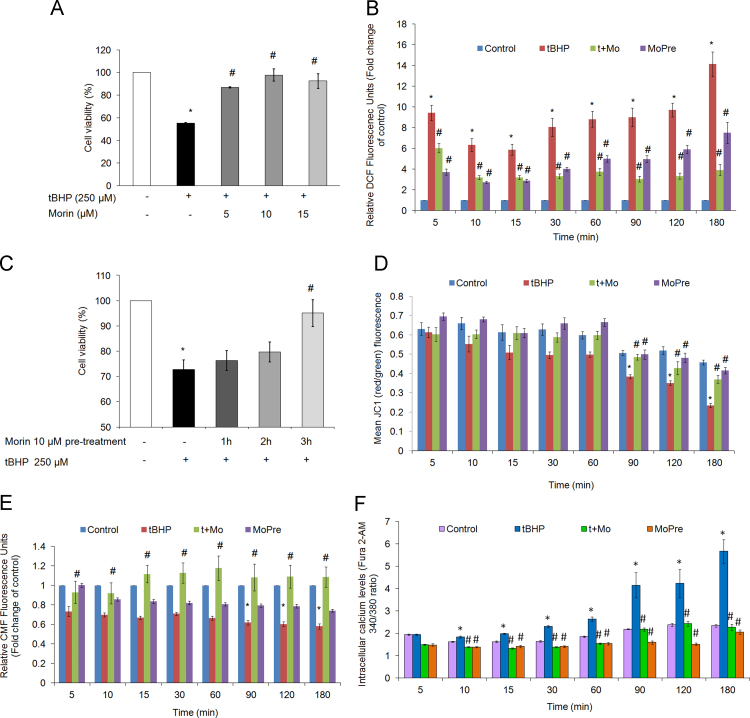
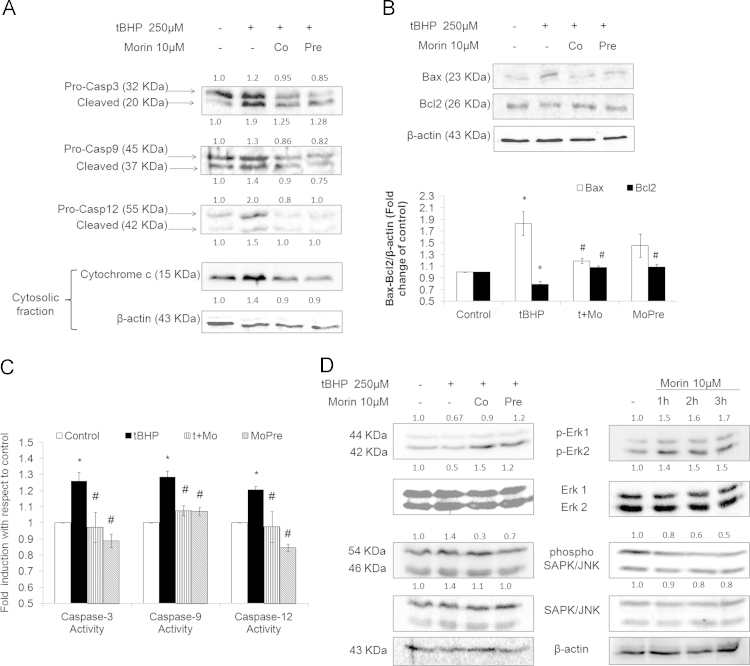
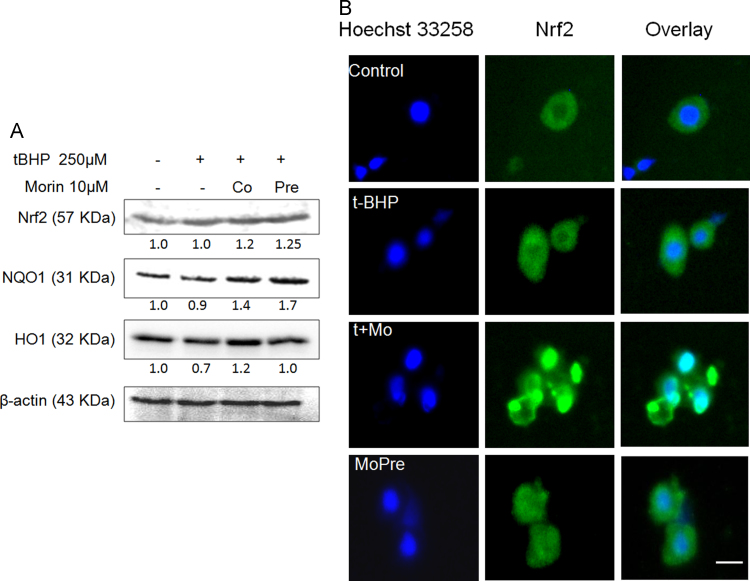
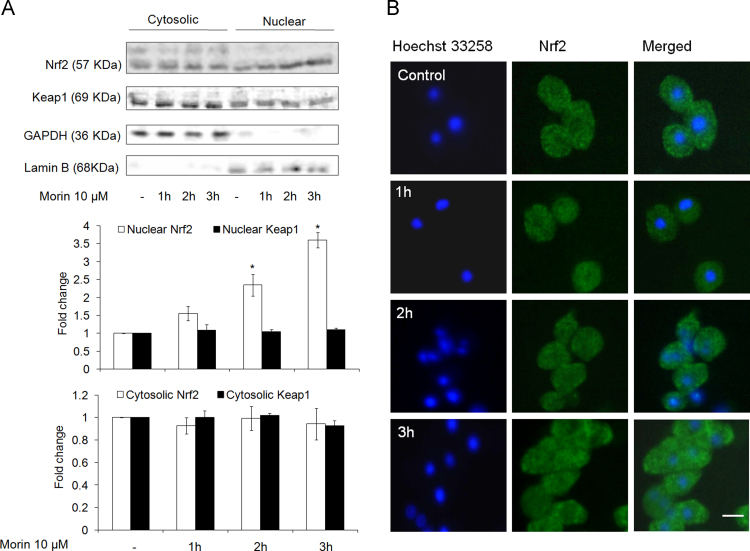
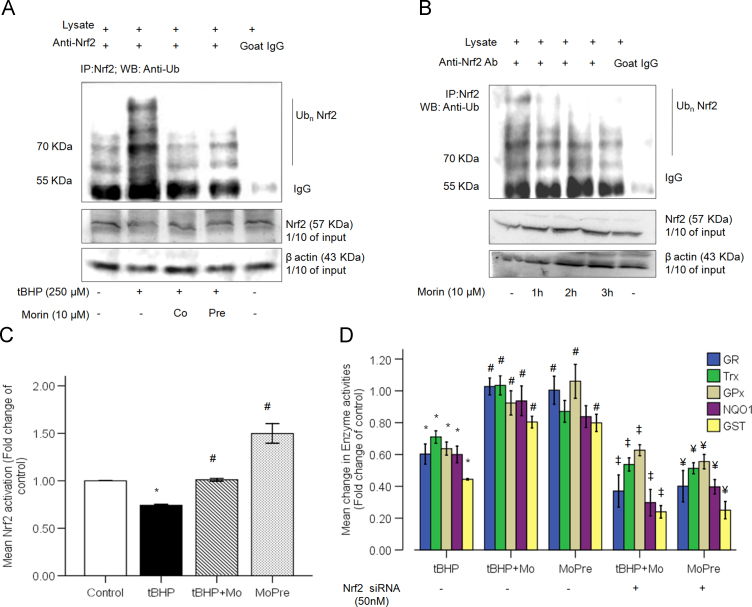
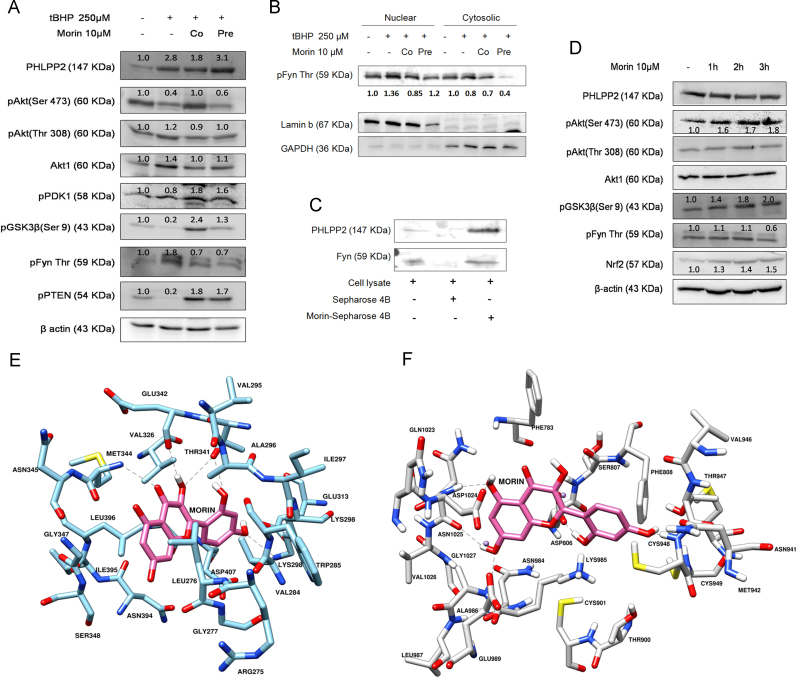
Recent advances indicate a possible role of phytochemicals as modulatory factors in signaling pathways. We have previously demonstrated PHLPP2-mediated suppression of Nrf2 responses during oxidant attack. The present study was designed to explore Nrf2-potentiating mechanism of morin, a flavonol, via its possible role in intervening PHLPP2-regulated Akt/GSK3β/Fyn kinase axis. Efficacy of morin was evaluated against oxidative stress-mediated damage to primary hepatocytes by tert-butyl hydroperoxide (tBHP) and acetaminophen. The anti-cytotoxic effects of morin were found to be a consequence of fortification of Nrf2-regulated antioxidant defenses since morin failed to sustain activities of redox enzyme in Nrf2 silenced hepatocytes. Morin promoted Nrf2 stability and its nuclear retention by possibly modulating PHLPP2 activity which subdues cellular Nrf2 responses by activating Fyn kinase. Pull-down assay using morin-conjugated beads indicated the binding affinity of morin towards PHLPP2. Molecular docking also revealed the propensity of morin to occupy the active site of PHLPP2 enzyme. Thus, dietary phytochemical morin was observed to counteract oxidant-induced hepatocellular damage by promoting Nrf2-regulated transcriptional induction. The findings support the novel role of morin in potentiating Nrf2 responses by limiting PHLPP2 and hence Fyn kinase activation. Therefore, morin may be exploited in developing novel therapeutic strategy aimed at enhancing Nrf2 responses.
近期的研究进展表明,植物化学物质可能作为信号通路中的调节因子发挥作用。我们之前已经证明,在氧化应激攻击期间,PHLPP2介导对Nrf2反应的抑制。本研究旨在通过其在干预PHLPP2调节的Akt/GSK3β/Fyn激酶轴中的可能作用,探索黄酮醇桑色素增强Nrf2的机制。通过叔丁基过氧化氢(tBHP)和对乙酰氨基酚评估桑色素对原代肝细胞氧化应激介导损伤的功效。发现桑色素的抗细胞毒性作用是Nrf2调节的抗氧化防御增强的结果,因为桑色素在Nrf2沉默的肝细胞中无法维持氧化还原酶的活性。桑色素可能通过调节PHLPP2活性来促进Nrf2的稳定性及其核内保留,而PHLPP2通过激活Fyn激酶来抑制细胞的Nrf2反应。使用桑色素偶联磁珠的下拉试验表明桑色素与PHLPP2的结合亲和力。分子对接还揭示了桑色素占据PHLPP2酶活性位点的倾向。因此,观察到膳食植物化学物质桑色素通过促进Nrf2调节的转录诱导来对抗氧化剂诱导的肝细胞损伤。这些发现支持了桑色素通过限制PHLPP2从而抑制Fyn激酶激活来增强Nrf2反应的新作用。因此,桑色素可用于开发旨在增强Nrf2反应的新型治疗策略。