Department of Pharmaceutical Sciences, School of Pharmacy and Pharmaceutical Sciences, University at Buffalo Buffalo, New York, 14214.
Department of Biological Sciences, University at Buffalo Buffalo, New York, 14260.
Pharmacol Res Perspect. 2015 Oct;3(5):e00169. doi: 10.1002/prp2.169. Epub 2015 Aug 3.
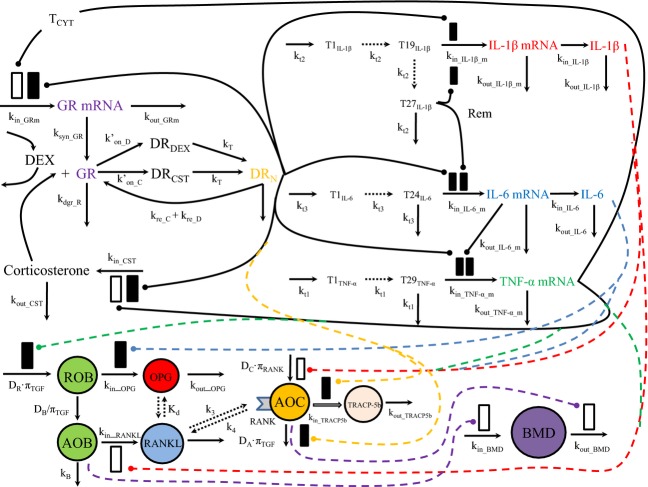
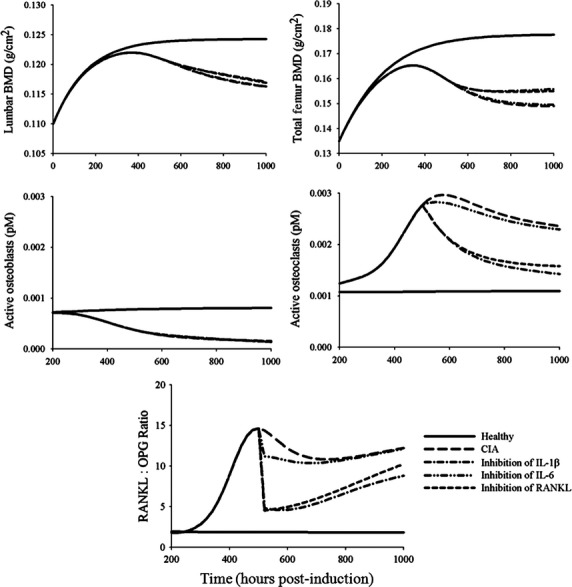
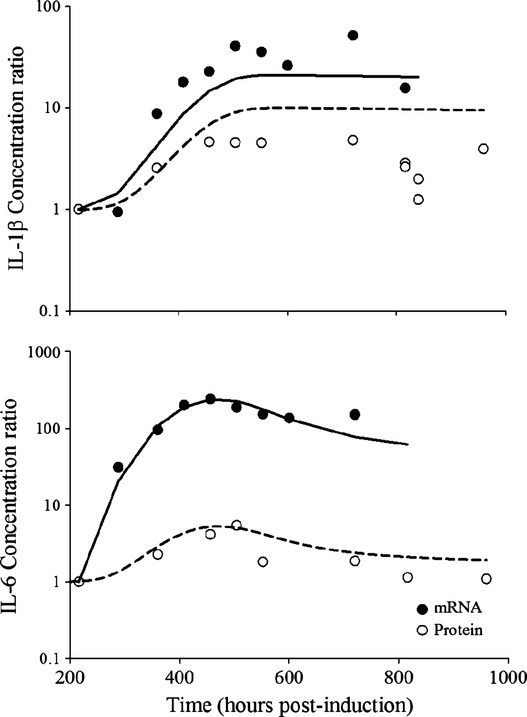
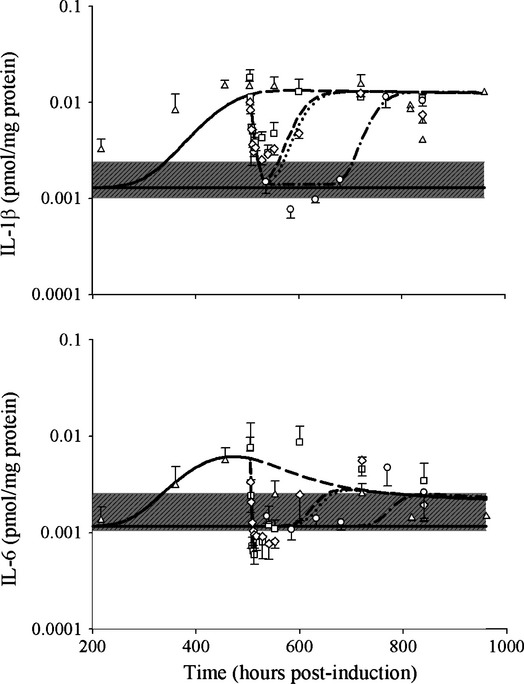
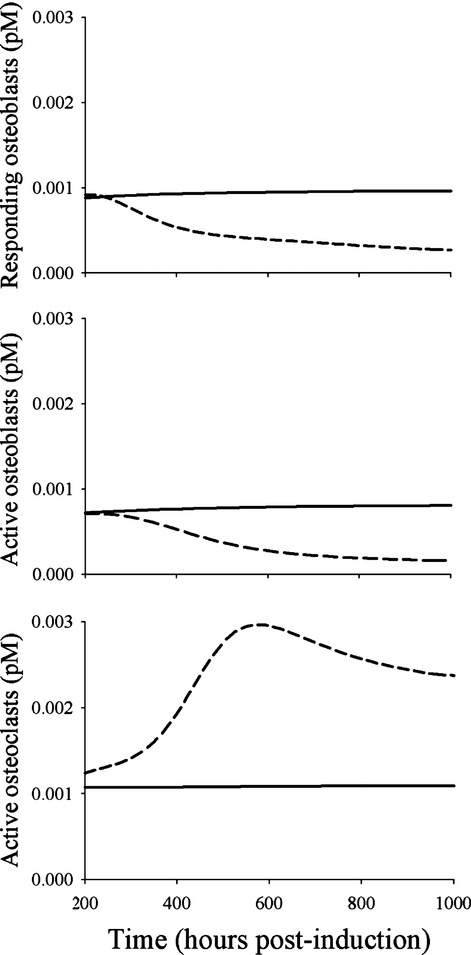
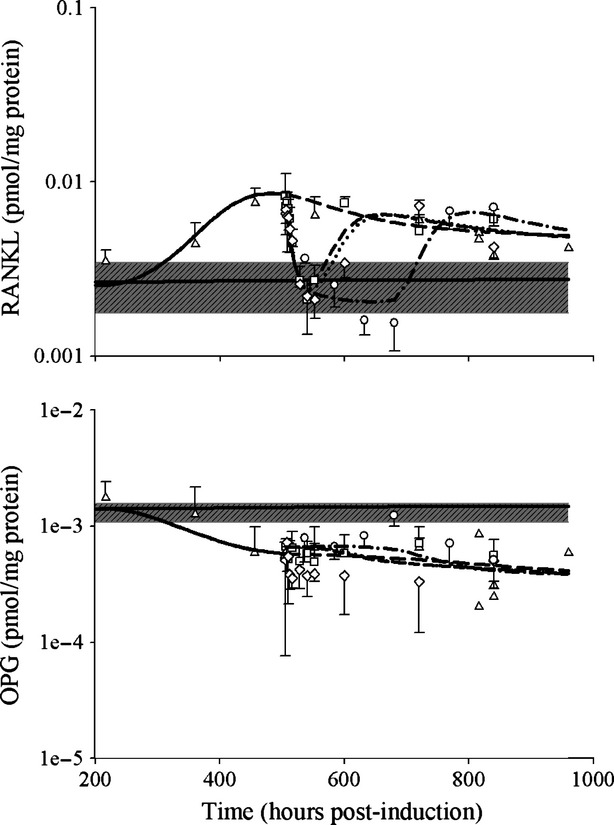
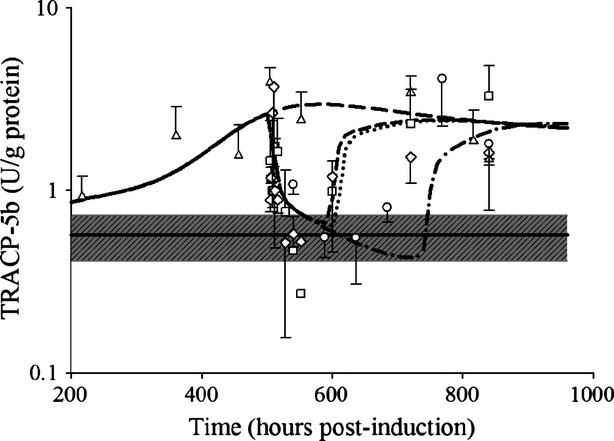
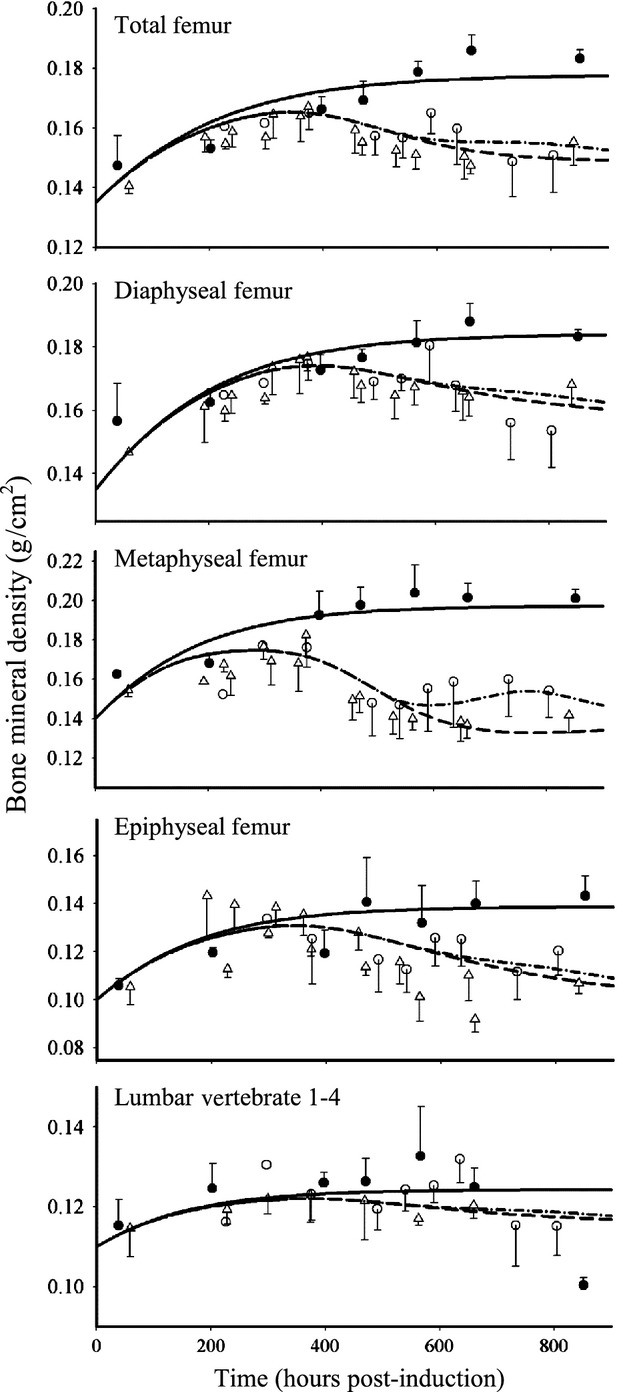
A mechanism-based model was developed to characterize the crosstalk between proinflammatory cytokines, bone remodeling biomarkers, and bone mineral density (BMD) in collagen-induced arthritic (CIA) rats. Male Lewis rats were divided into five groups: healthy control, CIA control, CIA receiving single 0.225 mg kg(-1) subcutaneous (SC) dexamethasone (DEX), CIA receiving single 2.25 mg kg(-1) SC DEX, and CIA receiving chronic 0.225 mg kg(-1) SC DEX. The CIA rats underwent collagen induction at day 0 and DEX was injected at day 21 post-induction. Disease activity was monitored throughout the study and rats were sacrificed at different time points for blood and paw collection. Protein concentrations of interleukin (IL)-1β, IL-6, receptor activator of nuclear factor kappa-B ligand (RANKL), osteoprotegerin (OPG), and tartrate-resistant acid phosphatase 5b (TRACP-5b) in paws were measured by enzyme-linked immunosorbent assays (ELISA). Disease progression and DEX pharmacodynamic profiles of IL-1β, IL-6, RANKL, and OPG were fitted simultaneously and parameters were sequentially applied to fit the TRACP-5b and BMD data. The model was built according to the mechanisms reported in the literature and modeling was performed using ADAPT 5 software with naïve pooling. Time profiles of IL-1β and IL-6 protein concentrations correlated with their mRNAs. The RANKL and OPG profiles matched previous findings in CIA rats. DEX inhibited the expressions of IL-1β, IL-6, and RANKL, but did not alter OPG. TRACP-5b was also inhibited by DEX. Model predictions suggested that anti-IL-1β therapy and anti-RANKL therapy would result in similar efficacy for prevention of bone loss among the cytokine antagonists.
建立了一个基于机制的模型,以描述胶原诱导性关节炎(CIA)大鼠中促炎细胞因子、骨重塑生物标志物和骨密度(BMD)之间的相互作用。雄性 Lewis 大鼠分为五组:健康对照组、CIA 对照组、CIA 单次接受 0.225mg/kg 皮下(SC)地塞米松(DEX)、CIA 单次接受 2.25mg/kg SC DEX 和 CIA 接受慢性 0.225mg/kg SC DEX。CIA 大鼠在第 0 天接受胶原诱导,在诱导后第 21 天注射 DEX。在整个研究过程中监测疾病活动,并在不同时间点处死大鼠以采集血液和爪子。通过酶联免疫吸附试验(ELISA)测量爪子中白细胞介素(IL)-1β、IL-6、核因子 kappa-B 受体激活剂配体(RANKL)、骨保护素(OPG)和抗酒石酸酸性磷酸酶 5b(TRACP-5b)的蛋白浓度。同时拟合疾病进展和 DEX 对 IL-1β、IL-6、RANKL 和 OPG 的药效动力学曲线,并依次应用参数拟合 TRACP-5b 和 BMD 数据。该模型根据文献中报道的机制构建,使用 ADAPT 5 软件进行建模,采用 naive pooling。IL-1β 和 IL-6 蛋白浓度的时间曲线与其 mRNAs 相关。RANKL 和 OPG 曲线与 CIA 大鼠的先前发现相符。DEX 抑制了 IL-1β、IL-6 和 RANKL 的表达,但不改变 OPG。DEX 还抑制了 TRACP-5b。模型预测表明,抗 IL-1β 治疗和抗 RANKL 治疗在预防细胞因子拮抗剂引起的骨质流失方面具有相似的疗效。