Sulahian Rita, Chen Justina, Arany Zoltan, Jadhav Unmesh, Peng Shouyong, Rustgi Anil K, Bass Adam J, Srivastava Amitabh, Hornick Jason L, Shivdasani Ramesh A
Department of Medical Oncology, Dana-Farber Cancer Institute, 450 Brookline Avenue, Boston, MA 02215, USA ; Department of Medicine, Harvard Medical School, 45 Shattuck Street, Boston, MA 02115, USA.
Department of Medical Oncology, Dana-Farber Cancer Institute, 450 Brookline Avenue, Boston, MA 02215, USA.
Cell Mol Gastroenterol Hepatol. 2015 Nov 1;1(6):598-609.e6. doi: 10.1016/j.jcmgh.2015.07.009.
BACKGROUND & AIMS: Intestinal metaplasia (Barrett's esophagus, BE) is the principal risk factor for esophageal adenocarcinoma (EAC). Study of the basis for BE has centered on intestinal factors, but loss of esophageal identity likely also reflects absence of key squamous-cell factors. As few determinants of stratified epithelial cell-specific gene expression are characterized, it is important to identify the necessary transcription factors.
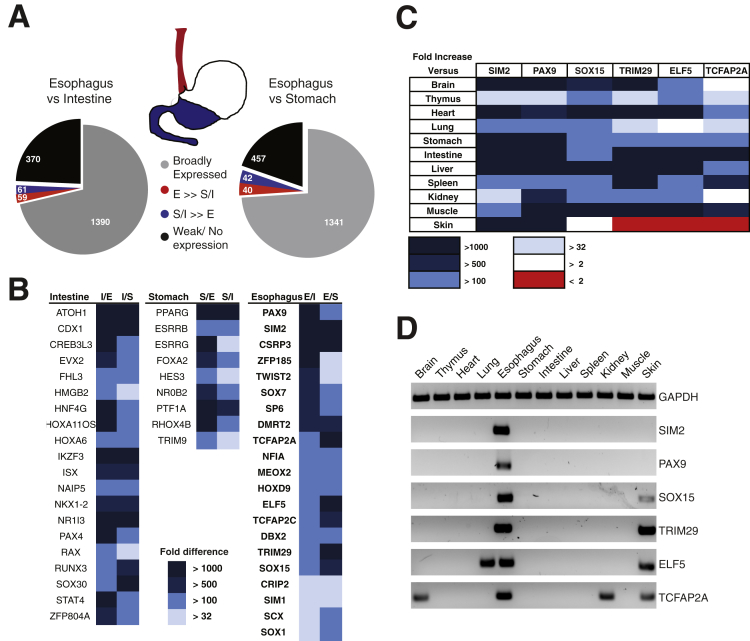
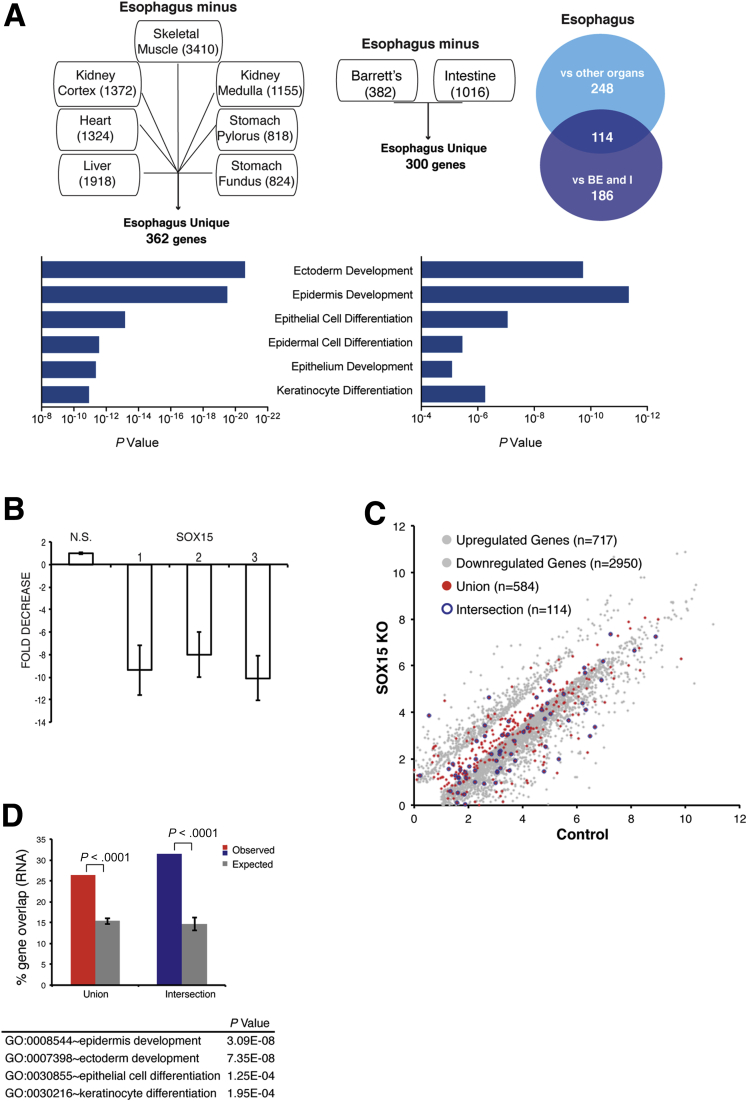
We tested regional expression of mRNAs for all putative DNA-binding proteins in the mouse digestive tract and verified esophagus-specific factors in human tissues and cell lines. Integration of diverse data defined a human squamous esophagus-specific transcriptome. We used chromatin immunoprecipitation (ChIP-seq) to locate transcription factor binding sites, computational approaches to profile transcripts in cancer datasets, and immunohistochemistry to reveal protein expression.
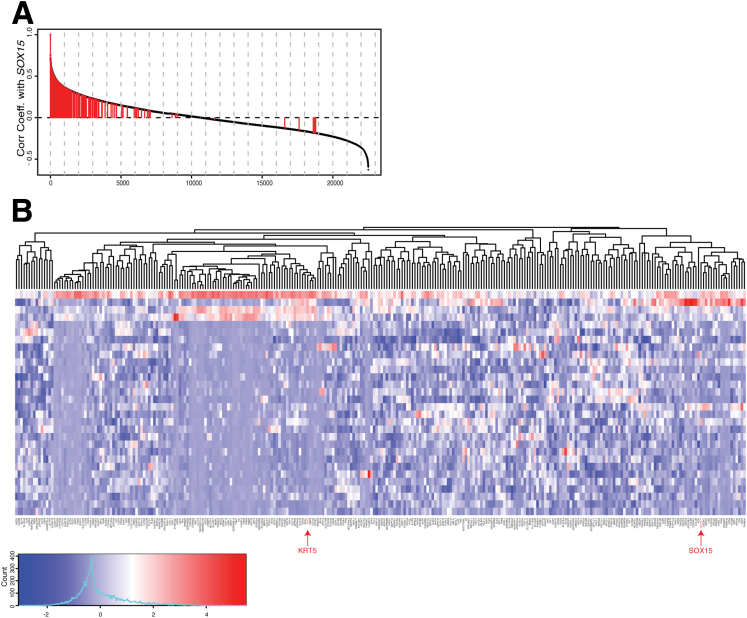
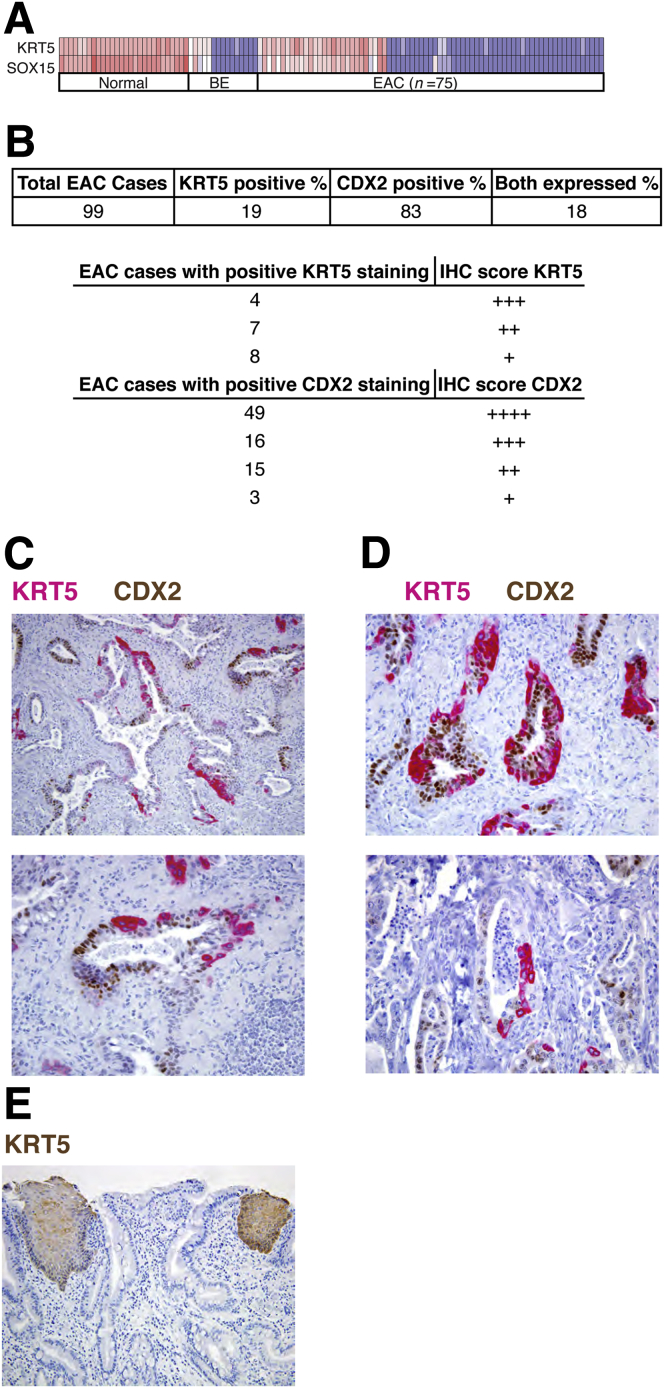
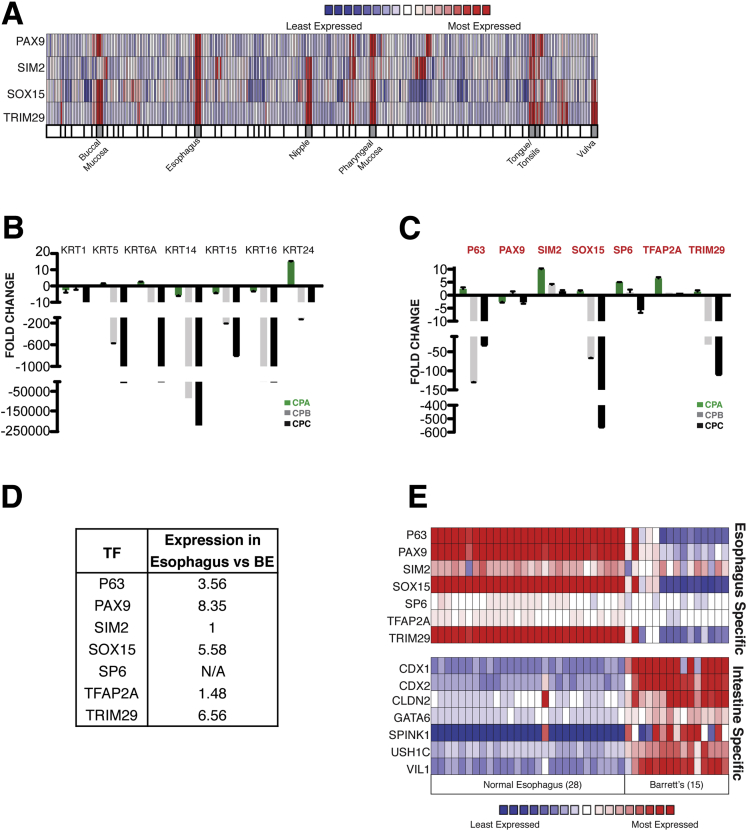
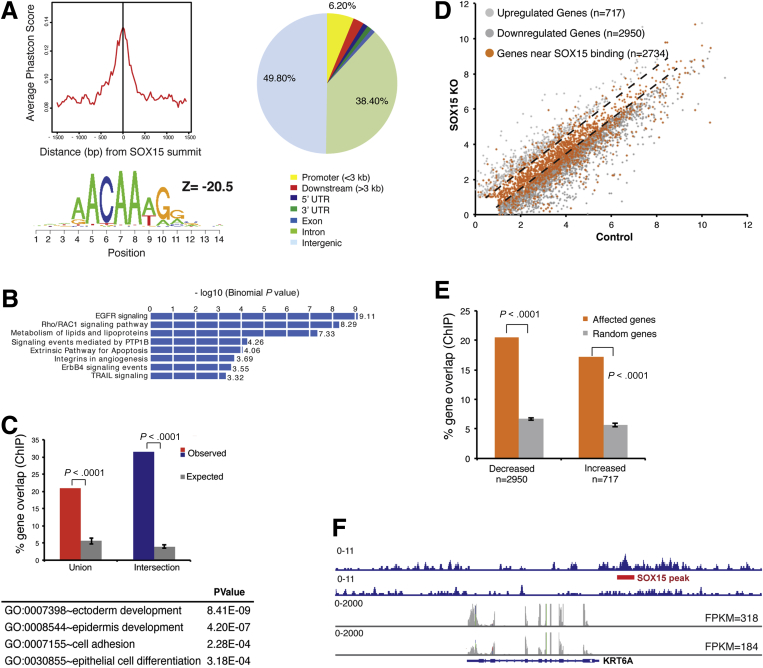
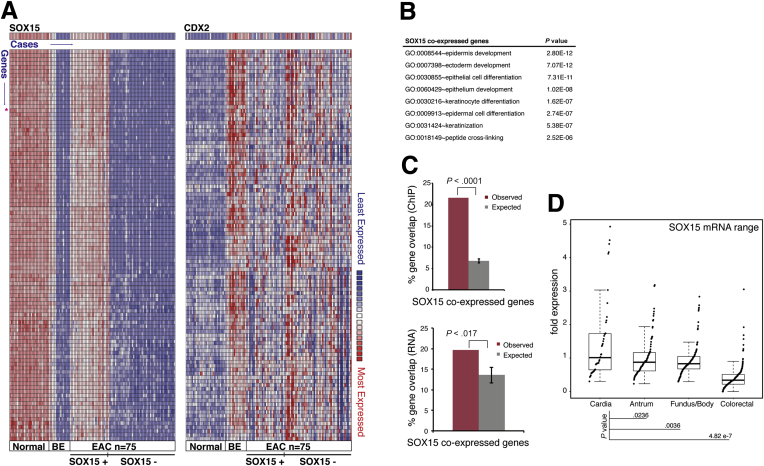
The transcription factor SOX15 is restricted to esophageal and other murine and human stratified epithelia. mRNA levels are attenuated in BE and its depletion in human esophageal cells reduced esophageal transcripts significantly and specifically. SOX15 binding is highly enriched near esophagus-expressed genes, indicating direct transcriptional control. and hundreds of genes co-expressed in squamous cells are reactivated in up to 30% of EAC specimens. Genes normally confined to the esophagus or intestine appear in different cells within the same malignant glands.
These data identify a novel transcriptional regulator of stratified epithelial cells and a subtype of EAC with bi-lineage gene expression. Broad activation of squamous-cell genes may shed light on whether EACs arise in the native stratified epithelium or in ectopic columnar cells.
肠化生(巴雷特食管,BE)是食管腺癌(EAC)的主要危险因素。对BE发病基础的研究主要集中在肠道因素上,但食管特征的丧失可能也反映了关键鳞状细胞因素的缺失。由于很少有分层上皮细胞特异性基因表达的决定因素得到表征,因此识别必要的转录因子很重要。
我们检测了小鼠消化道中所有假定的DNA结合蛋白的mRNA区域表达,并在人体组织和细胞系中验证了食管特异性因子。整合多种数据定义了人类鳞状食管特异性转录组。我们使用染色质免疫沉淀(ChIP-seq)来定位转录因子结合位点,采用计算方法分析癌症数据集中的转录本,并通过免疫组织化学揭示蛋白表达。
转录因子SOX15仅限于食管以及其他小鼠和人类的分层上皮。在BE中mRNA水平降低,在人类食管细胞中敲除该因子会显著且特异性地降低食管转录本。SOX15结合在食管表达基因附近高度富集,表明其直接转录调控作用。并且在高达30%的EAC标本中,数百个在鳞状细胞中共表达的基因被重新激活。通常局限于食管或肠道的基因出现在同一恶性腺体的不同细胞中。
这些数据确定了一种新型的分层上皮细胞转录调节因子以及一种具有双谱系基因表达的EAC亚型。鳞状细胞基因的广泛激活可能有助于阐明EAC是起源于天然的分层上皮还是异位柱状细胞。