Freund Natalia T, Horwitz Joshua A, Nogueira Lilian, Sievers Stuart A, Scharf Louise, Scheid Johannes F, Gazumyan Anna, Liu Cassie, Velinzon Klara, Goldenthal Ariel, Sanders Rogier W, Moore John P, Bjorkman Pamela J, Seaman Michael S, Walker Bruce D, Klein Florian, Nussenzweig Michel C
Laboratory of Molecular Immunology, The Rockefeller University, New York, New York, United States of America.
Division of Biology and Biological Engineering, California Institute of Technology, Pasadena, California, United States of America.
PLoS Pathog. 2015 Oct 30;11(10):e1005238. doi: 10.1371/journal.ppat.1005238. eCollection 2015 Oct.
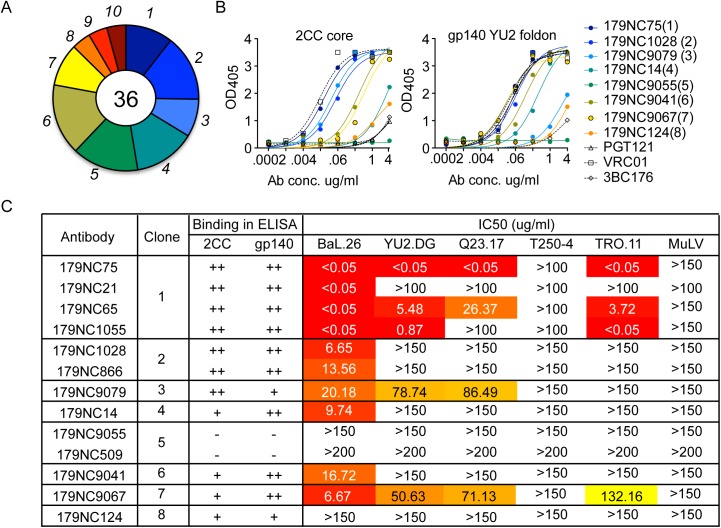
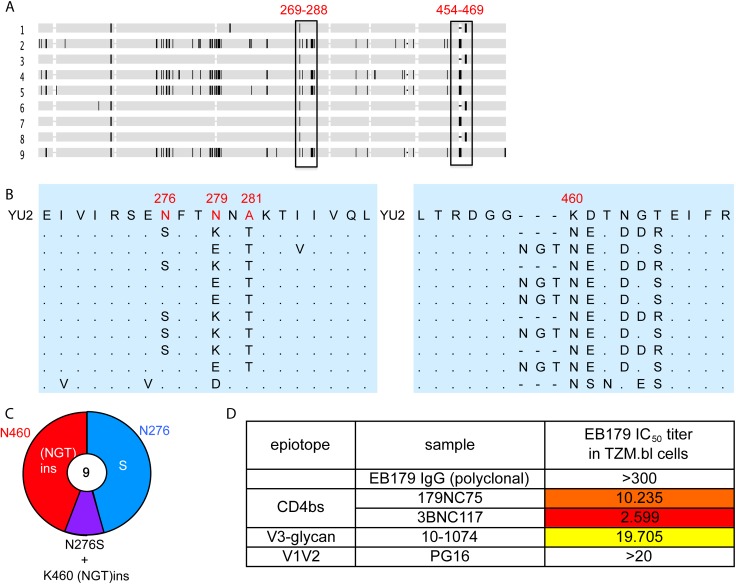
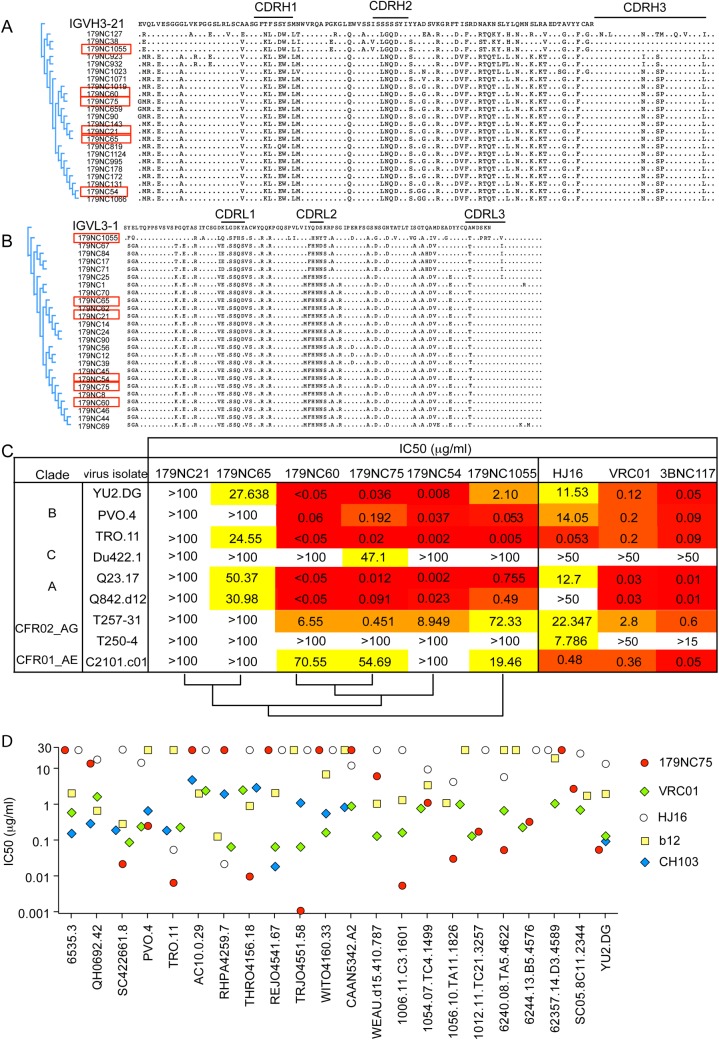
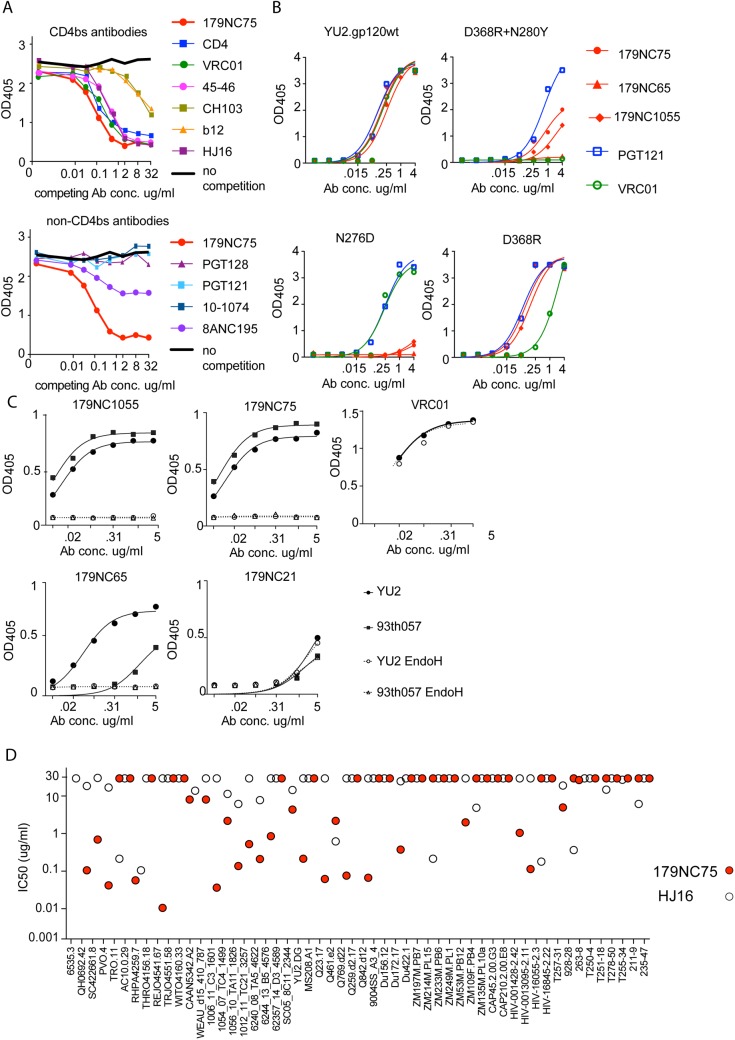
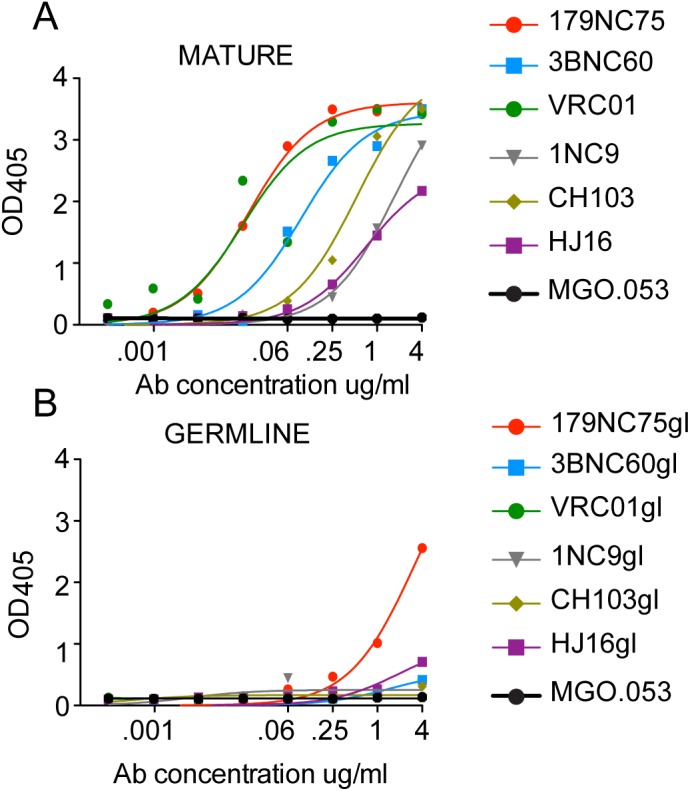
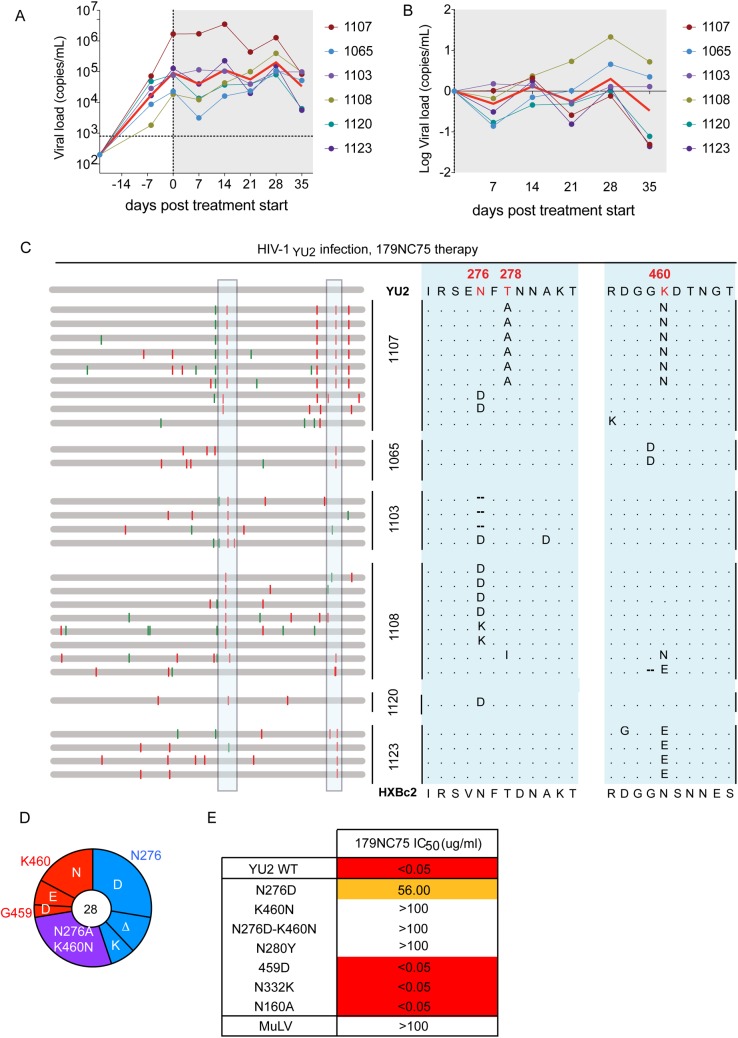
The CD4 binding site (CD4bs) on the envelope glycoprotein is a major site of vulnerability that is conserved among different HIV-1 isolates. Many broadly neutralizing antibodies (bNAbs) to the CD4bs belong to the VRC01 class, sharing highly restricted origins, recognition mechanisms and viral escape pathways. We sought to isolate new anti-CD4bs bNAbs with different origins and mechanisms of action. Using a gp120 2CC core as bait, we isolated antibodies encoded by IGVH3-21 and IGVL3-1 genes with long CDRH3s that depend on the presence of the N-linked glycan at position-276 for activity. This binding mode is similar to the previously identified antibody HJ16, however the new antibodies identified herein are more potent and broad. The most potent variant, 179NC75, had a geometric mean IC80 value of 0.42 μg/ml against 120 Tier-2 HIV-1 pseudoviruses in the TZM.bl assay. Although this group of CD4bs glycan-dependent antibodies can be broadly and potently neutralizing in vitro, their in vivo activity has not been tested to date. Here, we report that 179NC75 is highly active when administered to HIV-1-infected humanized mice, where it selects for escape variants that lack a glycan site at position-276. The same glycan was absent from the virus isolated from the 179NC75 donor, implying that the antibody also exerts selection pressure in humans.
包膜糖蛋白上的CD4结合位点(CD4bs)是一个主要的易损位点,在不同的HIV-1分离株中保守。许多针对CD4bs的广泛中和抗体(bNAbs)属于VRC01类,具有高度受限的起源、识别机制和病毒逃逸途径。我们试图分离具有不同起源和作用机制的新型抗CD4bs bNAbs。使用gp120 2CC核心作为诱饵,我们分离出了由IGVH3-21和IGVL3-1基因编码的抗体,其长CDRH3依赖于276位N-连接聚糖的存在来发挥活性。这种结合模式类似于先前鉴定的抗体HJ16,然而本文鉴定的新抗体更有效且更具广谱性。最有效的变体179NC75在TZM.bl试验中对120株2级HIV-1假病毒的几何平均IC80值为0.42μg/ml。尽管这组依赖于CD4bs聚糖的抗体在体外可具有广泛而有效的中和作用,但迄今为止尚未测试其体内活性。在此,我们报告179NC75在给予HIV-1感染的人源化小鼠时具有高活性,在小鼠体内它会选择产生在276位缺乏聚糖位点的逃逸变体。从179NC75供体分离出的病毒中不存在相同的聚糖,这意味着该抗体在人体内也施加了选择压力。