Vendetti Frank P, Lau Alan, Schamus Sandra, Conrads Thomas P, O'Connor Mark J, Bakkenist Christopher J
Department of Radiation Oncology, University of Pittsburgh School of Medicine, Pittsburgh, PA, USA.
Cancer Bioscience, AstraZeneca, Macclesfield, United Kingdom.
Oncotarget. 2015 Dec 29;6(42):44289-305. doi: 10.18632/oncotarget.6247.
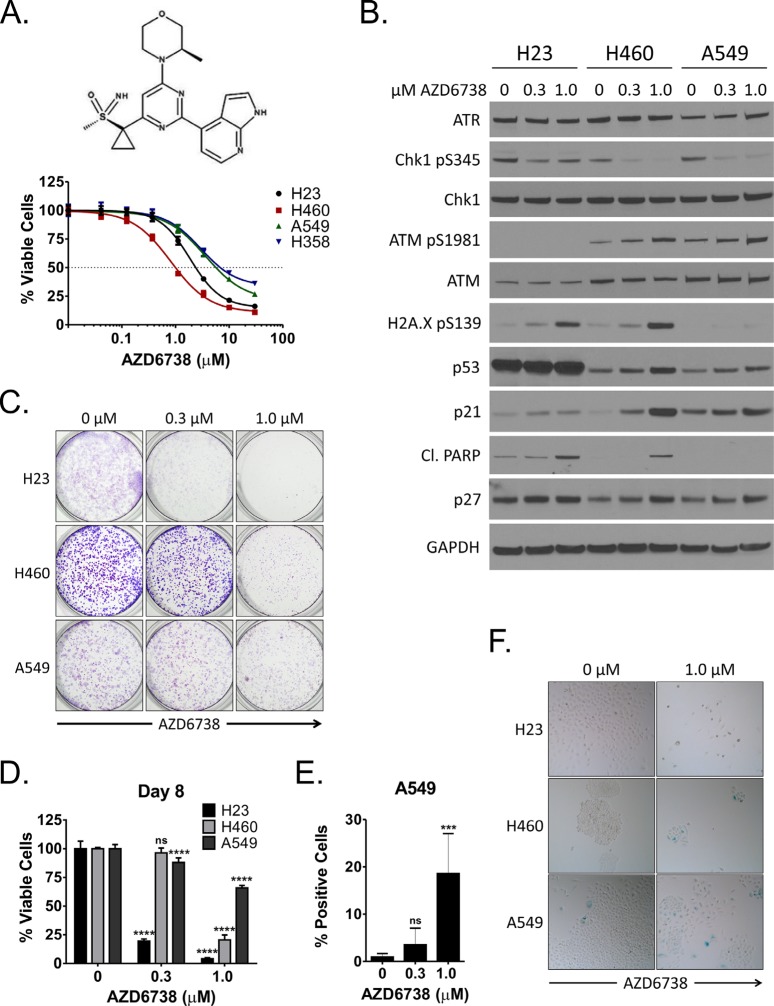
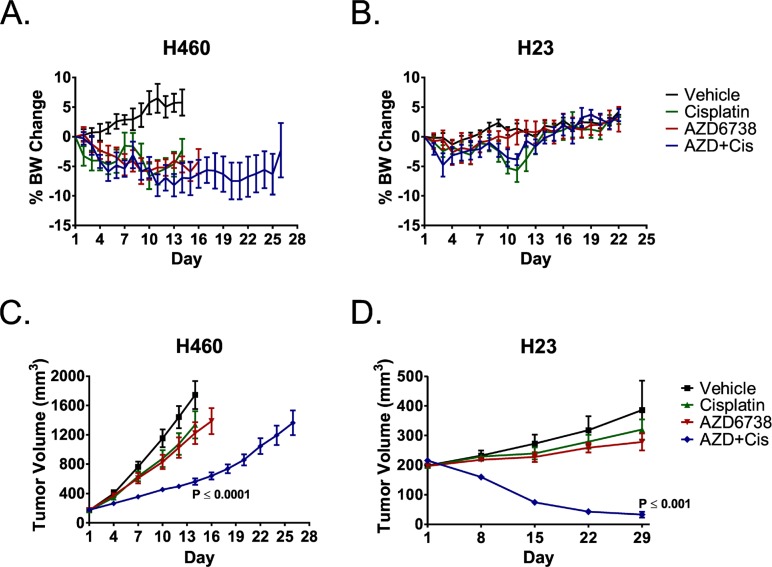
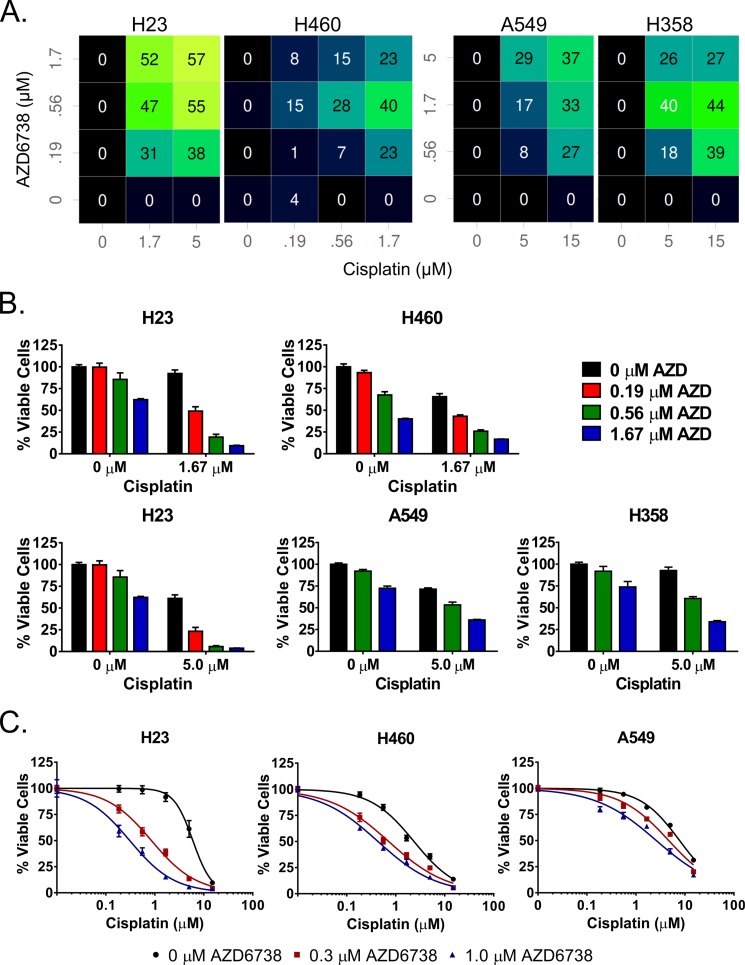
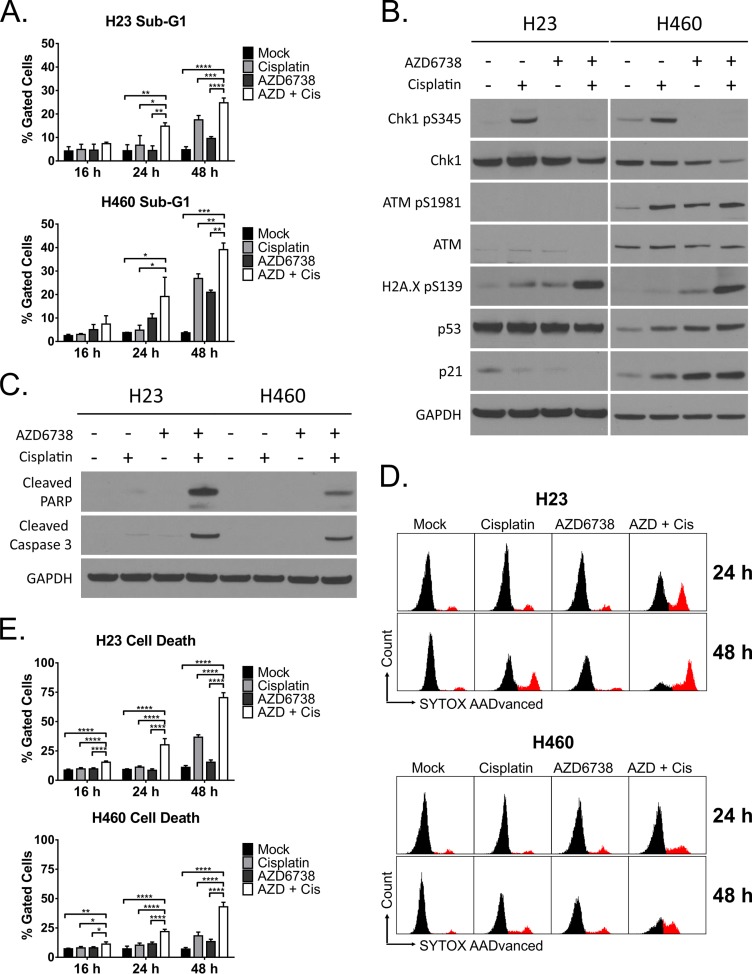
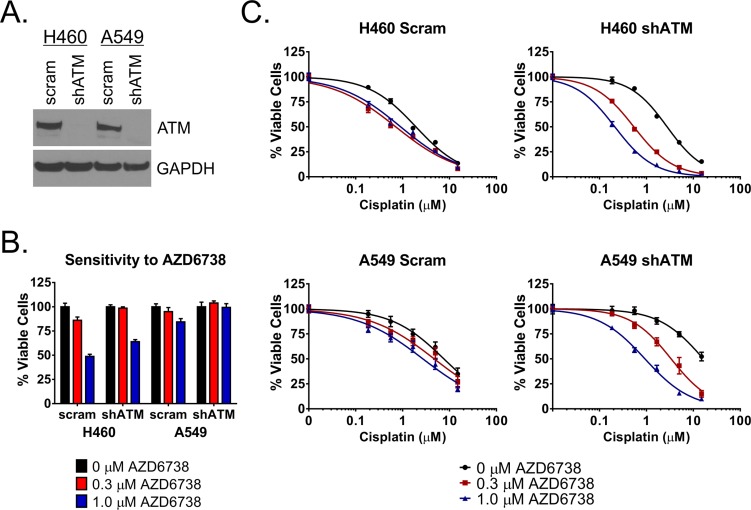
ATR and ATM are DNA damage signaling kinases that phosphorylate several thousand substrates. ATR kinase activity is increased at damaged replication forks and resected DNA double-strand breaks (DSBs). ATM kinase activity is increased at DSBs. ATM has been widely studied since ataxia telangiectasia individuals who express no ATM protein are the most radiosensitive patients identified. Since ATM is not an essential protein, it is widely believed that ATM kinase inhibitors will be well-tolerated in the clinic. ATR has been widely studied, but advances have been complicated by the finding that ATR is an essential protein and it is widely believed that ATR kinase inhibitors will be toxic in the clinic. We describe AZD6738, an orally active and bioavailable ATR kinase inhibitor. AZD6738 induces cell death and senescence in non-small cell lung cancer (NSCLC) cell lines. AZD6738 potentiates the cytotoxicity of cisplatin and gemcitabine in NSCLC cell lines with intact ATM kinase signaling, and potently synergizes with cisplatin in ATM-deficient NSCLC cells. In contrast to expectations, daily administration of AZD6738 and ATR kinase inhibition for 14 consecutive days is tolerated in mice and enhances the therapeutic efficacy of cisplatin in xenograft models. Remarkably, the combination of cisplatin and AZD6738 resolves ATM-deficient lung cancer xenografts.
ATR和ATM是DNA损伤信号激酶,可磷酸化数千种底物。在受损的复制叉和经切除的DNA双链断裂(DSB)处,ATR激酶活性增加。在DSB处,ATM激酶活性增加。自共济失调毛细血管扩张症患者(这些患者不表达ATM蛋白,是已确定的对辐射最敏感的患者)以来,ATM已得到广泛研究。由于ATM不是必需蛋白,人们普遍认为ATM激酶抑制剂在临床上会有良好的耐受性。ATR也已得到广泛研究,但由于发现ATR是一种必需蛋白,研究进展变得复杂,人们普遍认为ATR激酶抑制剂在临床上会有毒性。我们描述了AZD6738,一种口服活性且具有生物利用度的ATR激酶抑制剂。AZD6738可诱导非小细胞肺癌(NSCLC)细胞系发生细胞死亡和衰老。在具有完整ATM激酶信号传导的NSCLC细胞系中,AZD6738可增强顺铂和吉西他滨的细胞毒性,并且在ATM缺陷的NSCLC细胞中与顺铂具有强大的协同作用。与预期相反,在小鼠中连续14天每日给予AZD6738并抑制ATR激酶是可以耐受的,并且可增强异种移植模型中顺铂的治疗效果。值得注意的是,顺铂与AZD6738的联合使用可消除ATM缺陷的肺癌异种移植物。