Maynard Janielle P, Lee Ju-Seog, Sohn Bo Hwa, Yu Xiaoying, Lopez-Terrada Dolores, Finegold Milton J, Goss John A, Thevananther Sundararajah
Department of Pediatrics, Division of Gastroenterology, Hepatology and Nutrition, Texas Children's Liver Center, Houston, TX, USA.
Program in Translational Biology and Molecular Medicine, Baylor College of Medicine, Houston, TX, USA.
Oncotarget. 2015 Dec 1;6(38):41162-79. doi: 10.18632/oncotarget.6240.
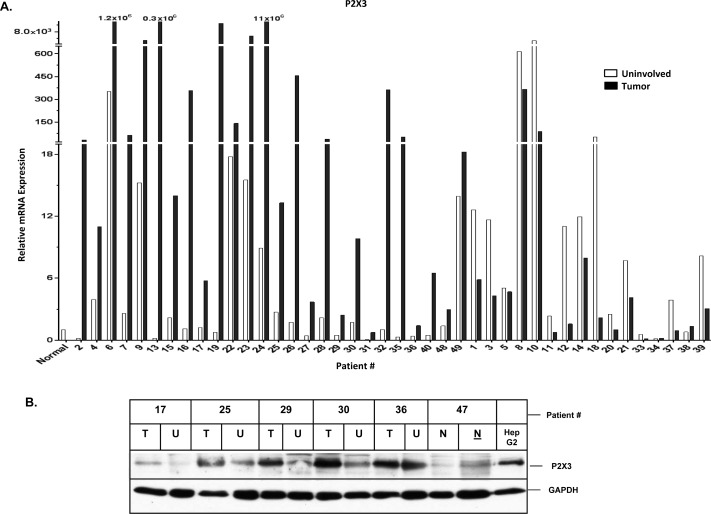
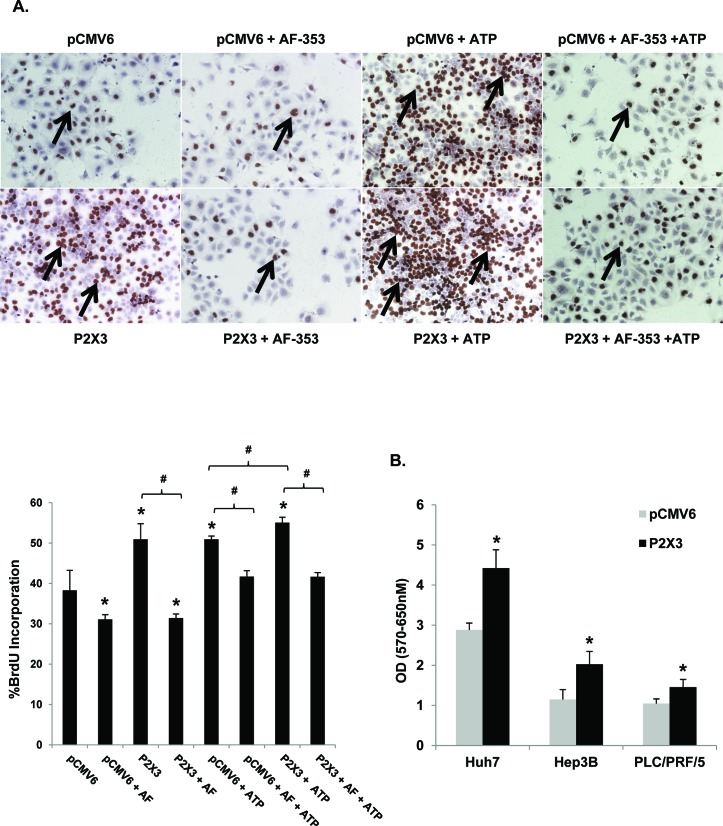
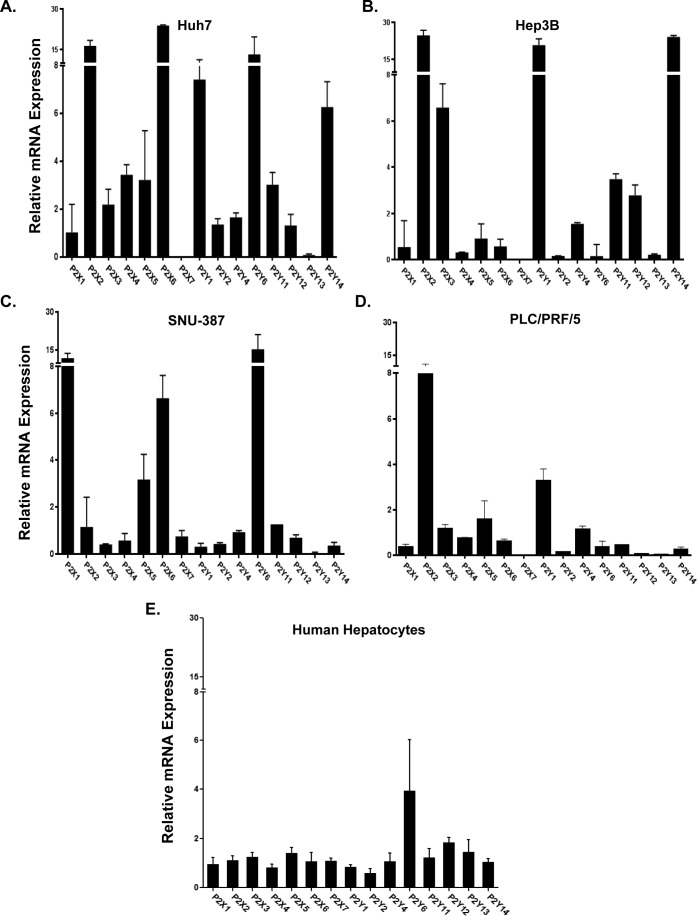
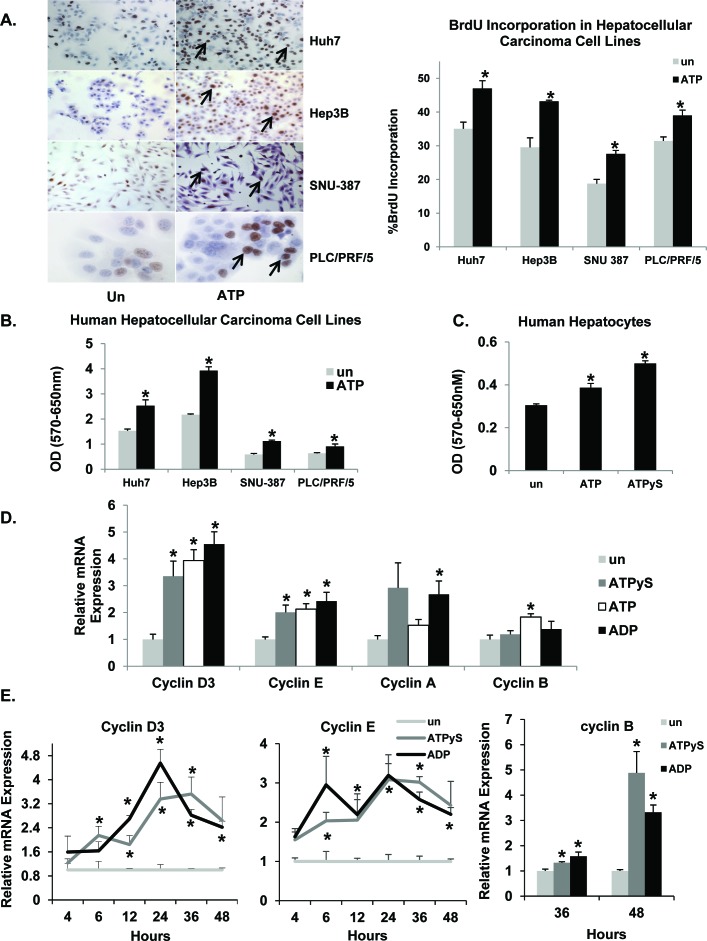
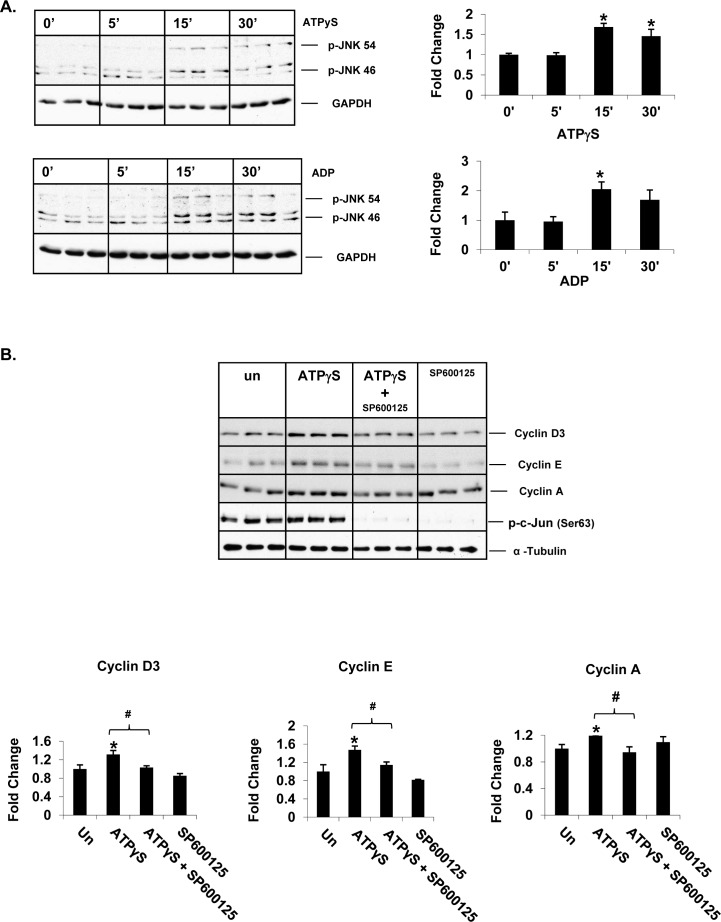
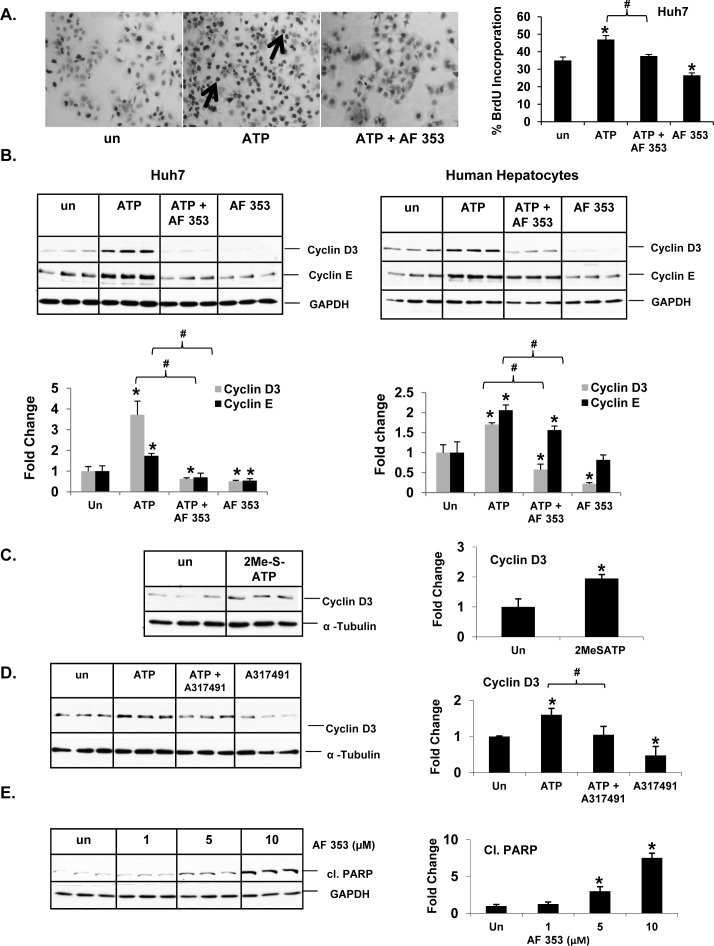
P2 purinergic receptors are overexpressed in certain cancer tissues, but the pathophysiologic relevance of purinergic signaling in hepatocellular carcinoma (HCC) remains unknown. To examine the role of P2 purinergic signaling in the pathogenesis of HCC and characterize extracellular nucleotide effects on HCC cell proliferation, two independent HCC patient cohorts were analyzed for P2 purinergic receptor expression, and nucleotide treated HCC cell lines were evaluated for effects on proliferation and cell cycle progression. Our studies suggest that multiple P2 purinergic receptor isoforms are overexpressed in liver tumors, as compared to uninvolved liver, and dysregulation of P2 purinergic receptor expression is apparent in HCC cell lines, as compared to human primary hepatocytes. High P2X3 purinergic receptor expression is associated with poor recurrence-free survival (RFS), while high P2Y13 expression is associated with improved RFS. Extracellular nucleotide treatment alone is sufficient to induce cell cycle progression, via activation of JNK signaling, and extracellular ATP-mediated activation of P2X3 receptors promotes proliferation in HCC cells.
Our analysis of HCC patient livers and HCC cells in vitro identifies a novel role for dysregulation of P2 purinergic signaling in the induction of hyper-proliferative HCC phenotype and identifies P2X3 purinergic receptors as potential new targets for therapy.
P2嘌呤能受体在某些癌组织中过表达,但嘌呤能信号传导在肝细胞癌(HCC)中的病理生理相关性仍不清楚。为了研究P2嘌呤能信号传导在HCC发病机制中的作用,并确定细胞外核苷酸对HCC细胞增殖的影响,分析了两个独立的HCC患者队列的P2嘌呤能受体表达情况,并评估了核苷酸处理的HCC细胞系对增殖和细胞周期进程的影响。我们的研究表明,与未受累肝脏相比,多种P2嘌呤能受体亚型在肝肿瘤中过表达,与人类原代肝细胞相比,P2嘌呤能受体表达失调在HCC细胞系中很明显。高P2X3嘌呤能受体表达与无复发生存期(RFS)差相关,而高P2Y13表达与改善的RFS相关。单独的细胞外核苷酸处理足以通过激活JNK信号传导诱导细胞周期进程,并且细胞外ATP介导的P2X3受体激活促进HCC细胞增殖。
我们对HCC患者肝脏和体外HCC细胞的分析确定了P2嘌呤能信号传导失调在诱导高增殖性HCC表型中的新作用,并确定P2X3嘌呤能受体为潜在的新治疗靶点。