Fourrier Mickael, Lester Katherine, Markussen Turhan, Falk Knut, Secombes Christopher J, McBeath Alastair, Collet Bertrand
Aquaculture and Fish Health, Marine Scotland Science, Aberdeen, United Kingdom.
Epidemiology, Norwegian Veterinary Institute, Oslo, Norway.
PLoS One. 2015 Oct 30;10(10):e0142020. doi: 10.1371/journal.pone.0142020. eCollection 2015.
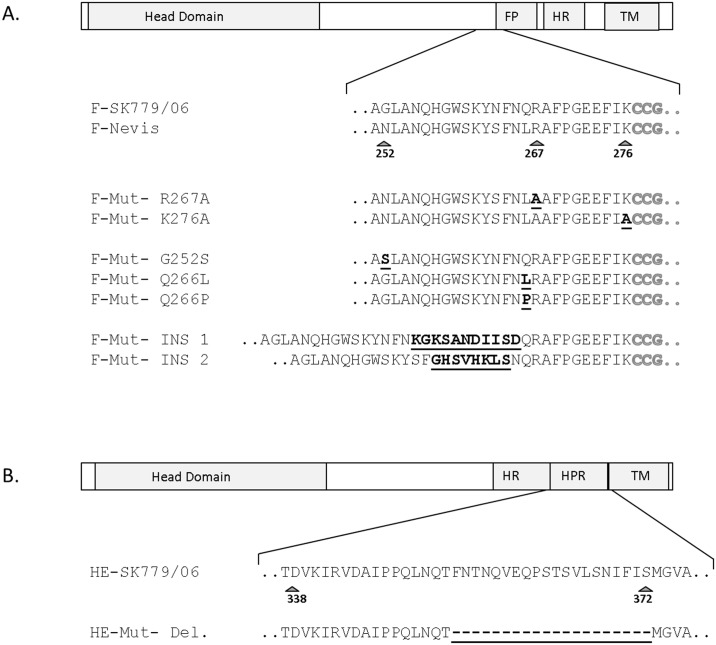
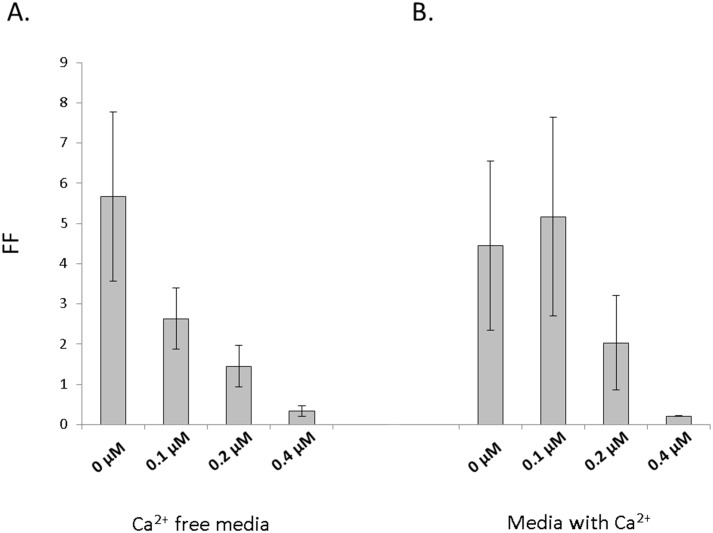
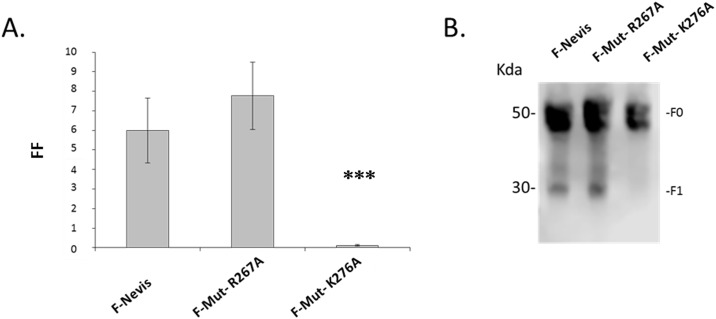
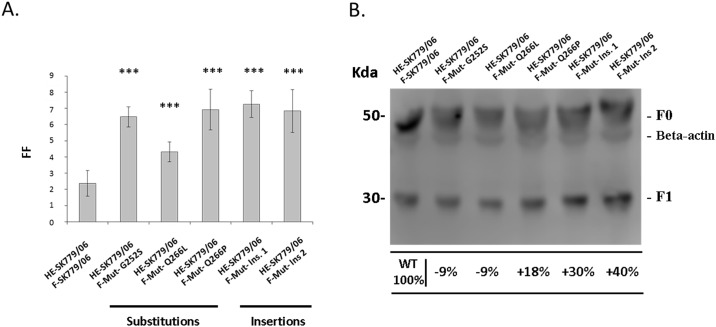
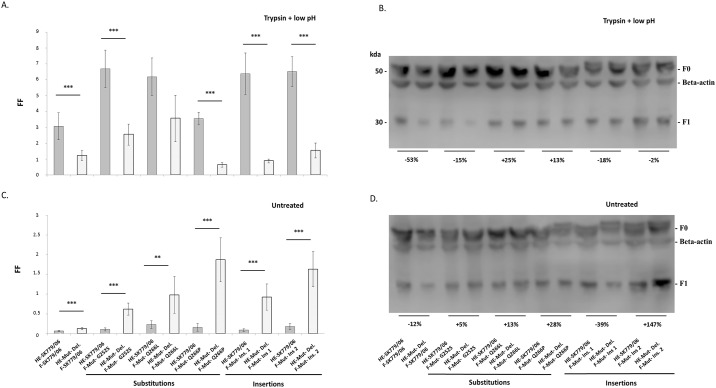
In Infectious salmon anaemia virus (ISAV), deletions in the highly polymorphic region (HPR) in the near membrane domain of the haemagglutinin-esterase (HE) stalk, influence viral fusion. It is suspected that selected mutations in the associated Fusion (F) protein may also be important in regulating fusion activity. To better understand the underlying mechanisms involved in ISAV fusion, several mutated F proteins were generated from the Scottish Nevis and Norwegian SK779/06 HPR0. Co-transfection with constructs encoding HE and F were performed, fusion activity assessed by content mixing assay and the degree of proteolytic cleavage by western blot. Substitutions in Nevis F demonstrated that K276 was the most likely cleavage site in the protein. Furthermore, amino acid substitutions at three sites and two insertions, all slightly upstream of K276, increased fusion activity. Co-expression with HE harbouring a full-length HPR produced high fusion activities when trypsin and low pH were applied. In comparison, under normal culture conditions, groups containing a mutated HE with an HPR deletion were able to generate moderate fusion levels, while those with a full length HPR HE could not induce fusion. This suggested that HPR length may influence how the HE primes the F protein and promotes fusion activation by an ubiquitous host protease and/or facilitate subsequent post-cleavage refolding steps. Variations in fusion activity through accumulated mutations on surface glycoproteins have also been reported in other orthomyxoviruses and paramyxoviruses. This may in part contribute to the different virulence and tissue tropism reported for HPR0 and HPR deleted ISAV genotypes.
在传染性鲑鱼贫血病毒(ISAV)中,血凝素酯酶(HE)柄部近膜结构域的高变区(HPR)缺失会影响病毒融合。据推测,相关融合(F)蛋白中的特定突变在调节融合活性方面可能也很重要。为了更好地理解ISAV融合所涉及的潜在机制,从苏格兰尼维斯株和挪威SK779/06 HPR0株中产生了几种突变的F蛋白。进行了编码HE和F的构建体的共转染,通过内容物混合试验评估融合活性,并通过蛋白质印迹法评估蛋白水解切割程度。尼维斯F株中的替代表明K276最有可能是该蛋白的切割位点。此外,在K276稍微上游的三个位点的氨基酸替代和两个插入增加了融合活性。当应用胰蛋白酶和低pH时,与含有全长HPR的HE共表达产生了高融合活性。相比之下,在正常培养条件下,含有HPR缺失突变HE的组能够产生中等融合水平,而含有全长HPR HE的组则不能诱导融合。这表明HPR长度可能影响HE如何引发F蛋白并通过普遍存在的宿主蛋白酶促进融合激活和/或促进后续切割后重折叠步骤。在其他正粘病毒和副粘病毒中也报道了表面糖蛋白上累积突变导致的融合活性变化。这可能部分解释了报道的HPR0和HPR缺失的ISAV基因型的不同毒力和组织嗜性。