Tremblay-Franco Marie, Cabaton Nicolas J, Canlet Cécile, Gautier Roselyne, Schaeberle Cheryl M, Jourdan Fabien, Sonnenschein Carlos, Vinson Florence, Soto Ana M, Zalko Daniel
UMR1331, TOXALIM, Research Centre in Food Toxicology, Institut National de la Recherche Agronomique, INRA, Université de Toulouse, Toulouse, France.
Department of Integrative Physiology & Pathobiology, Tufts University School of Medicine, Boston, Massachusetts, United States of America.
PLoS One. 2015 Oct 30;10(10):e0141698. doi: 10.1371/journal.pone.0141698. eCollection 2015.
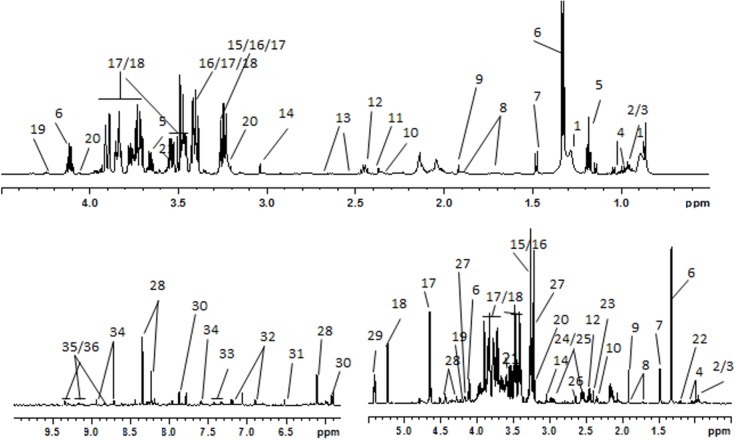
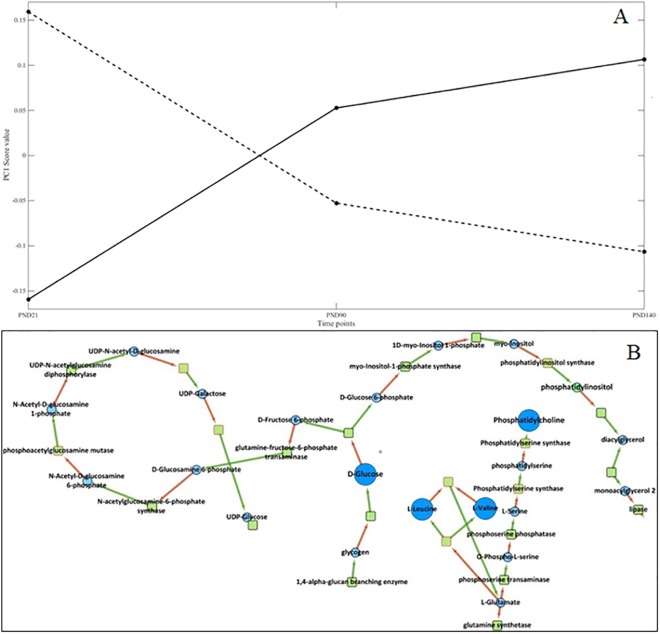
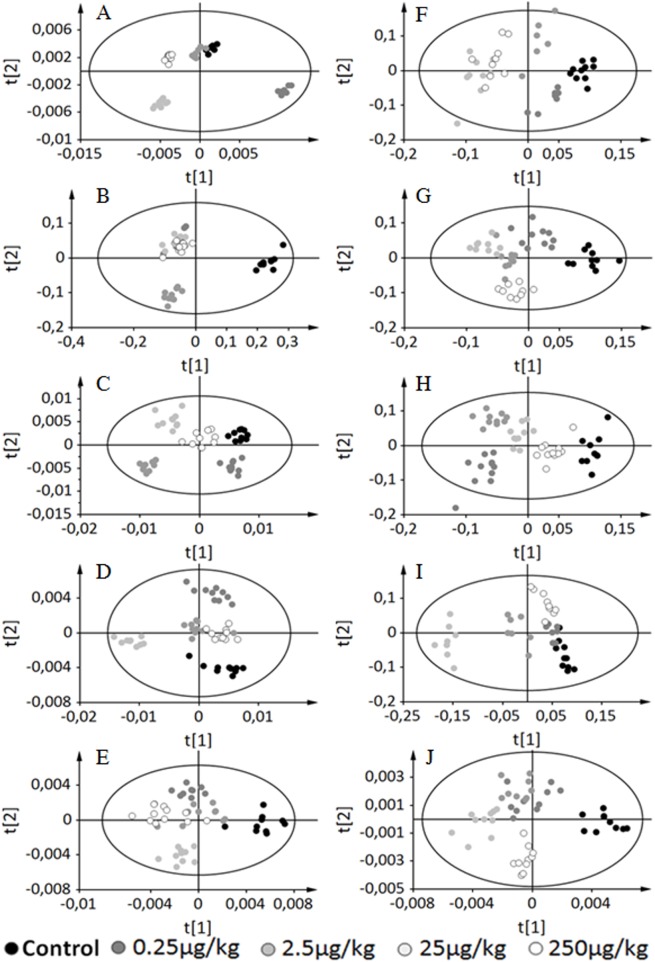
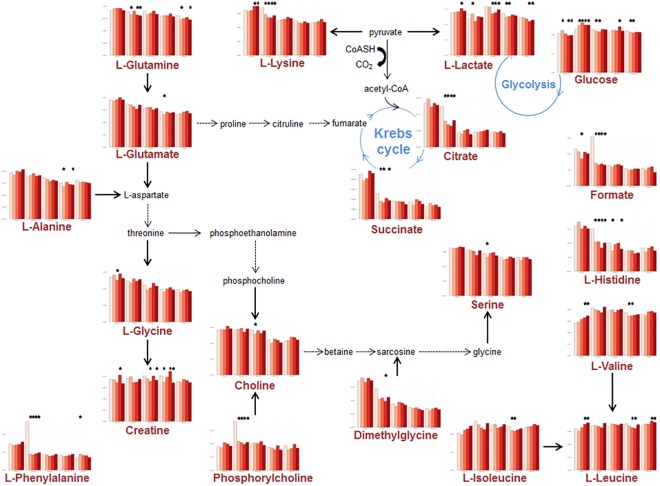
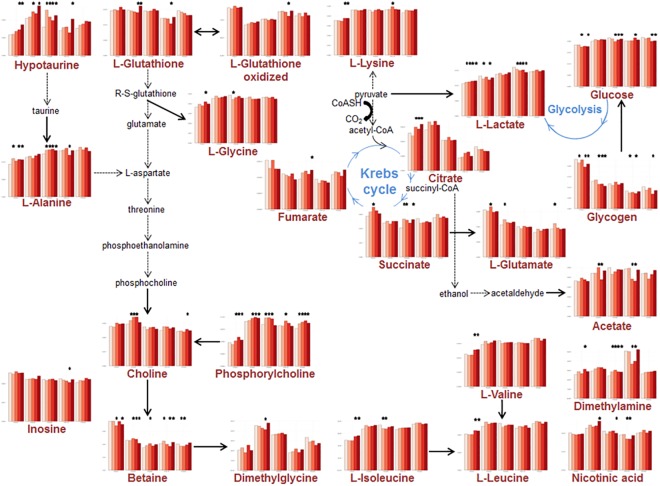
Along with the well-established effects on fertility and fecundity, perinatal exposure to endocrine disrupting chemicals, and notably to xeno-estrogens, is strongly suspected of modulating general metabolism. The metabolism of a perinatally exposed individual may be durably altered leading to a higher susceptibility of developing metabolic disorders such as obesity and diabetes; however, experimental designs involving the long term study of these dynamic changes in the metabolome raise novel challenges. 1H-NMR-based metabolomics was applied to study the effects of bisphenol-A (BPA, 0; 0.25; 2.5, 25 and 250 μg/kg BW/day) in rats exposed perinatally. Serum and liver samples of exposed animals were analyzed on days 21, 50, 90, 140 and 200 in order to explore whether maternal exposure to BPA alters metabolism. Partial Least Squares-Discriminant Analysis (PLS-DA) was independently applied to each time point, demonstrating a significant pair-wise discrimination for liver as well as serum samples at all time-points, and highlighting unequivocal metabolic shifts in rats perinatally exposed to BPA, including those exposed to lower doses. In BPA exposed animals, metabolism of glucose, lactate and fatty acids was modified over time. To further explore dynamic variation, ANOVA-Simultaneous Component Analysis (A-SCA) was used to separate data into blocks corresponding to the different sources of variation (Time, Dose and Time*Dose interaction). A-SCA enabled the demonstration of a dynamic, time/age dependent shift of serum metabolome throughout the rats' lifetimes. Variables responsible for the discrimination between groups clearly indicate that BPA modulates energy metabolism, and suggest alterations of neurotransmitter signaling, the latter finding being compatible with the neurodevelopmental effect of this xenoestrogen. In conclusion, long lasting metabolic effects of BPA could be characterized over 200 days, despite physiological (and thus metabolic) changes connected with sexual maturation and aging.
除了对生育能力和繁殖力有明确影响外,围产期接触内分泌干扰化学物质,尤其是外源性雌激素,被强烈怀疑会调节整体代谢。围产期接触这些物质的个体的新陈代谢可能会发生持久改变,导致患肥胖症和糖尿病等代谢紊乱的易感性增加;然而,涉及对代谢组这些动态变化进行长期研究的实验设计带来了新的挑战。基于1H-NMR的代谢组学被用于研究双酚A(BPA,剂量分别为0、0.25、2.5、25和250μg/kg体重/天)对围产期暴露大鼠的影响。为了探究母体接触BPA是否会改变新陈代谢,在出生后第21、50、90、140和200天对暴露动物的血清和肝脏样本进行了分析。偏最小二乘判别分析(PLS-DA)被独立应用于每个时间点,结果表明在所有时间点,肝脏和血清样本均存在显著的两两判别,突出显示了围产期暴露于BPA的大鼠,包括低剂量暴露组,存在明确的代谢变化。在暴露于BPA的动物中,葡萄糖、乳酸和脂肪酸的代谢随时间发生了改变。为了进一步探究动态变化,采用方差分析-同步成分分析(A-SCA)将数据分离为对应于不同变异来源(时间、剂量和时间*剂量相互作用)的组块。A-SCA能够证明血清代谢组在大鼠整个生命周期中呈现动态、时间/年龄依赖性变化。导致组间判别的变量清楚地表明,BPA调节能量代谢,并提示神经递质信号传导发生改变,后一发现与这种外源性雌激素的神经发育效应相符。总之,尽管存在与性成熟和衰老相关的生理(进而代谢)变化,但BPA的长期代谢效应在200天内仍可被表征。