Young Gavin M, Radhakrishnan Vijayababu M, Centuori Sara M, Gomes Cecil J, Martinez Jesse D
Undergraduate Biomedical Research Program, University of Arizona Cancer Center, 1515 N. Campbell Ave, Tucson, 85724, Arizona, USA.
Department of Pediatrics, Steele Children's Research Center, University of Arizona Cancer Center, 1515 N. Campbell Ave, Tucson, 85724, Arizona, USA.
BMC Cancer. 2015 Oct 30;15:826. doi: 10.1186/s12885-015-1856-y.
The 14-3-3 family is a group of intracellular proteins found in all eukaryotic organisms. Humans have seven isoforms that serve as scaffolds to promote interactions of regulatory phospho-proteins involved in many vital cellular processes and previous studies have shown that disturbances in native 14-3-3 levels can contribute significantly to the development of various cancers.
DNA and RNA was extracted from frozen tissue samples collected by the Human Cooperative Tissue Network. RNA samples were reverse transcribed and subjected to qRT-PCR analysis using fluorescently labelled probes. Genomic DNA was treated with bisulfite and cloned into bacterial vectors for subsequent high-resolution sequencing. Mammalian NIH3T3 cells were transformed with 14-3-3 eta and Ras expression vectors synthesized from cDNA. Colonies were counted and transforming capability assessed after 21 days of growth. Cell lysates were analyzed by western blot to verify protein expression.
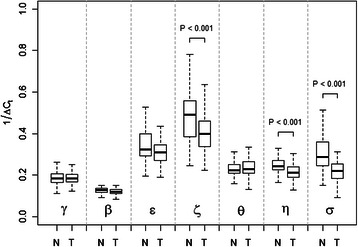
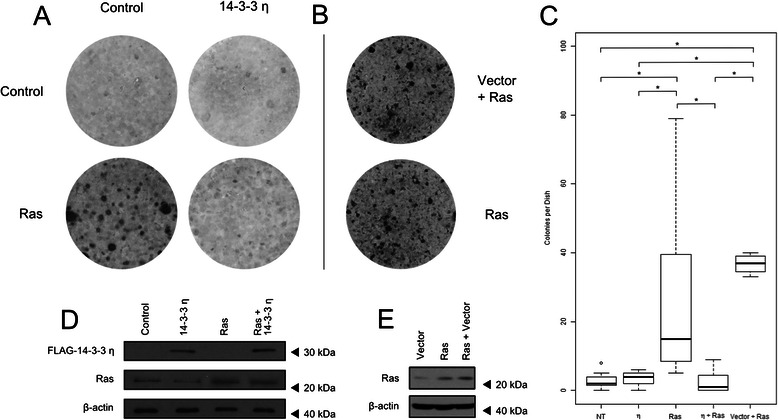
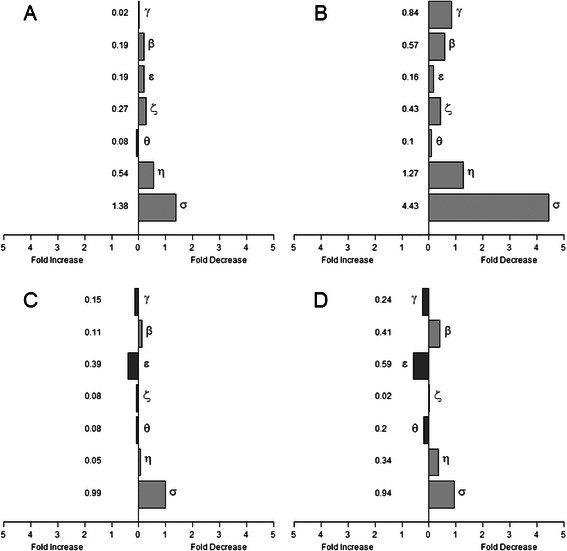
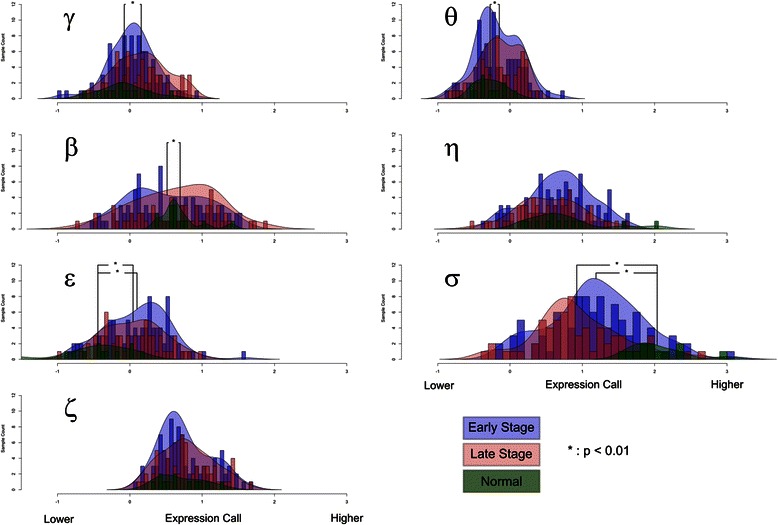
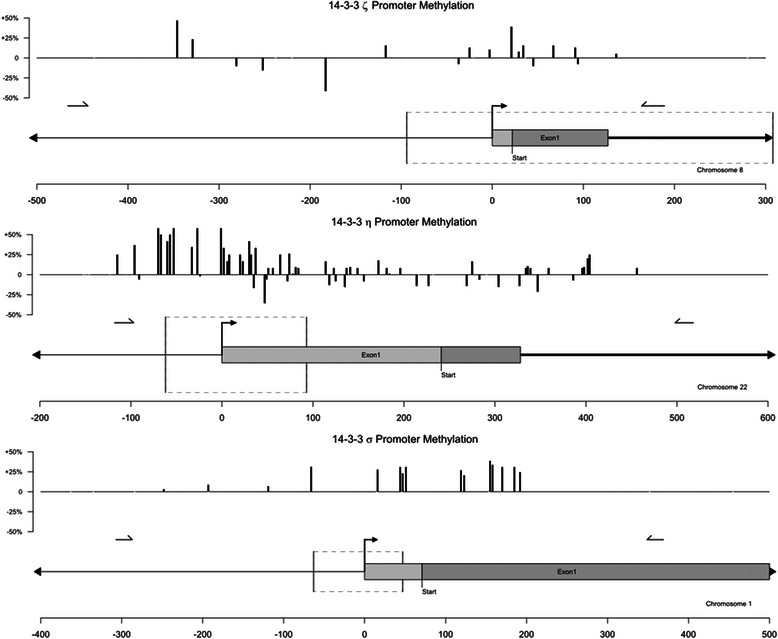
Here we examined normal and cancerous 14-3-3 expression levels of all seven isoforms in a cohort of sporadic colorectal adenocarcinomas and in a group of tumors and their matched normals using qRT-PCR analysis. We found a statistically significant decrease in the levels of 14-3-3 sigma, eta, and zeta observed among adenocarcinomas compared to normal tissue. A parallel analysis of microarray data from the TCGA dataset confirmed that expression of sigma and eta were down-regulated in colon tumors. To explore the mechanisms behind 14-3-3 expression changes, we examined the methylation status of the sigma, eta, and zeta gene promoters in selected samples. Our data identified novel CpG methylation sites in the eta promoter consistent with epigenetic silencing of both 14-3-3 sigma and eta isoforms during colon tumorigenesis. Because epigenetic silencing is the hallmark of a tumor suppressor we tested eta in focus formation assays and found that it is capable of suppressing ras-induced transformation of NIH3T3 cells.
To our knowledge, this is the first study to identify the 14-3-3 eta gene as a tumor suppressor and that its expression is suppressed in colon tumors by DNA hypermethylation. These data suggest a link between 14-3-3 expression levels and the development of colon cancers.
14-3-3蛋白家族是一类在所有真核生物中均能找到的细胞内蛋白。人类有七种亚型,它们作为支架蛋白,促进参与许多重要细胞过程的调节性磷酸化蛋白之间的相互作用。先前的研究表明,天然14-3-3蛋白水平的紊乱会显著促进各种癌症的发展。
从人类合作组织网络收集的冷冻组织样本中提取DNA和RNA。RNA样本经逆转录后,使用荧光标记探针进行qRT-PCR分析。基因组DNA经亚硫酸氢盐处理后,克隆到细菌载体中用于后续的高分辨率测序。用从cDNA合成的14-3-3 eta和Ras表达载体转染哺乳动物NIH3T3细胞。生长21天后计数菌落并评估转化能力。通过蛋白质印迹分析细胞裂解物以验证蛋白表达。
在此,我们使用qRT-PCR分析,检测了一组散发性结直肠癌以及一组肿瘤及其配对正常组织中所有七种亚型的正常和癌组织中14-3-3蛋白的表达水平。我们发现,与正常组织相比,腺癌中14-3-3 sigma、eta和zeta的水平在统计学上显著降低。对来自TCGA数据集的微阵列数据进行的平行分析证实,sigma和eta在结肠肿瘤中的表达下调。为了探究14-3-3蛋白表达变化背后的机制,我们检测了选定样本中sigma、eta和zeta基因启动子的甲基化状态。我们的数据在eta启动子中鉴定出了新的CpG甲基化位点,这与结肠肿瘤发生过程中14-3-3 sigma和eta亚型的表观遗传沉默一致。由于表观遗传沉默是肿瘤抑制因子的标志,我们在集落形成试验中检测了eta,发现它能够抑制ras诱导的NIH3T3细胞转化。
据我们所知,这是第一项将14-3-3 eta基因鉴定为肿瘤抑制因子且其表达在结肠肿瘤中因DNA高甲基化而受到抑制的研究。这些数据表明14-3-3蛋白表达水平与结肠癌的发生之间存在联系。