Cova Marta, Rodrigues João A, Smith Terry K, Izquierdo Luis
ISGlobal, Barcelona Ctr. Int. Health Res. (CRESIB), Hospital Clínic, Universitat de Barcelona, Barcelona, Spain.
Instituto de Medicina Molecular, Faculdade de Medicina da Universidade de Lisboa, Av. Prof. Egas Moniz, Edificio Egas Moniz, 1649-028, Lisbon, Portugal.
Malar J. 2015 Oct 31;14:427. doi: 10.1186/s12936-015-0949-z.
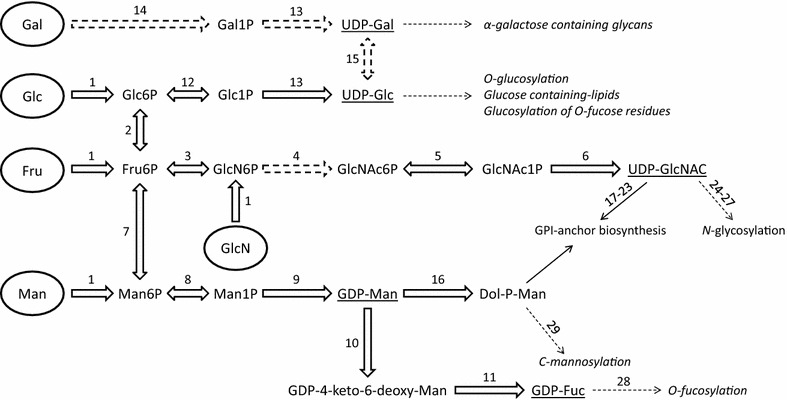
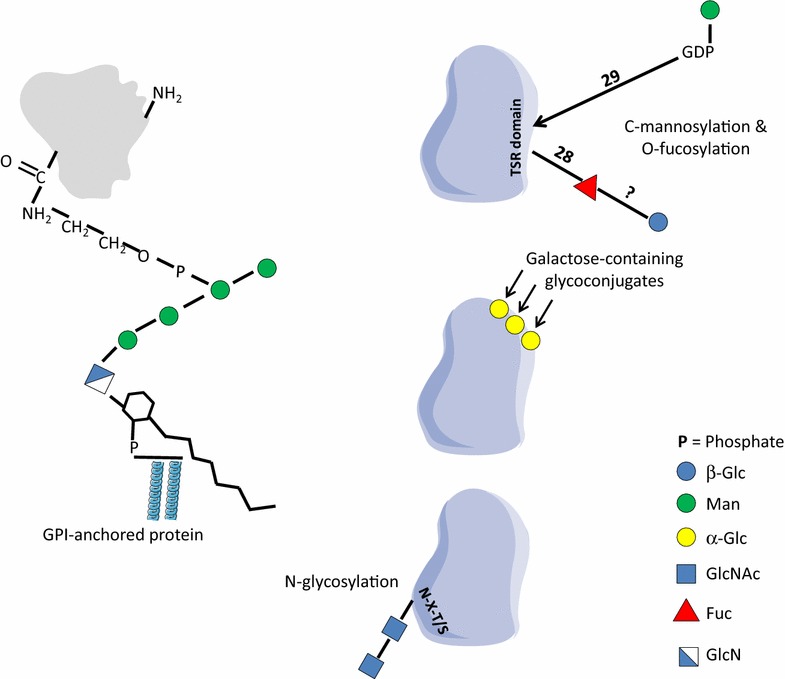
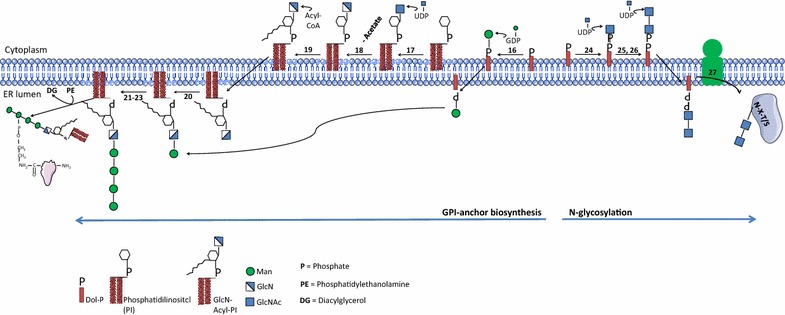
Glycoconjugates are important mediators of host-pathogen interactions and are usually very abundant in the surface of many protozoan parasites. However, in the particular case of Plasmodium species, previous works show that glycosylphosphatidylinositol anchor modifications, and to an unknown extent, a severely truncated N-glycosylation are the only glycosylation processes taking place in the parasite. Nevertheless, a detailed analysis of the parasite genome and the recent identification of the sugar nucleotide precursors biosynthesized by Plasmodium falciparum support a picture in which several overlooked, albeit not very prominent glycosylations may be occurring during the parasite life cycle. In this work, the authors review recent developments in the characterization of the biosynthesis of glycosylation precursors in the parasite, focusing on the outline of the possible fates of these precursors.
糖缀合物是宿主与病原体相互作用的重要介质,通常在许多原生动物寄生虫的表面大量存在。然而,就疟原虫属的特殊情况而言,先前的研究表明,糖基磷脂酰肌醇锚修饰以及程度未知的严重截短的N-糖基化是该寄生虫中仅有的糖基化过程。尽管如此,对寄生虫基因组的详细分析以及最近对恶性疟原虫生物合成的糖核苷酸前体的鉴定支持了这样一种情况,即在寄生虫生命周期中可能发生一些被忽视的、尽管不太显著的糖基化。在这项工作中,作者回顾了寄生虫中糖基化前体生物合成特征的最新进展,重点关注这些前体可能的去向概述。