Turqueti-Neves Adriana, Otte Manuel, Schwartz Christian, Schmitt Michaela Erika Renate, Lindner Cornelia, Pabst Oliver, Yu Philipp, Voehringer David
Department of Infection Biology, Institute for Clinical Microbiology, Immunology and Hygiene, University Hospital Erlangen and Friedrich-Alexander University Erlangen-Nuremberg, Erlangen, Germany.
Institute of Immunology, Hannover Medical School, Hannover, Germany.
PLoS Biol. 2015 Nov 2;13(11):e1002290. doi: 10.1371/journal.pbio.1002290. eCollection 2015.
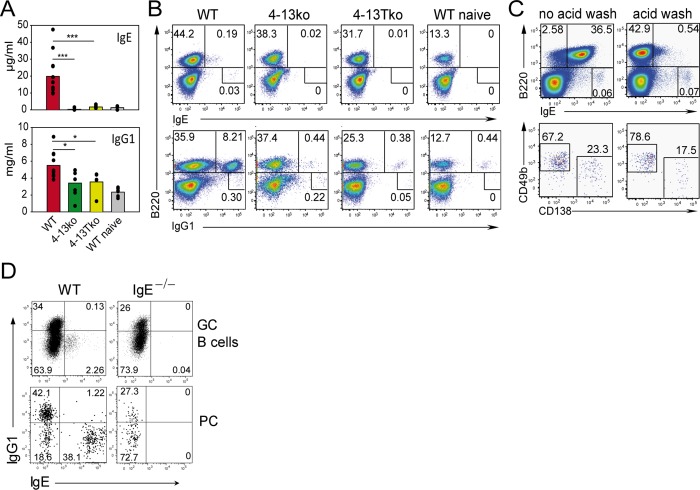
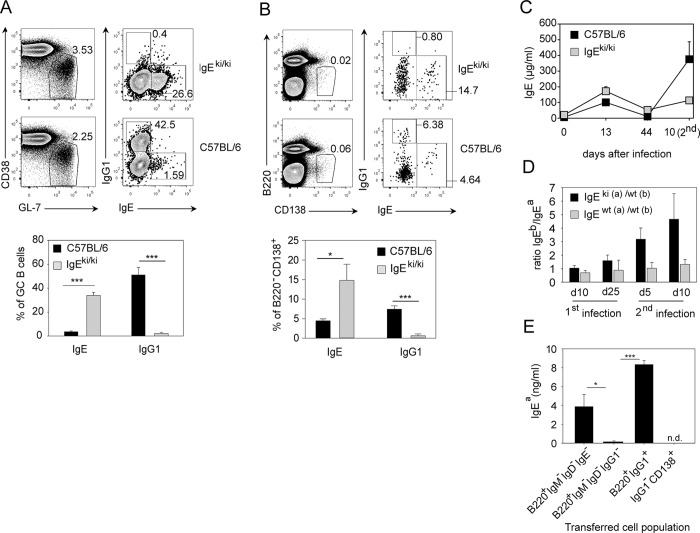
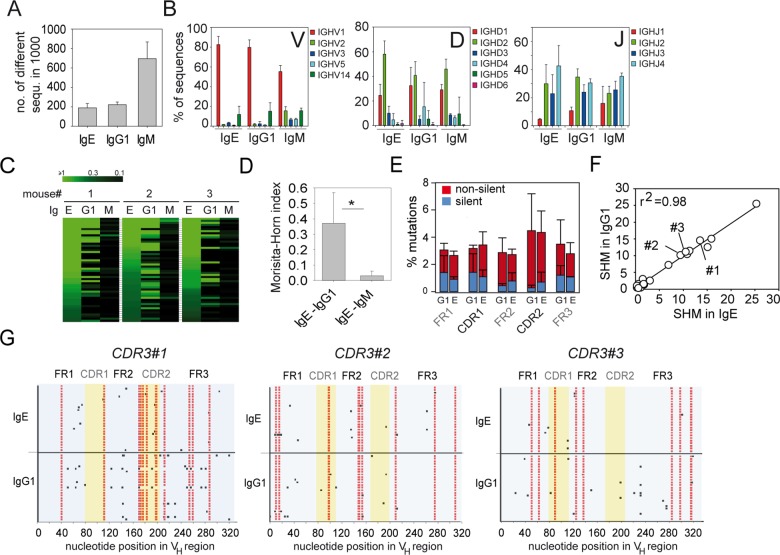
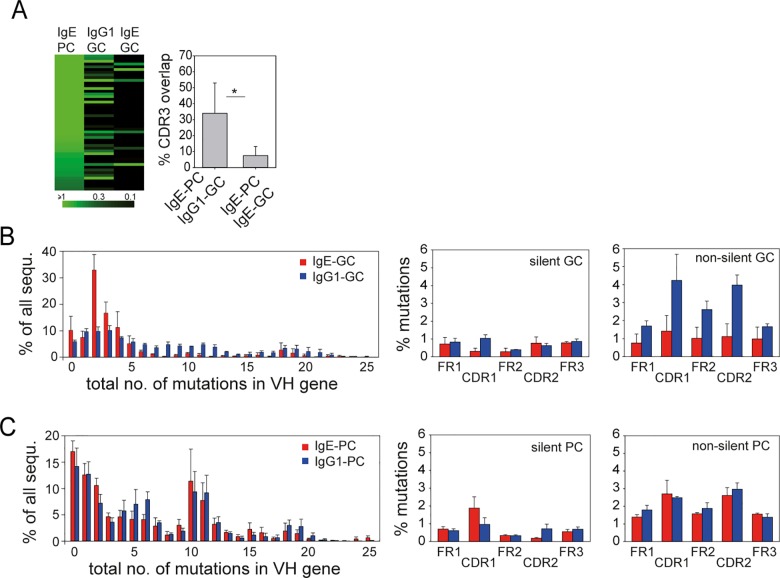
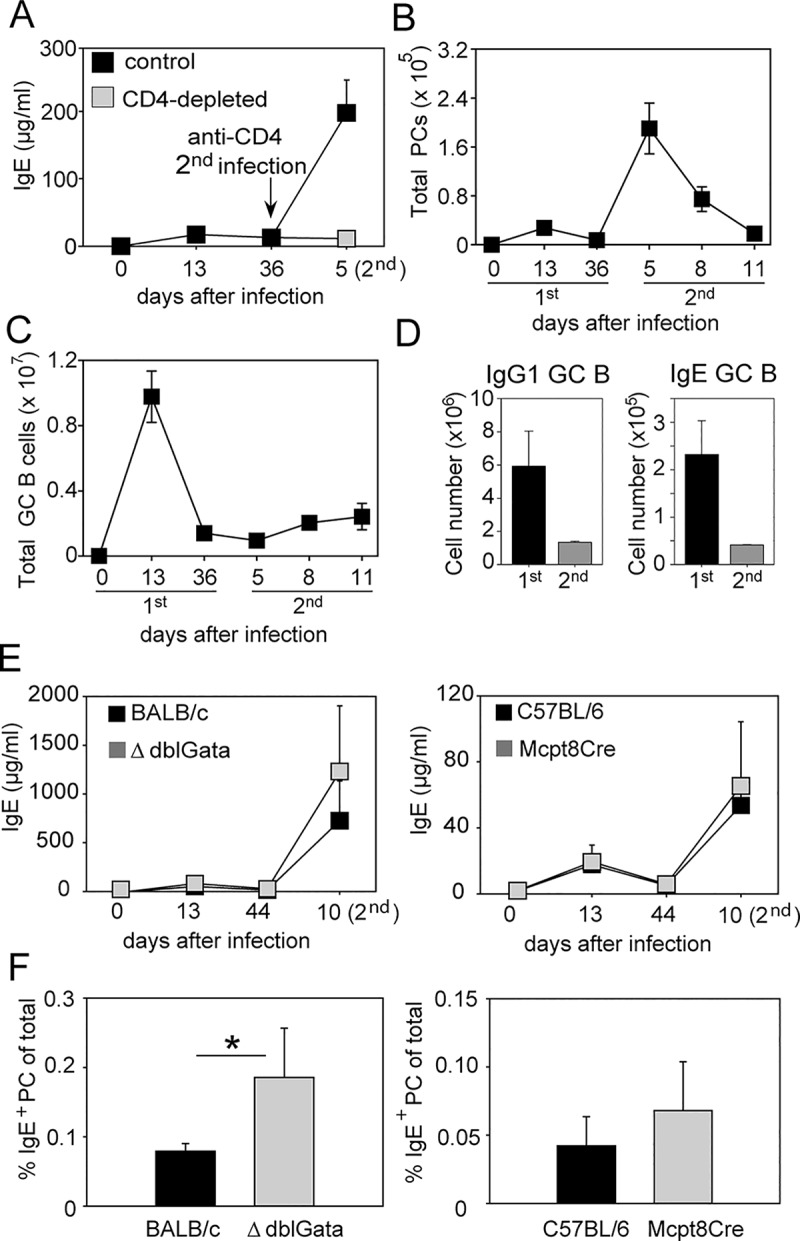
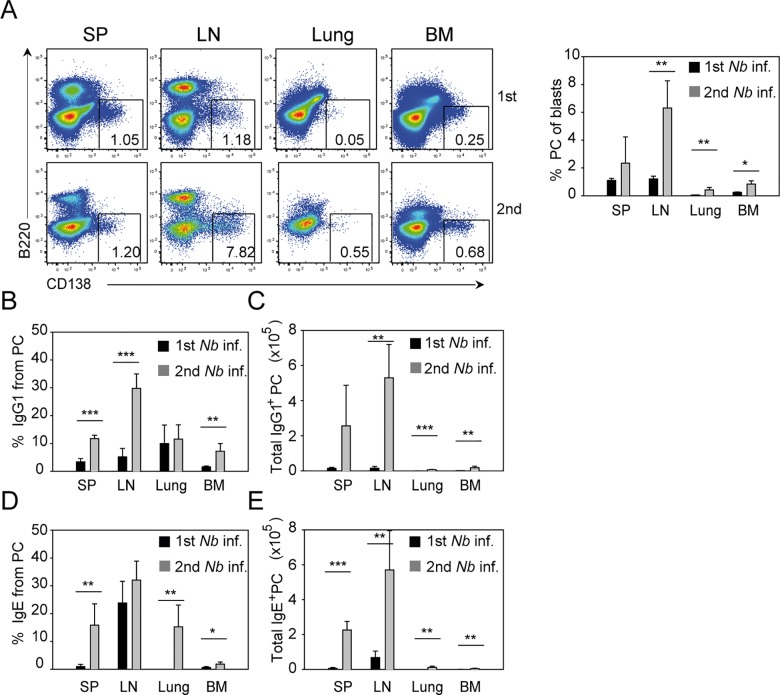
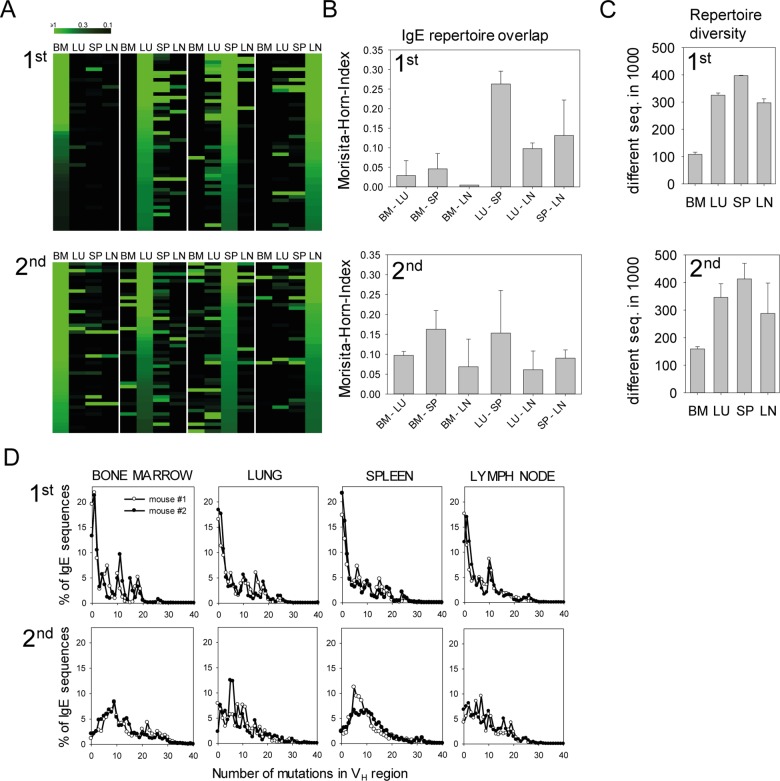
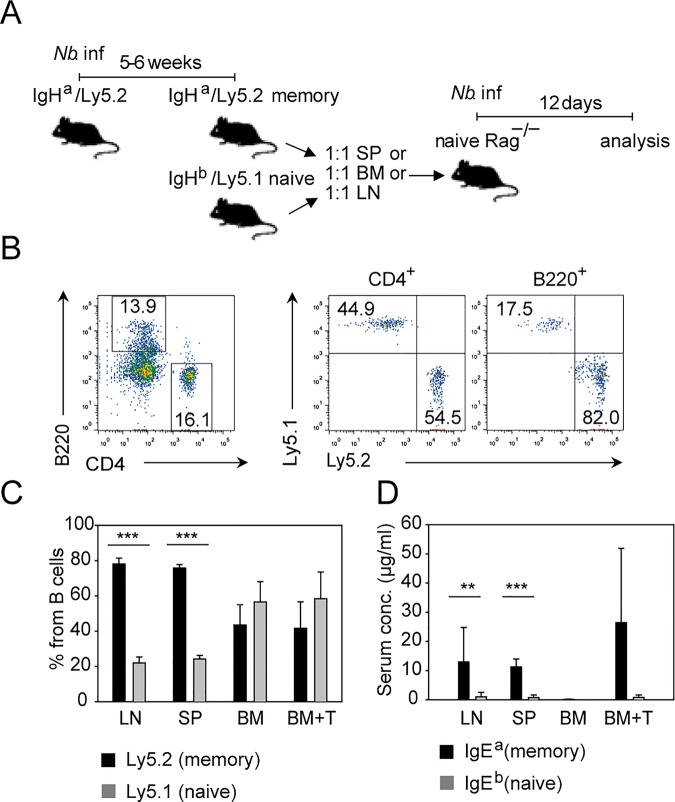
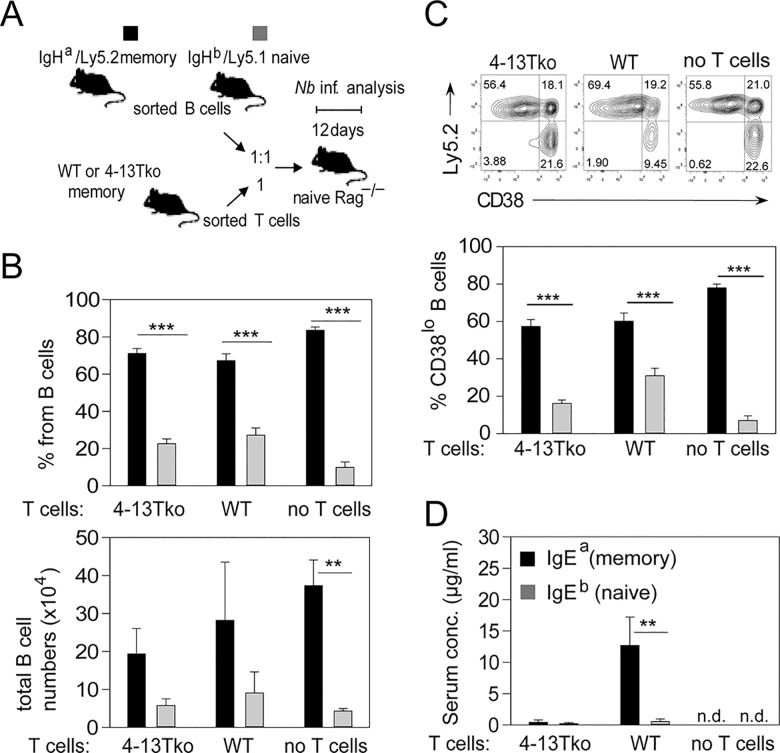
IgE-mediated activation of mast cells and basophils contributes to protective immunity against helminths but also causes allergic responses. The development and persistence of IgE responses are poorly understood, which is in part due to the low number of IgE-producing cells. Here, we used next generation sequencing to uncover a striking overlap between the IgE and IgG1 repertoires in helminth-infected or OVA/alum-immunized wild-type BALB/c mice. The memory IgE response after secondary infection induced a strong increase of IgE+ plasma cells in spleen and lymph nodes. In contrast, germinal center B cells did not increase during secondary infection. Unexpectedly, the memory IgE response was lost in mice where the extracellular part of IgG1 had been replaced with IgE sequences. Adoptive transfer studies revealed that IgG1+ B cells were required and sufficient to constitute the memory IgE response in recipient mice. T cell-derived IL-4/IL-13 was required for the memory IgE response but not for expansion of B cells from memory mice. Together, our results reveal a close relationship between the IgE and IgG1 repertoires in vivo and demonstrate that the memory IgE response is mainly conserved at the level of memory IgG1+ B cells. Therefore, targeting the generation and survival of allergen-specific IgG1+ B cells could lead to development of new therapeutic strategies to treat chronic allergic disorders.
IgE介导的肥大细胞和嗜碱性粒细胞活化有助于针对蠕虫的保护性免疫,但也会引发过敏反应。人们对IgE反应的发生和持续存在了解甚少,部分原因是产生IgE的细胞数量较少。在这里,我们使用下一代测序技术,发现在感染蠕虫或经卵清蛋白/明矾免疫的野生型BALB/c小鼠中,IgE和IgG1库之间存在显著重叠。二次感染后的记忆性IgE反应导致脾脏和淋巴结中IgE+浆细胞大量增加。相比之下,生发中心B细胞在二次感染期间并未增加。出乎意料的是,在IgG1细胞外部分被IgE序列取代的小鼠中,记忆性IgE反应消失了。过继转移研究表明,IgG1+B细胞对于在受体小鼠中构成记忆性IgE反应是必需且足够的。记忆性IgE反应需要T细胞衍生的IL-4/IL-13,但对于来自记忆小鼠的B细胞扩增则不是必需的。总之,我们的结果揭示了体内IgE和IgG1库之间的密切关系,并表明记忆性IgE反应主要在记忆性IgG1+B细胞水平上得以保留。因此,针对过敏原特异性IgG1+B细胞的产生和存活进行靶向治疗,可能会带来治疗慢性过敏性疾病的新治疗策略。