Park Chul-Kee, Park Inho, Lee Seungmook, Sun Choong-Hyun, Koh Youngil, Park Sung-Hye, Kim Ja Eun, Yun Hongseok, Lee Se-Hoon
Department of Neurosurgery, Seoul National University Hospital, Seoul, Korea.
SD Genomics, Seoul, Korea.
Oncotarget. 2015 Dec 22;6(41):43653-66. doi: 10.18632/oncotarget.6189.
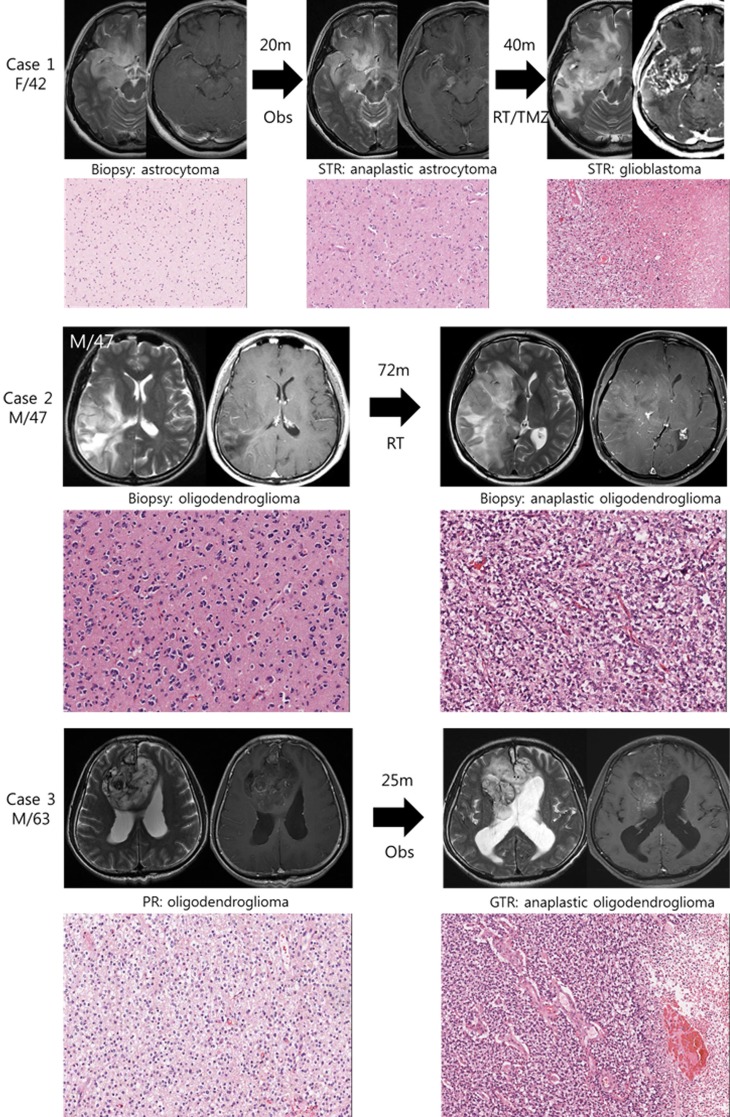
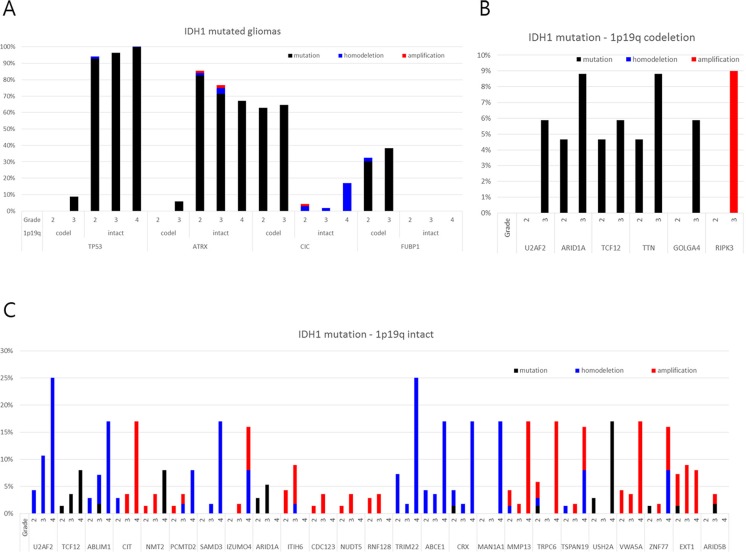
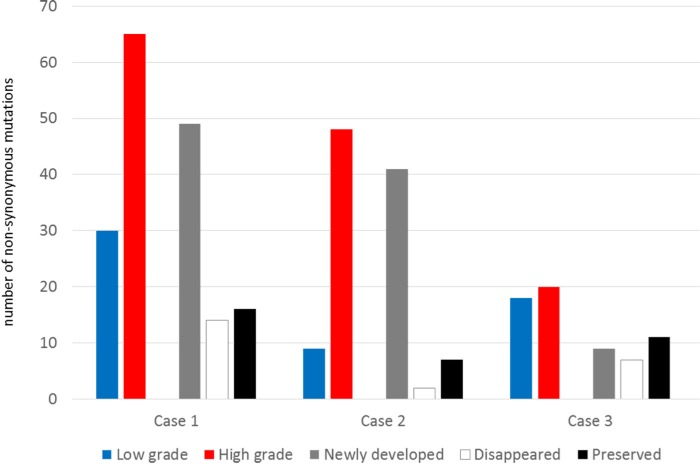
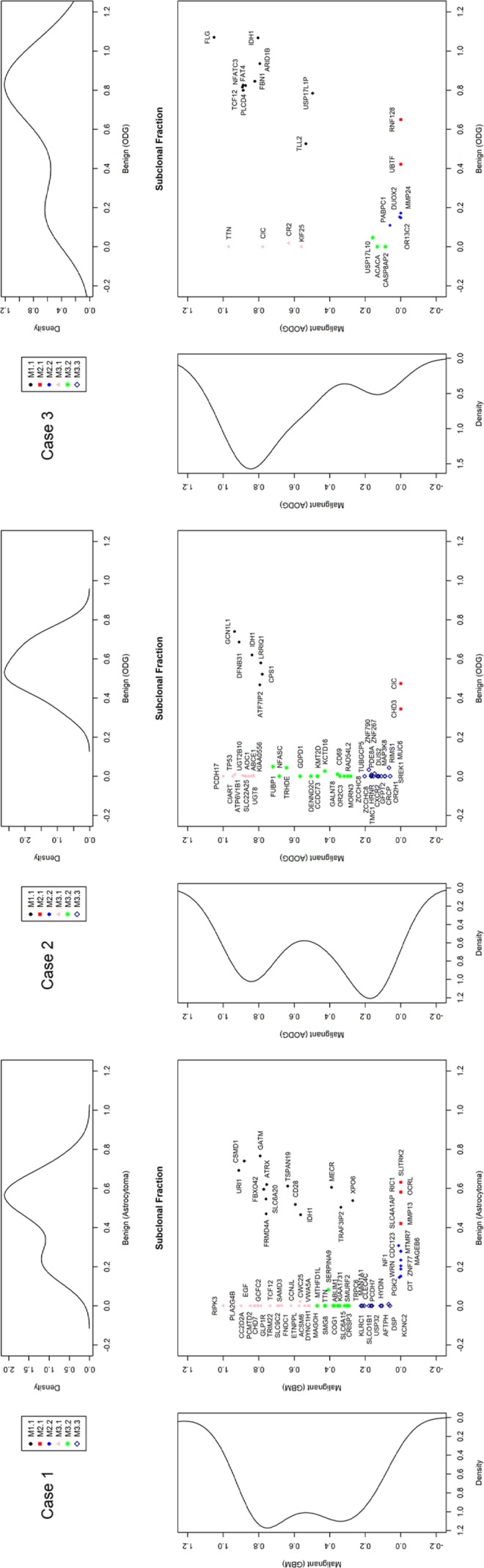
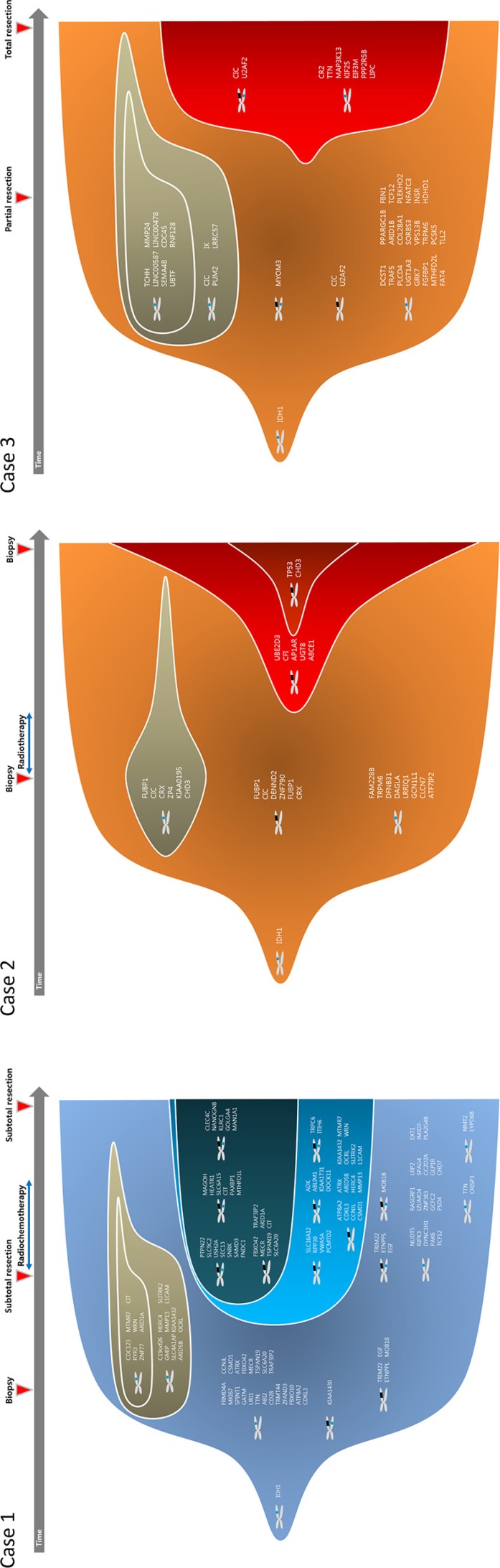
The genomic mechanism responsible for malignant transformation remains an open question for glioma researchers, where differing conclusions have been drawn based on diverse study conditions. Therefore, it is essential to secure direct evidence using longitudinal samples from the same patient. Moreover, malignant transformation of IDH1-mutated gliomas is of potential interest, as its genomic mechanism under influence of oncometabolite remains unclear, and even higher rate of malignant transformation was reported in IDH1-mutated low grade gliomas than in wild-type IDH1 tumors. We have analyzed genomic data using next-generation sequencing technology for longitudinal samples from 3 patients with IDH1-mutated gliomas whose disease had progressed from a low grade to a high grade phenotype. Comprehensive analysis included chromosomal aberrations as well as whole exome and transcriptome sequencing, and the candidate driver genes for malignant transformation were validated with public database. Integrated analysis of genomic dynamics in clonal evolution during the malignant transformation revealed alterations in the machinery regulating gene expression, including the spliceosome complex (U2AF2), transcription factors (TCF12), and chromatin remodelers (ARID1A). Moreover, consequential expression changes implied the activation of genes associated with the restoration of the stemness of cancer cells. The alterations in genetic regulatory mechanisms may be the key factor for the major phenotypic changes in IDH1 mutated gliomas. Despite being limited to a small number of cases, this analysis provides a direct example of the genomic changes responsible for malignant transformation in gliomas.
对胶质瘤研究人员来说,导致恶性转化的基因组机制仍是一个悬而未决的问题,基于不同的研究条件已得出了不同的结论。因此,使用同一患者的纵向样本获取直接证据至关重要。此外,异柠檬酸脱氢酶1(IDH1)突变型胶质瘤的恶性转化具有潜在研究价值,因为其在致癌代谢物影响下的基因组机制尚不清楚,而且据报道,IDH1突变型低级别胶质瘤的恶性转化率甚至高于野生型IDH1肿瘤。我们使用下一代测序技术分析了3例IDH1突变型胶质瘤患者纵向样本的基因组数据,这些患者的疾病已从低级别表型进展为高级别表型。综合分析包括染色体畸变以及全外显子组和转录组测序,并且利用公共数据库对恶性转化的候选驱动基因进行了验证。对恶性转化过程中克隆进化的基因组动态进行综合分析,揭示了调控基因表达的机制发生了改变,包括剪接体复合物(U2AF2)、转录因子(TCF12)和染色质重塑因子(ARID1A)。此外,相应的表达变化暗示了与癌细胞干性恢复相关的基因被激活。遗传调控机制的改变可能是IDH1突变型胶质瘤主要表型变化的关键因素。尽管本分析仅限于少数病例,但它为胶质瘤恶性转化所涉及的基因组变化提供了一个直接实例。