Eikeset Anne Maria, Richter Andries P, Dankel Dorothy J, Dunlop Erin S, Heino Mikko, Dieckmann Ulf, Stenseth Nils Chr
Centre for Ecological and Evolutionary Synthesis (CEES), Department of Biology, University of Oslo, P.O. Box 1066 Blindern, N-0316 Oslo, Norway.
Institute of Marine Research, P.O. Box 1870 Nordnes, N-5817 Bergen, Norway.
Mar Policy. 2013 May;39:172-181. doi: 10.1016/j.marpol.2012.10.020.
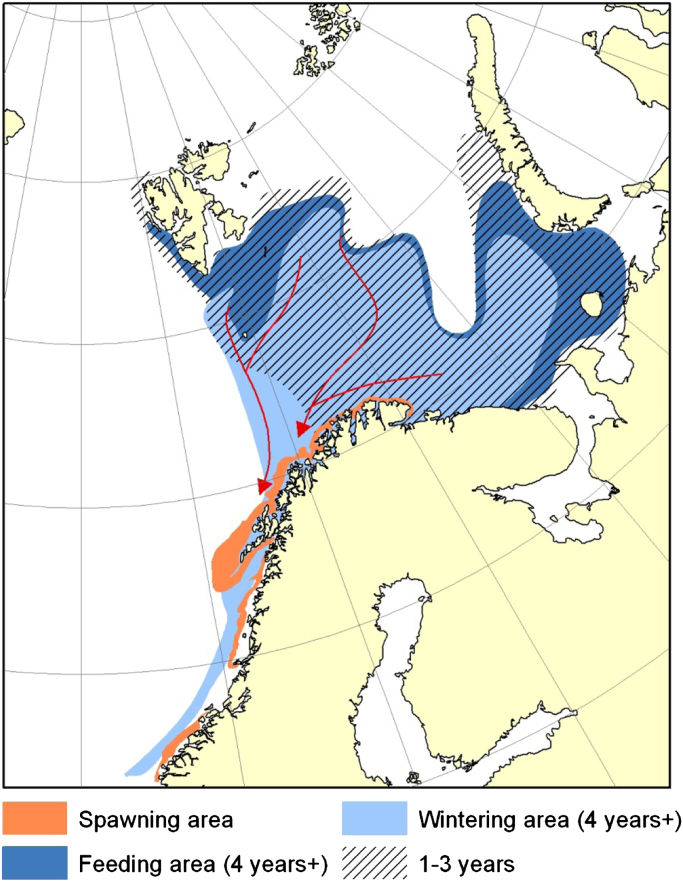
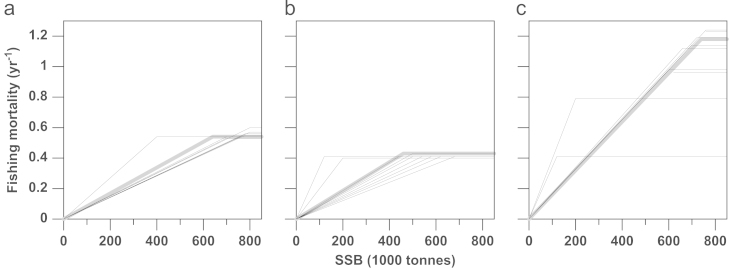
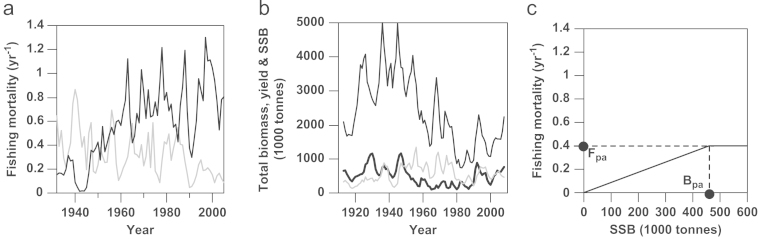
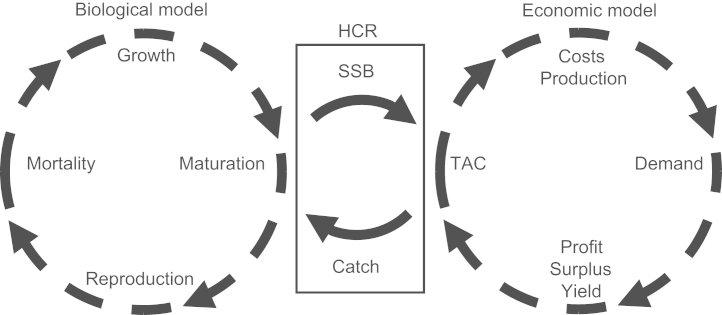
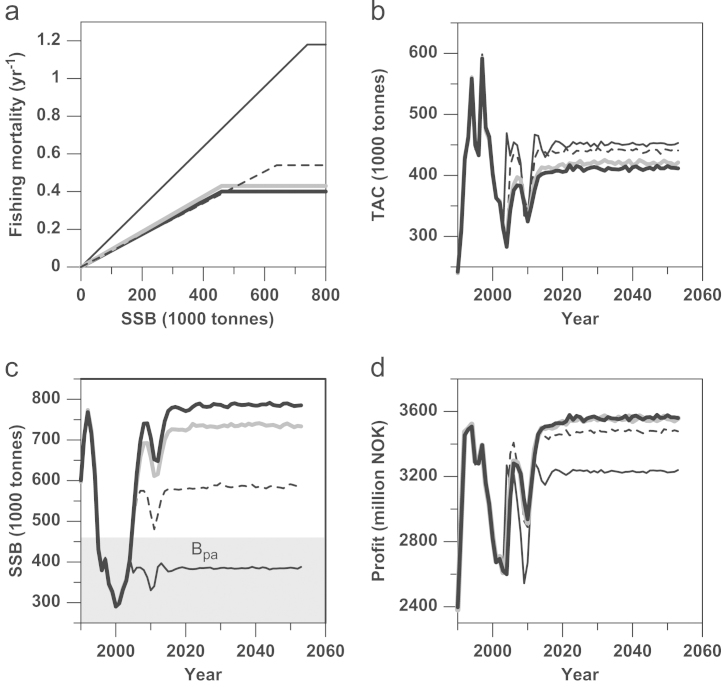
Harvest control rules (HCRs) have been implemented for many fisheries worldwide. However, in most instances, those HCRs are not based on the explicit feedbacks between stock properties and economic considerations. This paper develops a bio-economic model that evaluates the HCR adopted in 2004 by the Joint Norwegian-Russian Fishery Commission to manage the world's largest cod stock, Northeast Arctic cod (NEA). The model considered here is biologically and economically detailed, and is the first to compare the performance of the stock's current HCR with that of alternative HCRs derived with optimality criteria. In particular, HCRs are optimized for economic objectives including fleet profits, economic welfare, and total yield and the emerging properties are analyzed. The performance of these optimal HCRs was compared with the currently used HCR. This paper show that the current HCR does in fact comes very close to maximizing profits. Furthermore, the results reveal that the HCR that maximizes profits is the most precautionary one among the considered HCRs. Finally, the HCR that maximizes yield leads to un-precautionary low levels of biomass. In these ways, the implementation of the HCR for NEA cod can be viewed as a success story that may provide valuable lessons for other fisheries.
收获控制规则(HCRs)已在全球许多渔业中实施。然而,在大多数情况下,这些收获控制规则并非基于种群特性与经济考量之间的明确反馈。本文构建了一个生物经济模型,用以评估挪威 - 俄罗斯渔业联合委员会于2004年采用的收获控制规则,该规则用于管理世界上最大的鳕鱼种群——东北极鳕鱼(NEA)。此处所考虑的模型在生物学和经济方面都很详细,并且是首个将该种群当前收获控制规则的表现与基于最优标准推导得出的替代收获控制规则的表现进行比较的模型。具体而言,收获控制规则针对包括船队利润、经济福利和总产量在内的经济目标进行了优化,并对新出现的特性进行了分析。将这些最优收获控制规则的表现与当前使用的收获控制规则进行了比较。本文表明,当前的收获控制规则实际上非常接近利润最大化。此外,结果显示,在考虑的收获控制规则中,利润最大化的收获控制规则是最具预防性的。最后,产量最大化的收获控制规则导致生物量处于不具预防性的低水平。通过这些方式,东北极鳕鱼收获控制规则的实施可被视为一个成功案例,可能为其他渔业提供宝贵经验。