Wu Gusheng, Lu Zi-Hua, André Sabine, Gabius Hans-Joachim, Ledeen Robert W
Department of Pharmacology, Physiology & Neurosciences, Rutgers-The State University of New Jersey, New Jersey Medical School, Newark, New Jersey, USA.
Institut für Physiologische Chemie, Tierärztliche Fakultät, Ludwig-Maximilians-Universität, München, Germany.
J Neurochem. 2016 Feb;136(3):550-63. doi: 10.1111/jnc.13418. Epub 2015 Dec 28.
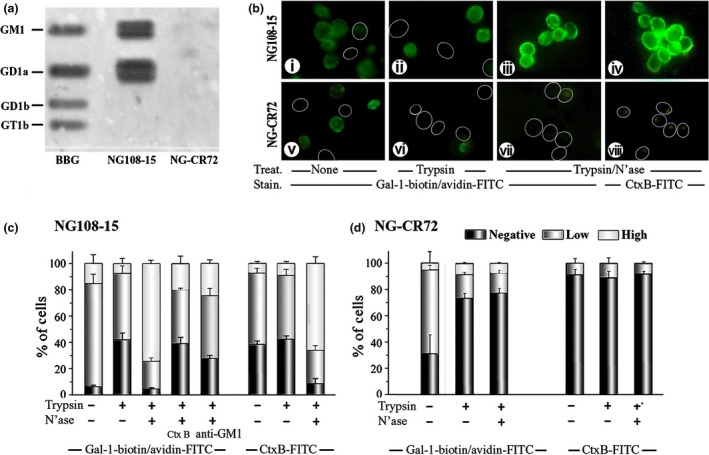
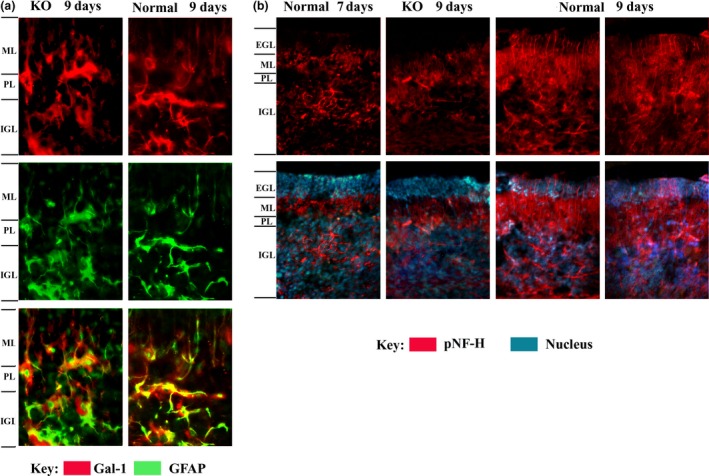
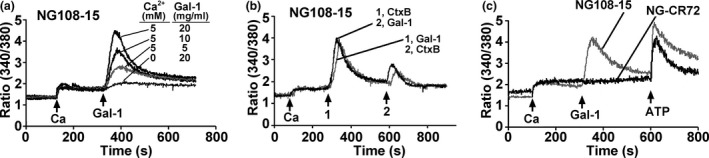
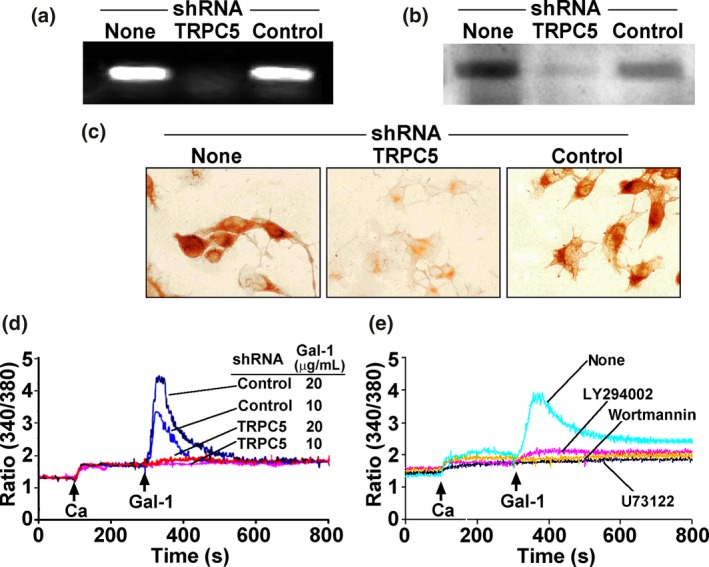
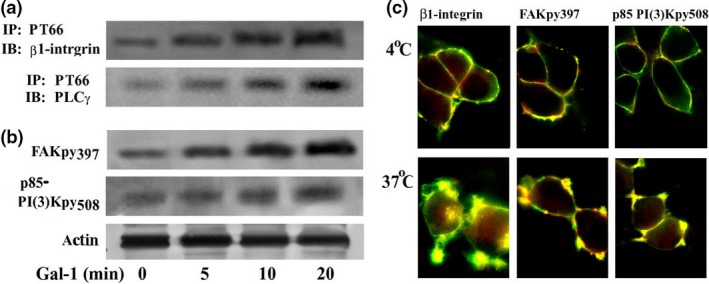
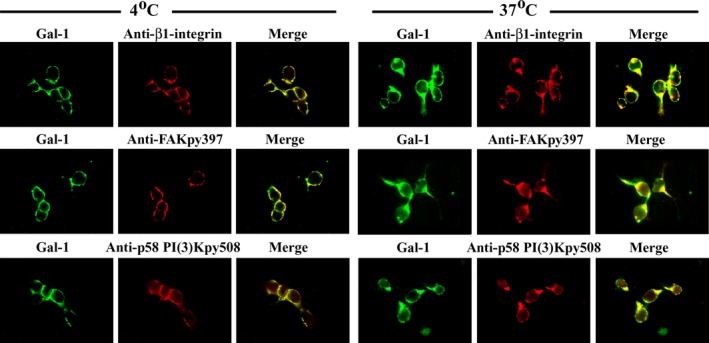
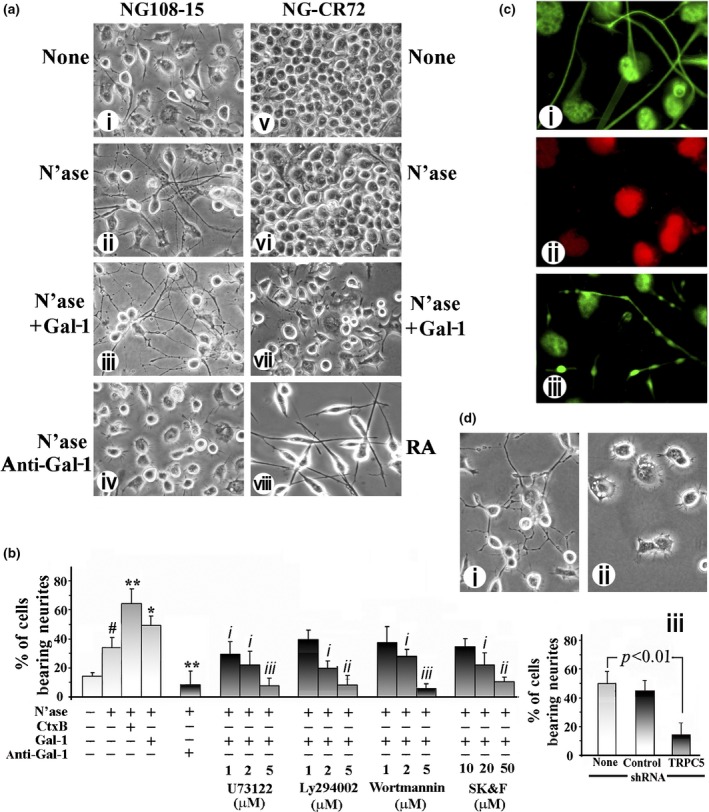
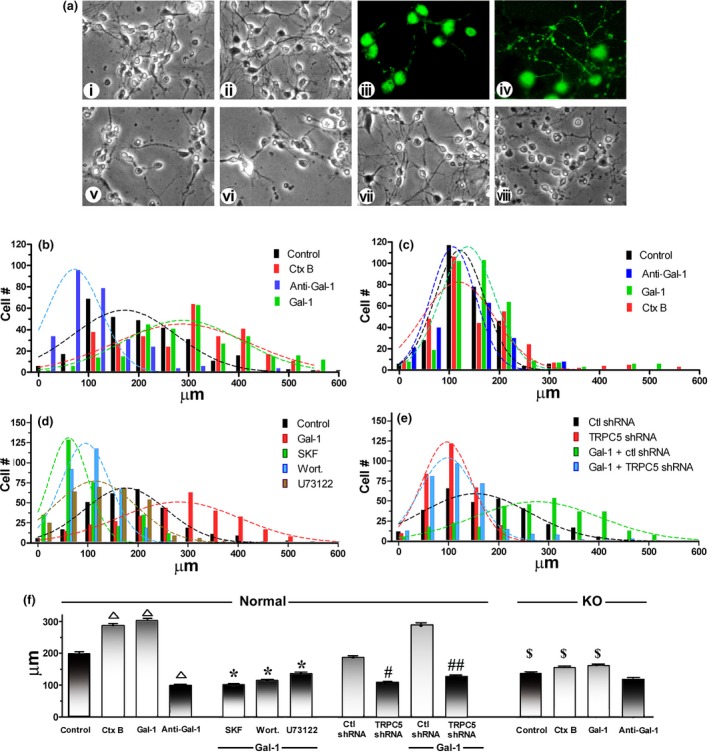
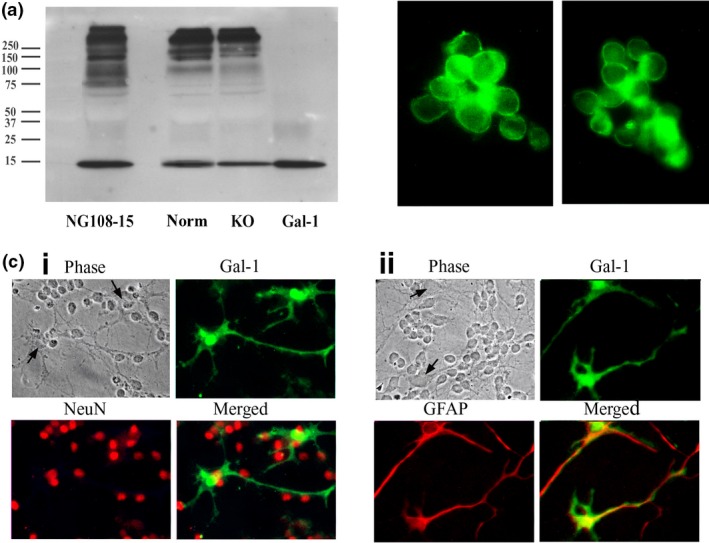
Axon-like neuritogenesis in neuroblastoma (NG108-15) cells and primary cerebellar granular neurons is furthered by the presence of ganglioside GM1. We describe here that galectin-1 (Gal-1), a homobivalent endogenous lectin, is an effector by cross-linking the ganglioside and its associated glycoprotein α5 β1 -integrin. The thereby triggered signaling cascade involves autophosphorylation of focal adhesion kinase and activation of phospholipase Cγ and phosphoinositide-3 kinase. This leads to a transient increase in the intracellular Ca(2+) concentration by opening of TRPC5 channels, which belong to the signal transduction-gated cation channels. Controls with GM1-defective cells (NG-CR72 and neurons from ganglio-series KO mice) were retarded in axonal growth, underscoring the relevance of GM1 as functional counterreceptor for Gal-1. The lectin's presence was detected in the NG108-15 cells, suggesting an autocrine mechanism of action, and in astrocytes in situ. Gal-1, as cross-linking lectin, can thus translate metabolic conversion of ganglioside GD1a to GM1 by neuraminidase action into axon growth. Galectin-1 (Gal-1) was shown an effector of axonogenesis in cerebellar granule neurons (CGNs) and NG108-15 cells by cross-linking GM1 ganglioside and its associated glycoprotein α5 β1 -integrin. The resulting signaling led to a transient increase in intracellular Ca(2+) by opening TRPC5 channels. CGNs deficient in GM1 showed retarded axonogenesis, underscoring the relevance of GM1 as functional counterreceptor for Gal-1 in this process. This Gal-1/GM1-induced signaling was manifest only at the earliest, initiating stage of axon development.
神经节苷脂GM1的存在促进了神经母细胞瘤(NG108-15)细胞和原代小脑颗粒神经元中轴突样神经突的形成。我们在此描述,半乳糖凝集素-1(Gal-1),一种同型二价内源性凝集素,通过交联神经节苷脂及其相关糖蛋白α5β1整合素发挥效应作用。由此触发的信号级联反应涉及粘着斑激酶的自磷酸化以及磷脂酶Cγ和磷脂酰肌醇-3激酶的激活。这通过打开属于信号转导门控阳离子通道的TRPC5通道导致细胞内Ca(2+)浓度短暂升高。用GM1缺陷细胞(NG-CR72和神经节系列基因敲除小鼠的神经元)进行的对照实验显示轴突生长受阻,这突出了GM1作为Gal-1功能性反受体的相关性。在NG108-15细胞中检测到了凝集素的存在,提示其自分泌作用机制,并且在原位星形胶质细胞中也有发现。因此,作为交联凝集素的Gal-1可以将神经氨酸酶作用下神经节苷脂GD1a向GM1的代谢转化转化为轴突生长。通过交联GM1神经节苷脂及其相关糖蛋白α5β1整合素,半乳糖凝集素-1(Gal-1)被证明是小脑颗粒神经元(CGNs)和NG108-15细胞中轴突发生的效应分子。产生的信号通过打开TRPC5通道导致细胞内Ca(2+)短暂升高。缺乏GM1的CGNs显示轴突发生受阻,这突出了GM1在该过程中作为Gal-1功能性反受体的相关性。这种Gal-1/GM1诱导的信号仅在轴突发育的最早起始阶段表现出来。