Ren Hongyu, Zhang Pei, Tang Yong, Wu Mengping, Zhang Weikang
Department of Gastroenterology, Union Hospital, Huazhong University of Science and Technology, Wuhan, People's Republic of China.
Department of Gastrointestinal Surgery, Union Hospital, Huazhong University of Science and Technology, Wuhan, People's Republic of China.
Onco Targets Ther. 2015 Oct 20;8:3029-39. doi: 10.2147/OTT.S91035. eCollection 2015.
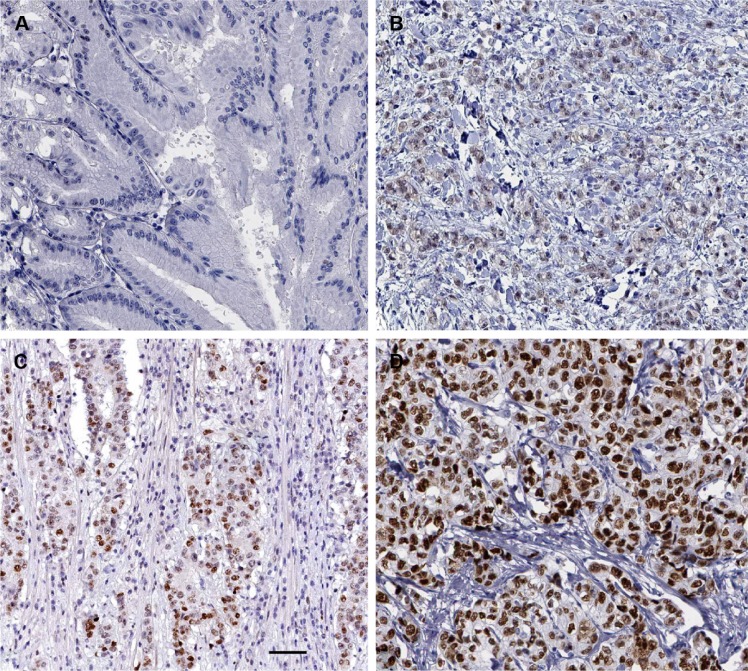
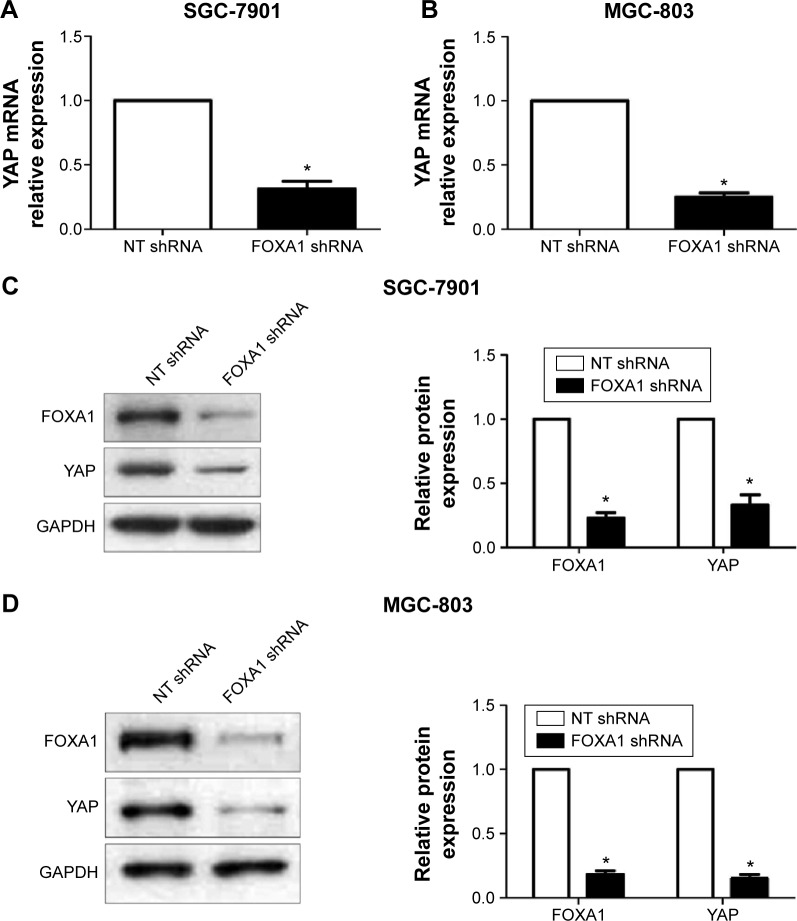
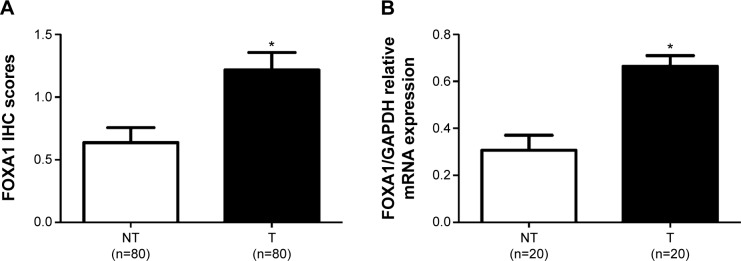
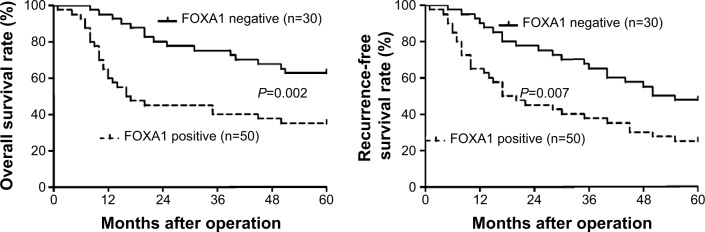
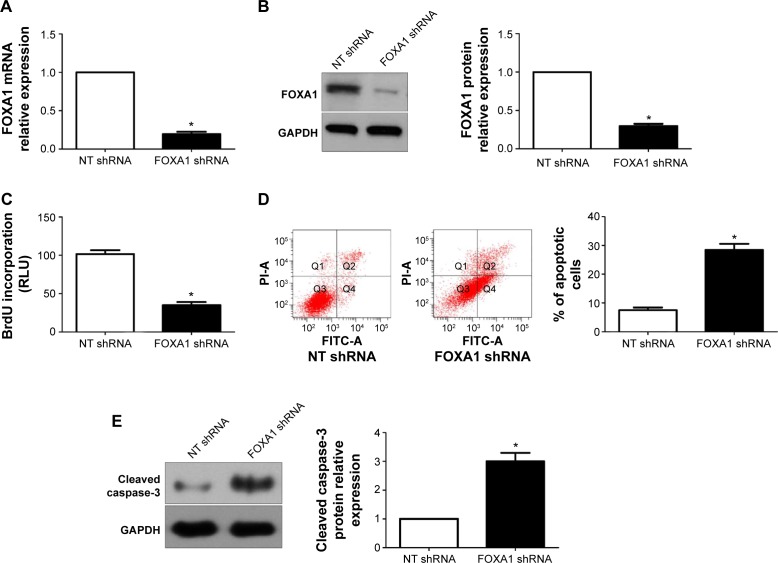
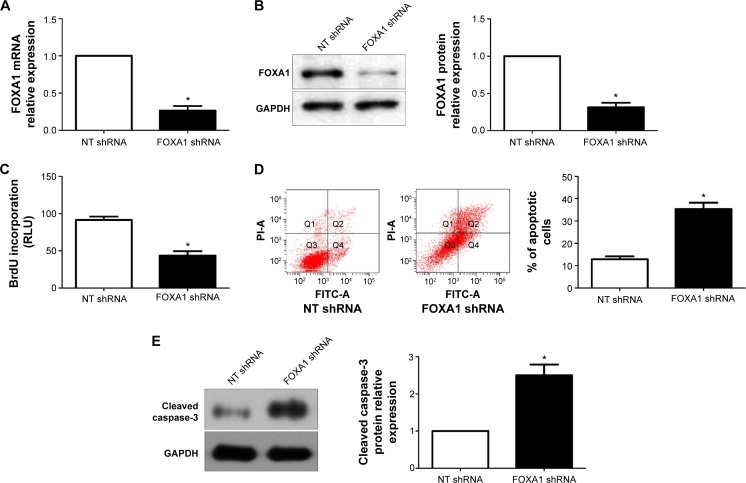
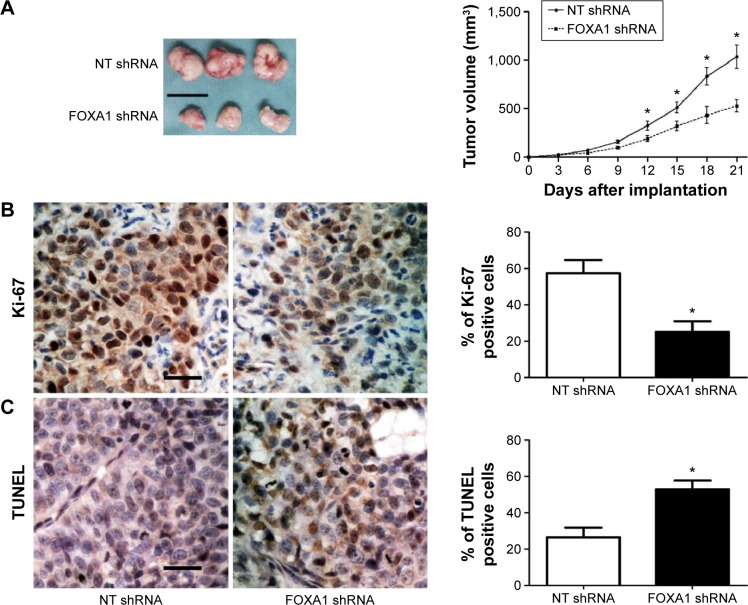
Previous studies have demonstrated the cancer-type specific role of forkhead box protein A1 (FOXA1) in human malignancies. However, the clinical significance of FOXA1 and its biological function in gastric cancer remain unknown. In this study, the expression of FOXA1 in 80 pairs of gastric cancer tissues and corresponding non-tumor tissues was analyzed using immunohistochemistry and quantitative real-time polymerase chain reaction. We found that the levels of FOXA1 protein and mRNA in gastric cancer tissues were significantly higher than those in matched tumor-adjacent tissues. Furthermore, clinical association analysis indicated that the positive expression of FOXA1 was associated with adverse clinicopathological characteristics of gastric cancer patients including poor tumor differentiation, large tumor size, and advanced tumor-node-metastasis tumor stage. Notably, gastric cancer patients with positive expression of FOXA1 had a poorer 5-year overall survival and recurrence-free survival. In addition, FOXA1 knockdown remarkably inhibited cell proliferation and induced apoptosis in both SGC-7901 and MGC-803 cells. In vivo studies indicated that FOXA1 knockdown prominently suppressed tumor growth of gastric cancer in a nude mouse xenograft model. Mechanistically, we disclosed that the expression of Yes-associated protein was decreased accordingly after FOXA1 knockdown in both SGC-7901 and MGC-803 cells. Taken together, our data suggest that FOXA1 may serve as a promising prognostic indicator and an attractive therapeutic target of gastric cancer.
先前的研究已经证明了叉头框蛋白A1(FOXA1)在人类恶性肿瘤中的癌症类型特异性作用。然而,FOXA1在胃癌中的临床意义及其生物学功能仍不清楚。在本研究中,使用免疫组织化学和定量实时聚合酶链反应分析了80对胃癌组织和相应的非肿瘤组织中FOXA1的表达。我们发现,胃癌组织中FOXA1蛋白和mRNA水平显著高于配对的肿瘤旁组织。此外,临床关联分析表明,FOXA1的阳性表达与胃癌患者的不良临床病理特征相关,包括肿瘤分化差、肿瘤体积大以及肿瘤-淋巴结-转移肿瘤分期晚。值得注意的是,FOXA1阳性表达的胃癌患者5年总生存率和无复发生存率较差。此外,FOXA1敲低显著抑制了SGC-7901和MGC-803细胞的增殖并诱导了细胞凋亡。体内研究表明,在裸鼠异种移植模型中,FOXA1敲低显著抑制了胃癌的肿瘤生长。机制上,我们发现,在SGC-7901和MGC-803细胞中,FOXA1敲低后Yes相关蛋白的表达相应降低。综上所述,我们的数据表明,FOXA1可能是一个有前景的胃癌预后指标和有吸引力的治疗靶点。