Wang Pengjiao, Shan Ling, Xue Liyan, Zheng Bo, Ying Jianming, Lu Ning
Department of Pathology, National Cancer Center/Cancer Hospital, Chinese Academy of Medical Sciences and Peking Union Medical College, Beijing, P. R. China.
Oncotarget. 2017 Jan 17;8(3):5069-5080. doi: 10.18632/oncotarget.13847.
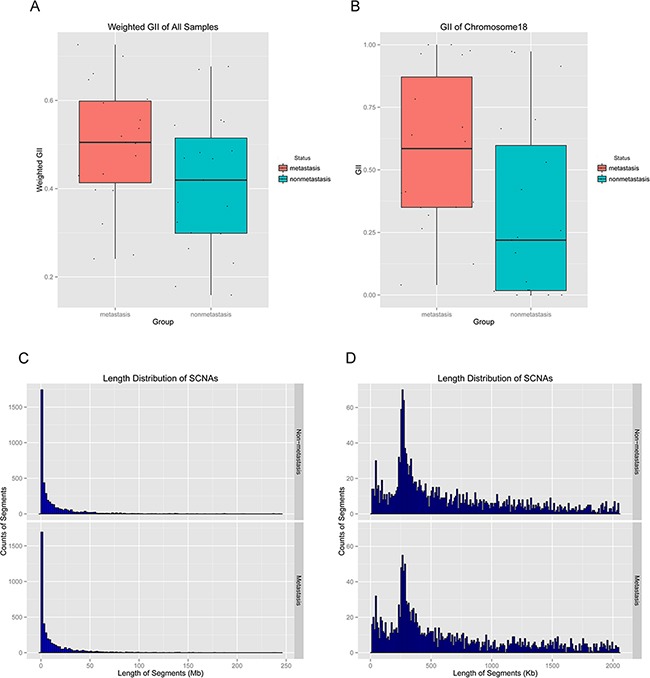
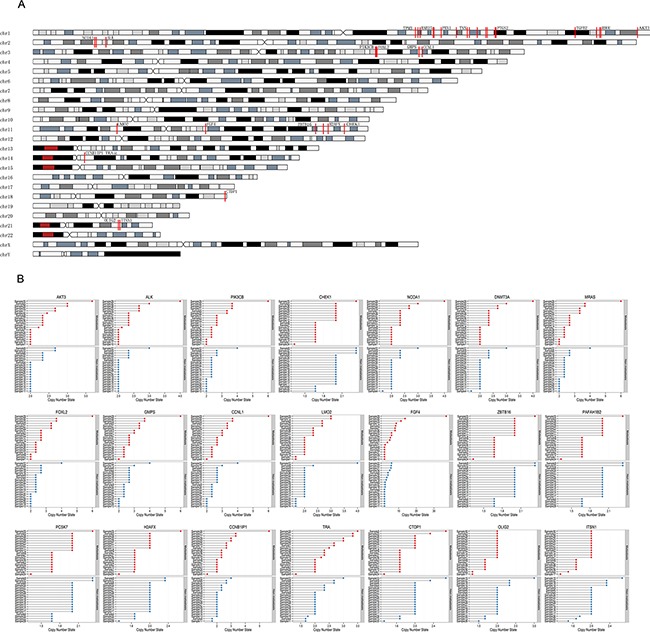
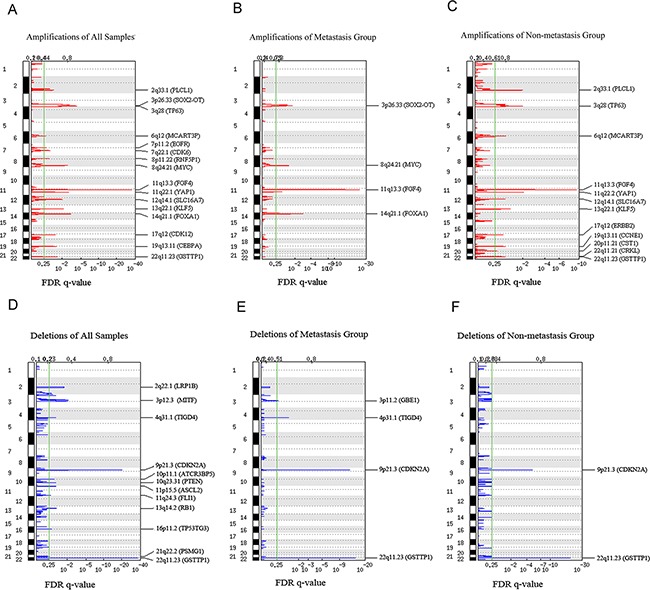
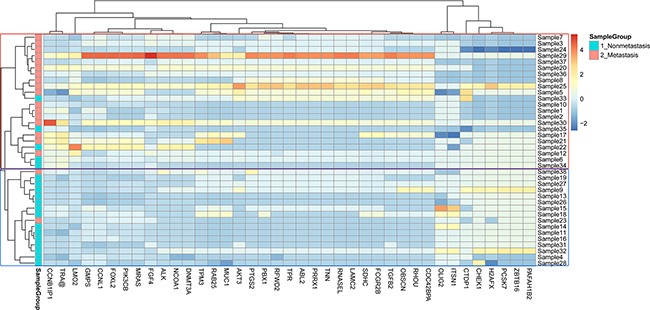
Superficial esophageal squamous cell carcinoma (ESCC) is generally considered a subtype of less invasive ESCC. Yet a subset of these superficial ESCC would have metastasis after esophagostomy or endoscopic resection and lead to poor prognosis. The objective of this study is to determine biomarkers that can identify such subset of superficial ESCC that would have metastasis after surgery using genome wide copy number alteration (CNA) analyses. The CNAs of 38 cases of superficial ESCCs originated from radical surgery, including 19 without metastasis and 19 with metastasis within 5 years' post-surgery, were analyzed using Affymetrix OncoScan™ FFPE Assay. A 39-gene signature was identified which characterized the subset of superficial ESCC with high risk of metastasis after surgery. In addition, recurrent CNAs of superficial ESCC were also investigated in the study. Amplification of 11q13.3 (FGF4) and deletion of 9p21.3 (CDKN2A) were found to be recurrent in all 38 superficial ESCCs analyzed. Notably amplifications of 3p26.33 (SOX2OT), 8q24.21 (MYC), 14q21.1 (FOXA1) and deletion of 3p12.1 (GBE1) were only found to be recurrent in metastaic superficial ESCCs. In conclusion, using CNAs analyses, we identify a 39-gene signature which characterizes the high risk metastatic superficial ESCCs and discover several recurrent CNAs that might be the driver alterations in metastasis among superficial ESCCs.
食管浅表鳞状细胞癌(ESCC)通常被认为是侵袭性较低的ESCC亚型。然而,这些浅表ESCC中的一部分在食管造口术或内镜切除术后会发生转移,并导致预后不良。本研究的目的是通过全基因组拷贝数改变(CNA)分析来确定能够识别术后会发生转移的浅表ESCC亚组的生物标志物。使用Affymetrix OncoScan™ FFPE检测方法分析了38例来自根治性手术的浅表ESCC病例的CNA,其中包括19例无转移病例和19例术后5年内发生转移的病例。确定了一个39基因特征,该特征可表征术后转移风险高的浅表ESCC亚组。此外,本研究还调查了浅表ESCC的复发性CNA。在所有38例分析的浅表ESCC中均发现11q13.3(FGF4)扩增和9p21.3(CDKN2A)缺失。值得注意的是,仅在转移性浅表ESCC中发现3p26.33(SOX2OT), 8q24.21(MYC), 14q21.1(FOXA1)扩增以及3p12.1(GBE1)缺失。总之,通过CNA分析,我们确定了一个39基因特征,该特征可表征高风险转移性浅表ESCC,并发现了几种复发性CNA,它们可能是浅表ESCC转移中的驱动性改变。