Yan Ting, Rizak Joshua Dominic, Wang Jianhong, Yang Shangchuan, Ma Yuanye, Hu Xintian
Key Laboratory of Animal Models and Human Disease Mechanisms, Kunming Institute of Zoology, Chinese Academy of Sciences Kunming, Yunnan, China ; University of Chinese Academy of Sciences Beijing, China.
Key Laboratory of Animal Models and Human Disease Mechanisms, Kunming Institute of Zoology, Chinese Academy of Sciences Kunming, Yunnan, China.
Front Behav Neurosci. 2015 Oct 12;9:273. doi: 10.3389/fnbeh.2015.00273. eCollection 2015.
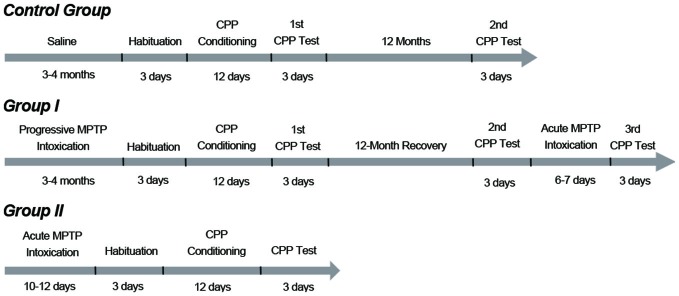
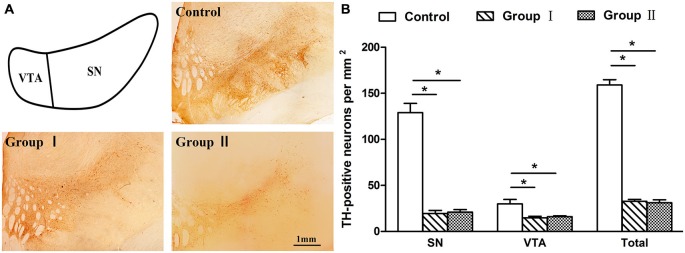
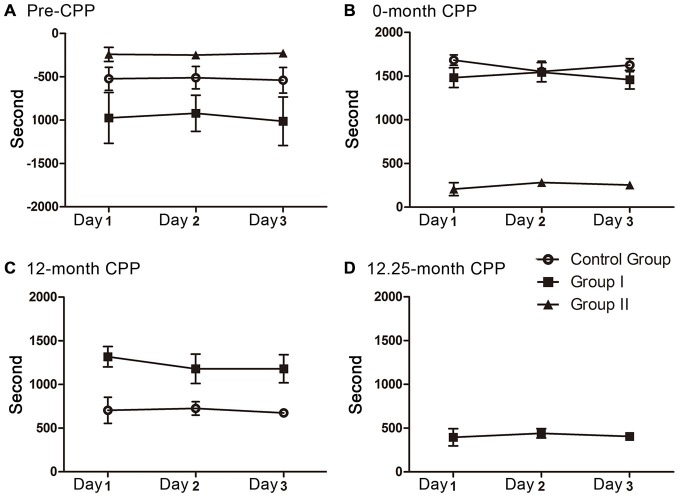
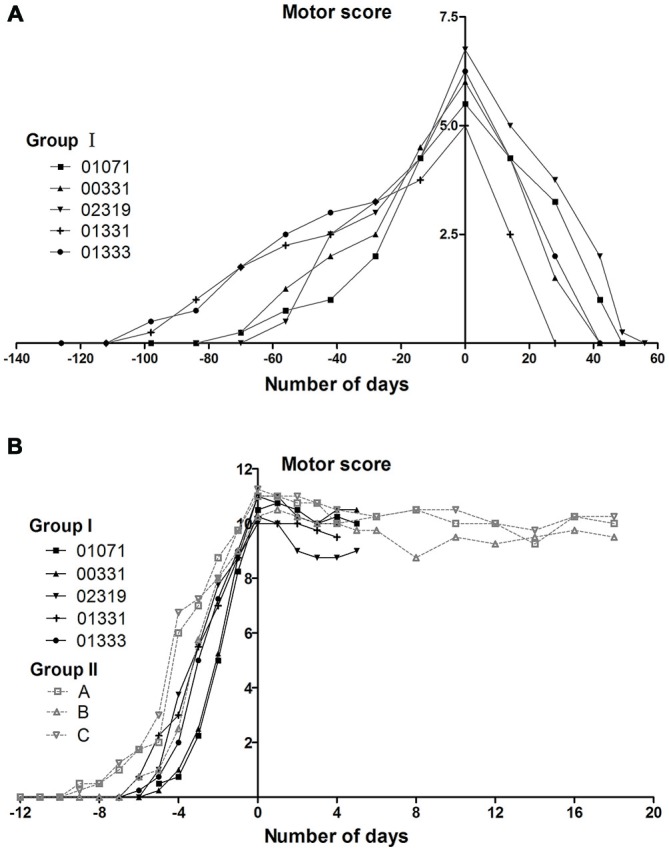
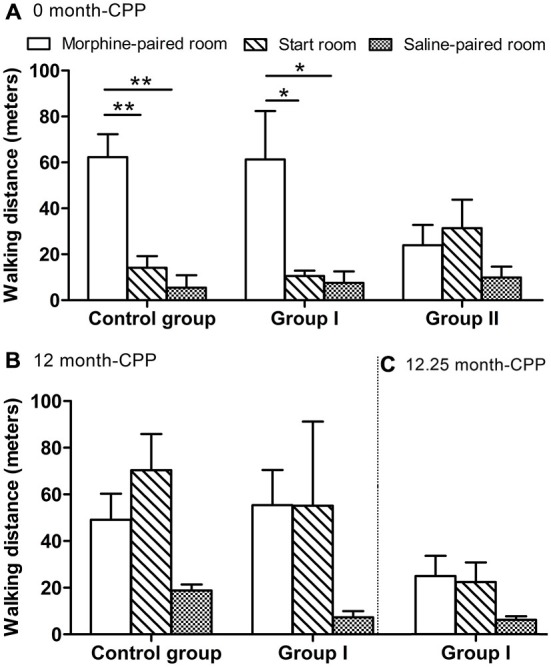
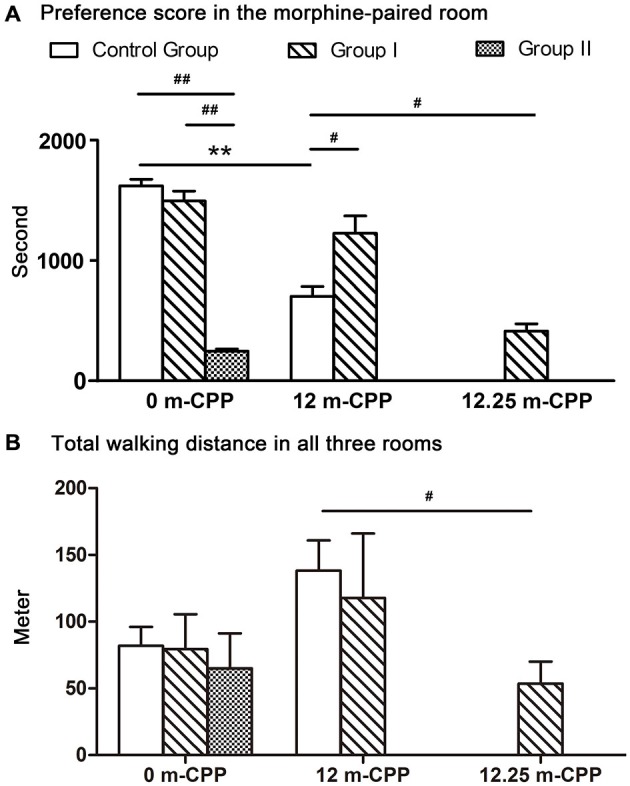
It is well known that dopamine (DA) is critical for reward, but the precise role of DA in reward remains uncertain. The aim of this study was to determine what percentage of dopaminergic neurons in the primate brain is required for the expression of conditioned reward by measuring the performance of DA-deficient rhesus monkeys in a morphine-induced conditioned place preference (CPP) paradigm. Animals with mild Parkinsonian symptoms successfully developed and retained a morphine preference that was equivalent to control monkeys. However, these monkeys could not maintain the preference as well as controls when they retained severe Parkinsonian symptoms. On the other hand, monkeys initially in a severe Parkinsonian state developed a preference for morphine, but this preference was weaker than that of the controls. Histological results showed that the loss of dopaminergic neurons in monkeys that had severe Parkinsonian symptoms was about 80% in comparison to the control monkeys. All these data suggest that a severely impaired DA system alters rewarding-seeking behavior in non-human primates.
众所周知,多巴胺(DA)对奖赏至关重要,但DA在奖赏中的精确作用仍不确定。本研究的目的是通过测量多巴胺缺乏的恒河猴在吗啡诱导的条件性位置偏爱(CPP)范式中的表现,来确定灵长类动物大脑中表达条件性奖赏所需的多巴胺能神经元的百分比。患有轻度帕金森症状的动物成功地形成并保持了与对照猴子相当的吗啡偏爱。然而,当这些猴子出现严重帕金森症状时,它们无法像对照猴子那样维持这种偏爱。另一方面,最初处于严重帕金森状态的猴子对吗啡产生了偏爱,但这种偏爱比对照猴子的要弱。组织学结果显示,与对照猴子相比,患有严重帕金森症状的猴子中多巴胺能神经元的损失约为80%。所有这些数据表明,严重受损的DA系统会改变非人类灵长类动物的奖赏寻求行为。