Grguric-Smith Laryssa M, Lee Hiu H, Gandhi Jay A, Brennan Melissa B, DeLeon-Rodriguez Carlos M, Coelho Carolina, Han George, Martinez Luis R
Department of Biomedical Sciences, Long Island University-Post Brookville, NY, USA.
Department of Biomedical Sciences, Long Island University-Post Brookville, NY, USA ; Department of Biomedical Sciences, College of Osteopathic Medicine, New York Institute of Technology Old Westbury, NY, USA.
Front Microbiol. 2015 Oct 16;6:1134. doi: 10.3389/fmicb.2015.01134. eCollection 2015.
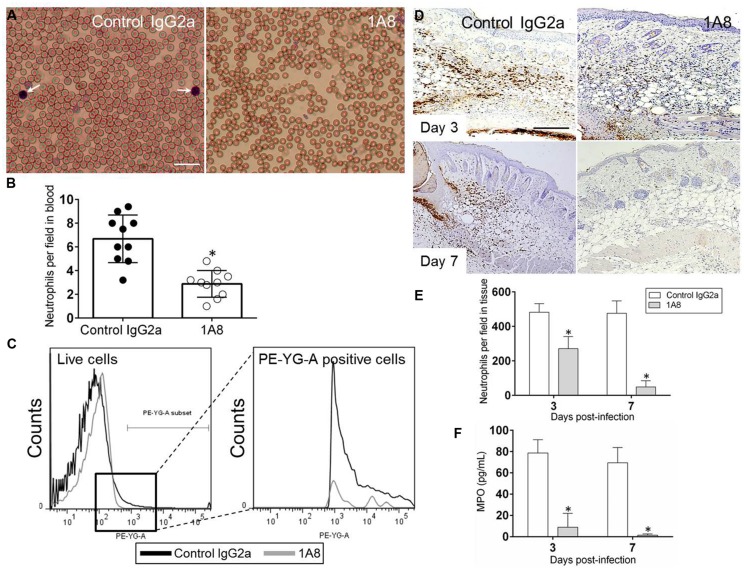
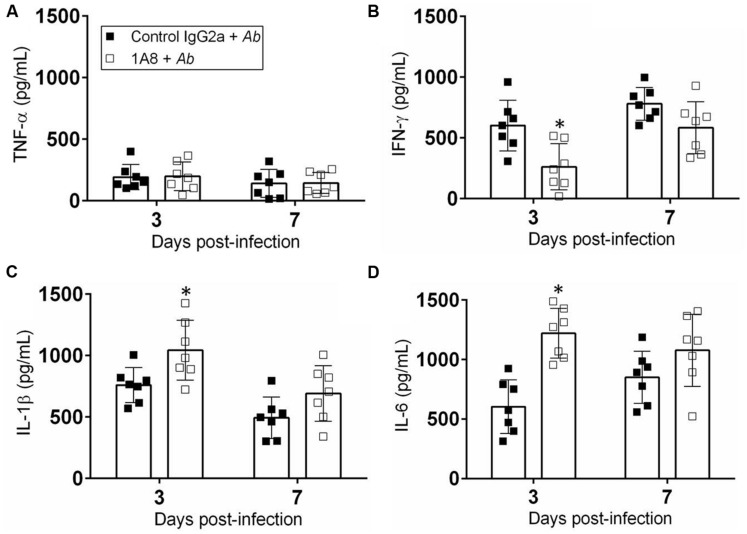
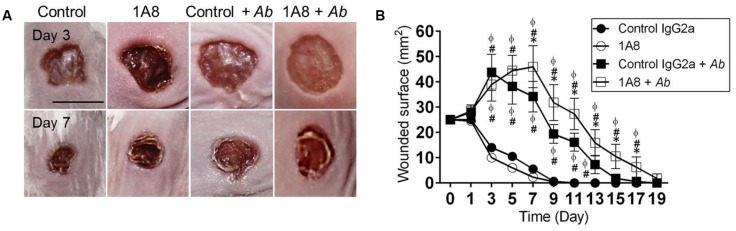
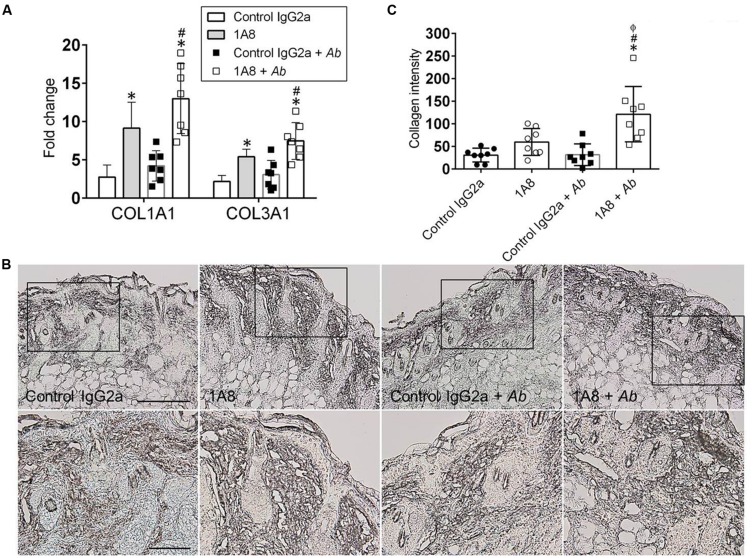
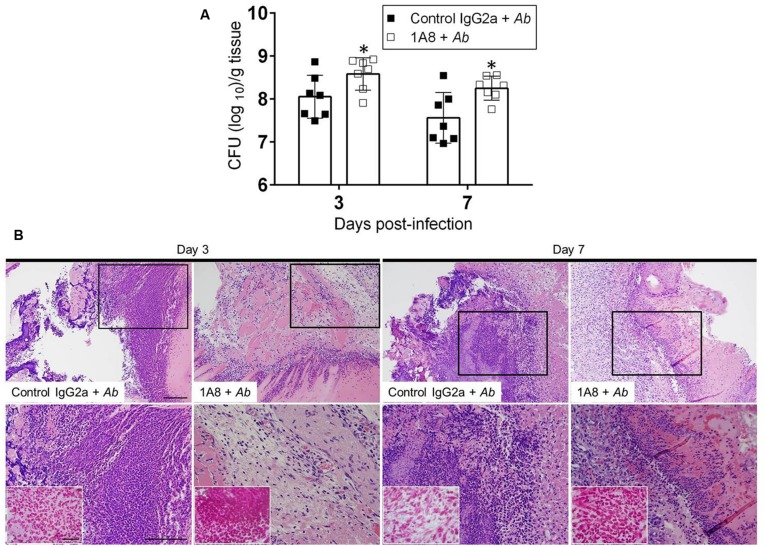
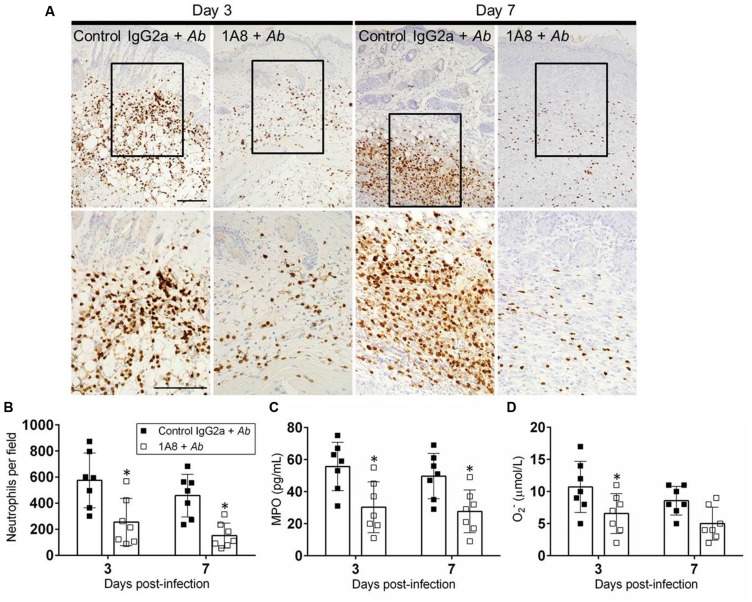
The Gram negative coccobacillus Acinetobacter baumannii has become an increasingly prevalent cause of hospital-acquired infections in recent years. The majority of clinical A. baumannii isolates display high-level resistance to antimicrobials, which severely compromises our capacity to care for patients with A. baumannii disease. Neutrophils are of major importance in the host defense against microbial infections. However, the contribution of these cells of innate immunity in host resistance to cutaneous A. baumannii infection has not been directly investigated. Hence, we hypothesized that depletion of neutrophils increases severity of bacterial disease in an experimental A. baumannii murine wound model. In this study, the Ly-6G-specific monoclonal antibody (mAb), 1A8, was used to generate neutropenic mice and the pathogenesis of several A. baumannii clinical isolates on wounded cutaneous tissue was investigated. We demonstrated that neutrophil depletion enhances bacterial burden using colony forming unit determinations. Also, mAb 1A8 reduces global measurements of wound healing in A. baumannii-infected animals. Interestingly, histological analysis of cutaneous tissue excised from A. baumannii-infected animals treated with mAb 1A8 displays enhanced collagen deposition. Furthermore, neutropenia and A. baumannii infection alter pro-inflammatory cytokine release leading to severe microbial disease. Our findings provide a better understanding of the impact of these innate immune cells in controlling A. baumannii skin infections.
革兰氏阴性球杆菌鲍曼不动杆菌近年来已成为医院获得性感染日益普遍的病因。大多数临床分离的鲍曼不动杆菌对抗菌药物表现出高度耐药性,这严重损害了我们治疗鲍曼不动杆菌病患者的能力。中性粒细胞在宿主抵御微生物感染中至关重要。然而,这些固有免疫细胞在宿主抵抗皮肤鲍曼不动杆菌感染中的作用尚未得到直接研究。因此,我们假设在实验性鲍曼不动杆菌小鼠伤口模型中,中性粒细胞的耗竭会增加细菌性疾病的严重程度。在本研究中,使用Ly-6G特异性单克隆抗体(mAb)1A8制备中性粒细胞减少的小鼠,并研究了几种鲍曼不动杆菌临床分离株在受伤皮肤组织上的发病机制。我们通过菌落形成单位测定证明,中性粒细胞耗竭会增加细菌载量。此外,mAb 1A8降低了鲍曼不动杆菌感染动物伤口愈合的整体指标。有趣的是,对用mAb 1A8治疗的鲍曼不动杆菌感染动物切除的皮肤组织进行组织学分析,显示胶原沉积增加。此外,中性粒细胞减少和鲍曼不动杆菌感染会改变促炎细胞因子的释放,导致严重的微生物疾病。我们的研究结果有助于更好地理解这些固有免疫细胞在控制鲍曼不动杆菌皮肤感染中的作用。