Quan Juan-Hua, Chu Jia-Qi, Kwon Jaeyul, Choi In-Wook, Ismail Hassan Ahmed Hassan Ahmed, Zhou Wei, Cha Guang-Ho, Zhou Yu, Yuk Jae-Min, Jo Eun-Kyeong, Lee Young-Ha
Department of Gastroenterology, The Affiliated Hospital of Guangdong Medical College, Zhanjiang 524-001, Guangdong, China.
Stem Cell Research and Cellular Therapy Center, The Affiliated Hospital of Guangdong Medical College, Zhanjiang, 524-001, China.
PLoS One. 2015 Nov 3;10(11):e0141550. doi: 10.1371/journal.pone.0141550. eCollection 2015.
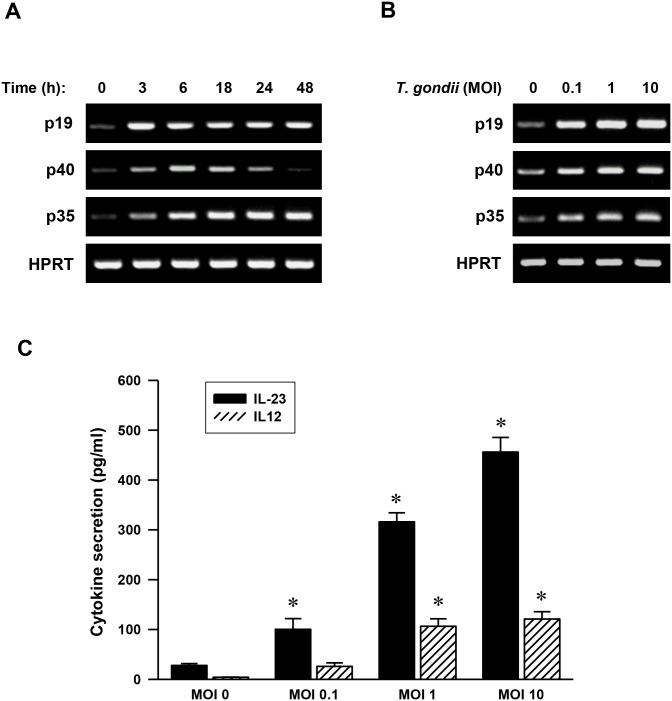
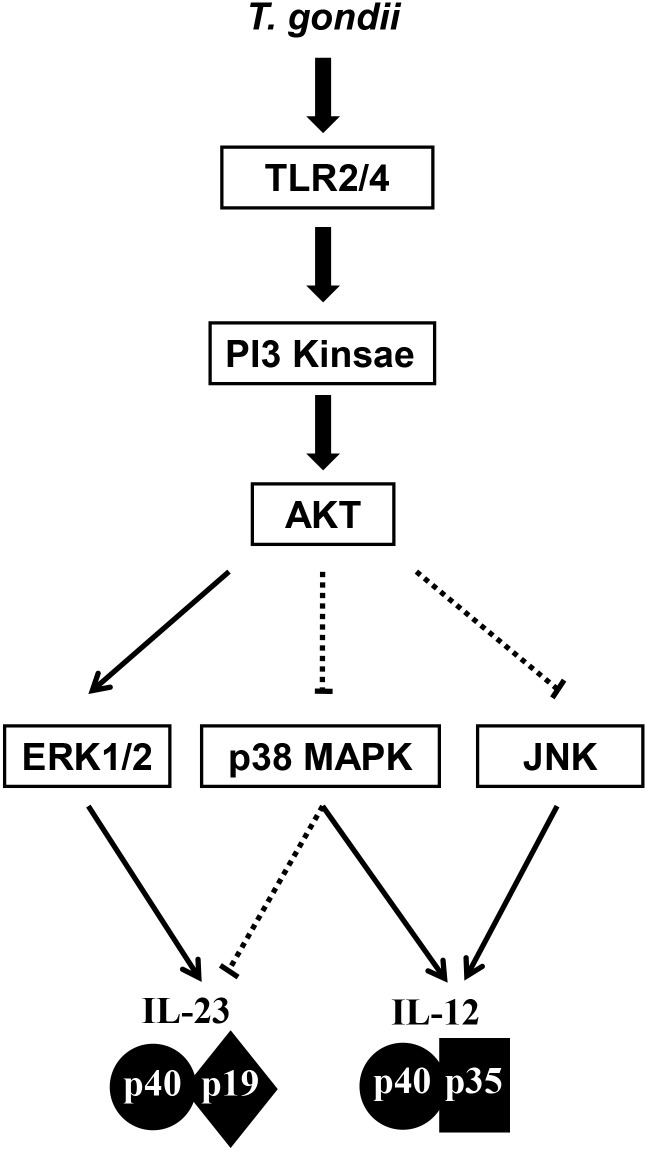
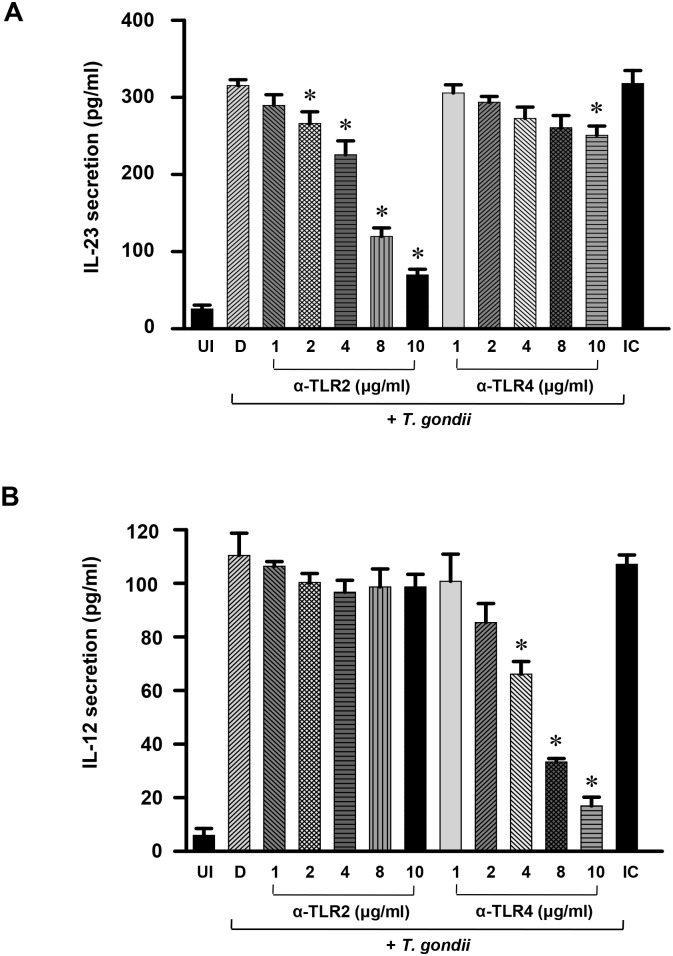
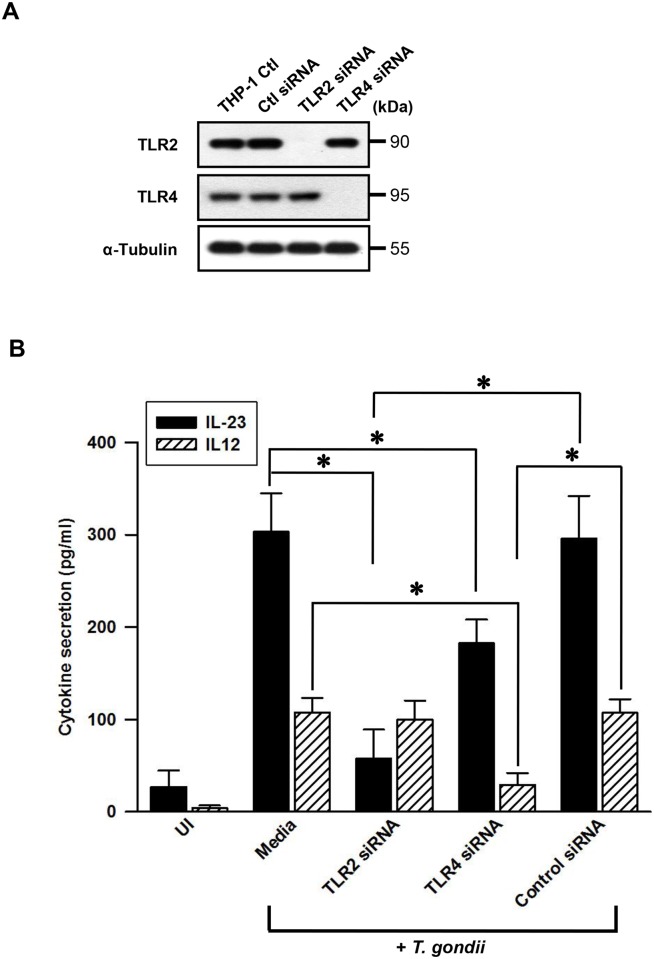
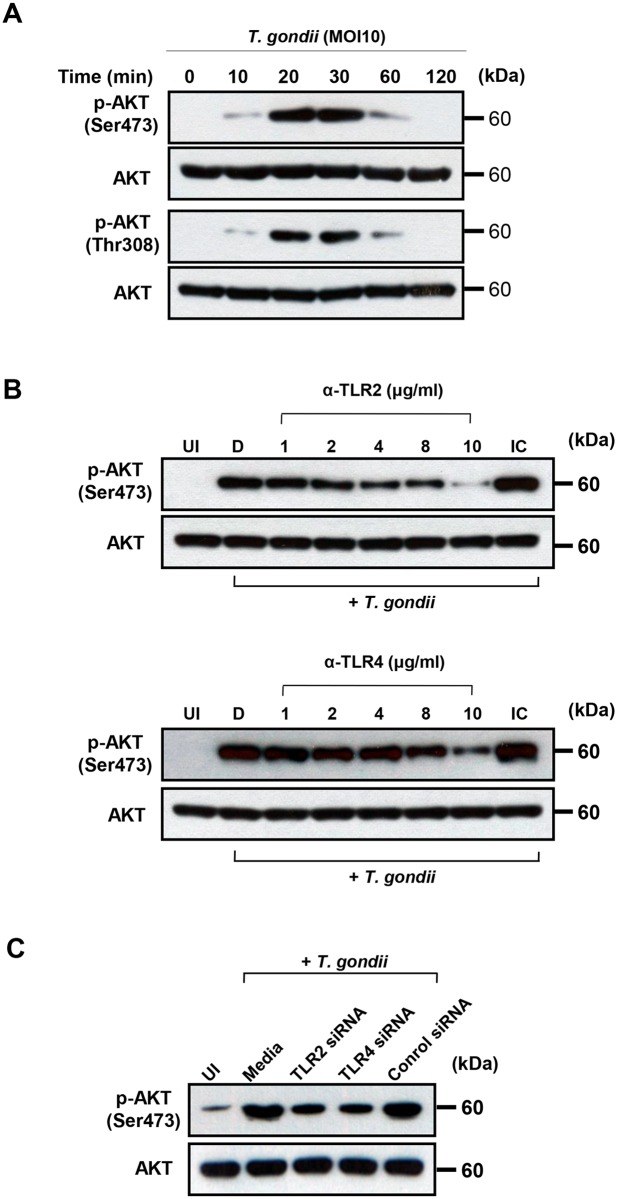
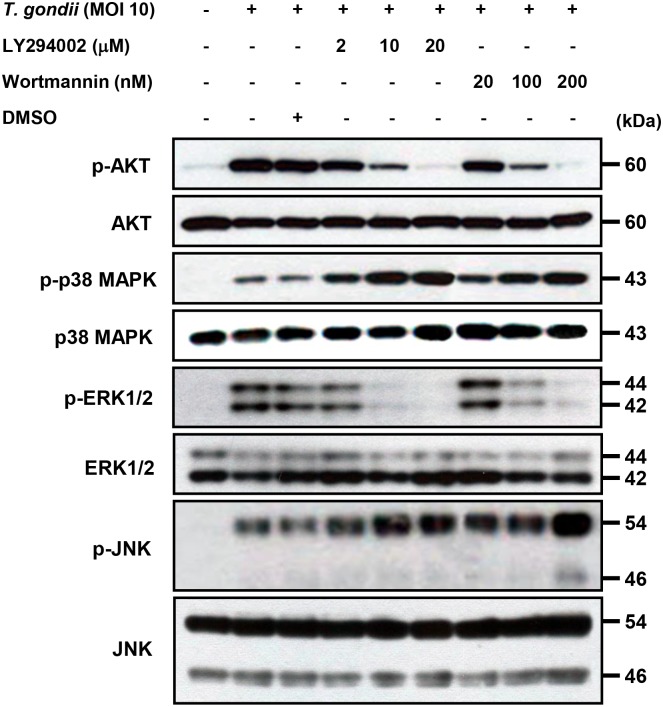
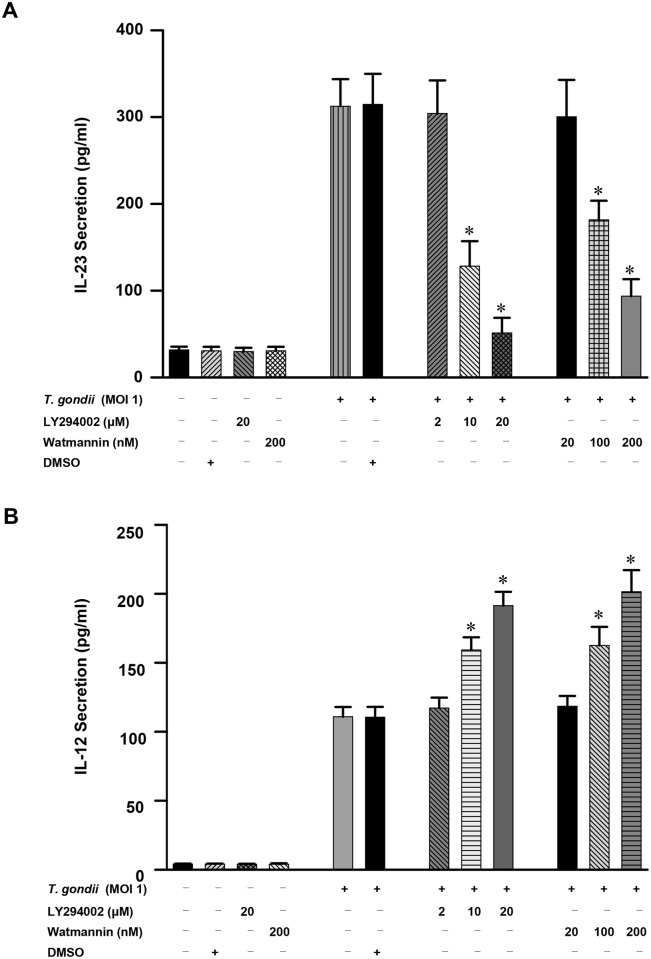
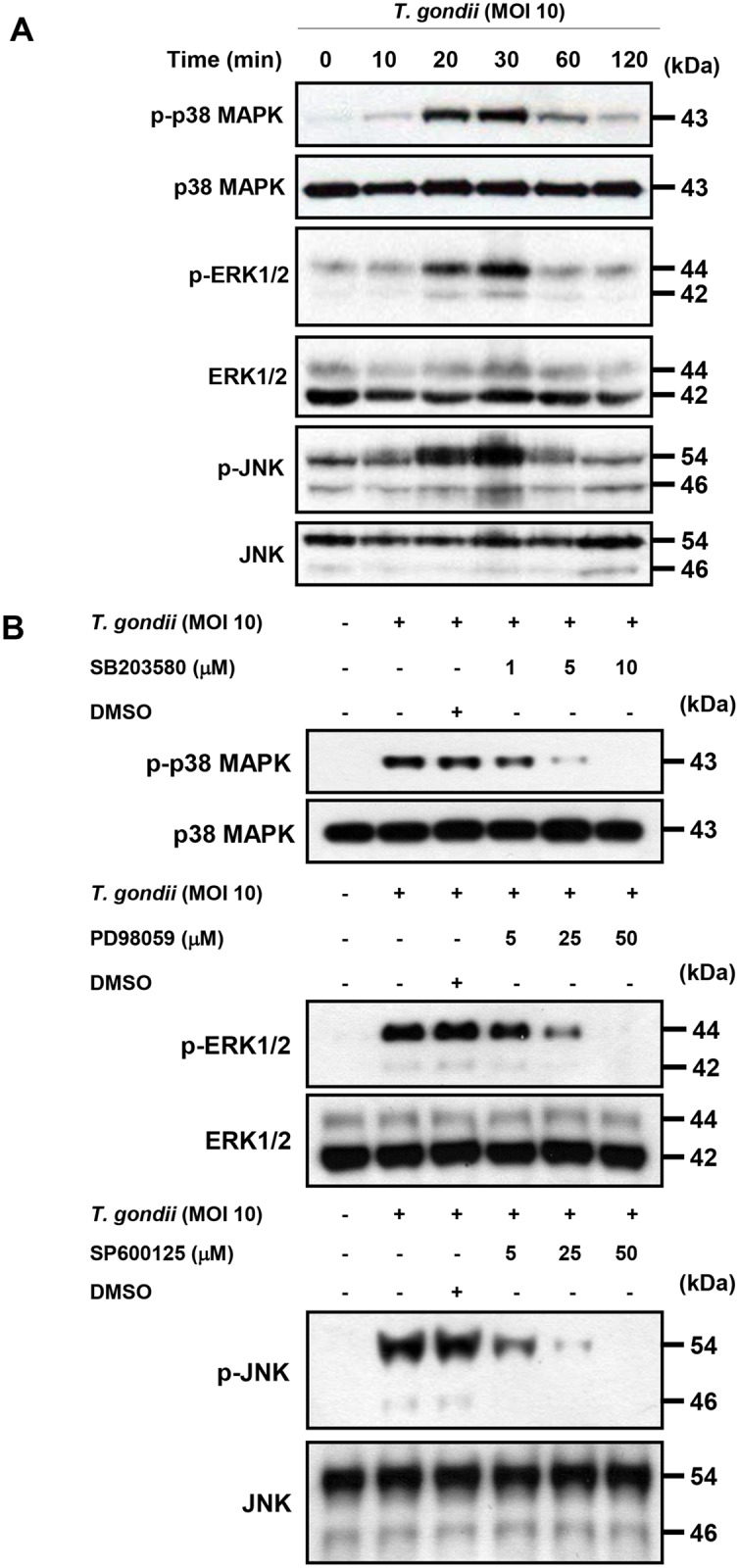
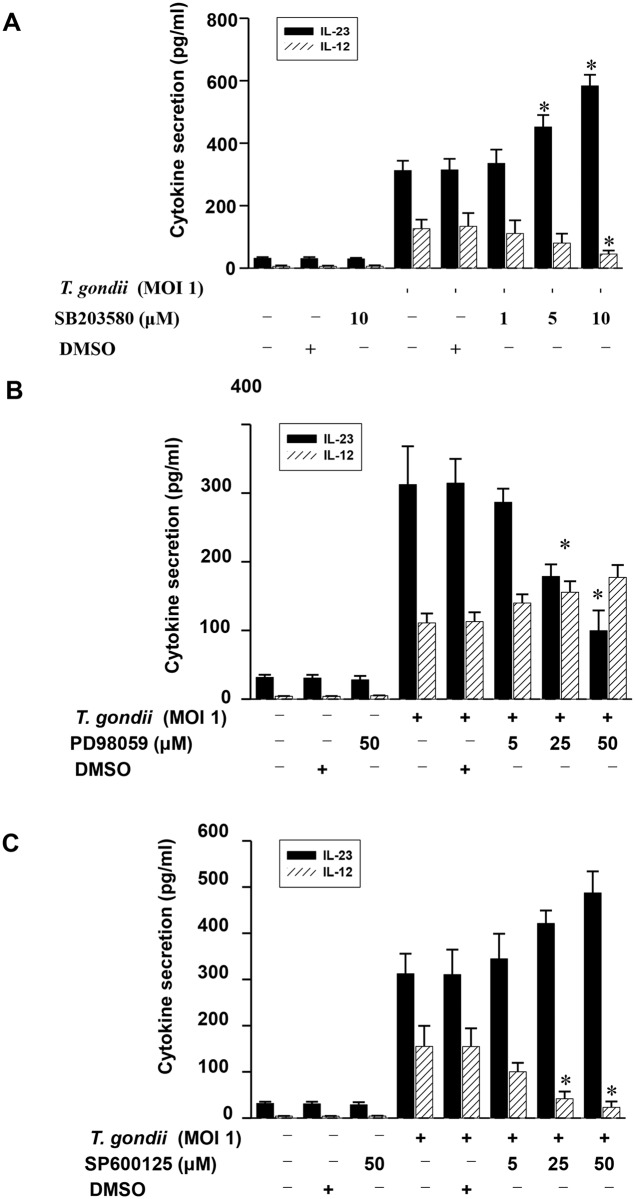
Interleukin (IL)-23 and IL-12 are closely related in structure, and these cytokines regulate both innate and adaptive immunity. However, the precise signaling networks that regulate the production of each in Toxoplasma gondii-infected THP-1 monocytic cells, particularly the PI3K/AKT and MAPK signaling pathways, remain unknown. In the present study, T. gondii infection upregulated the expression of IL-23 and IL-12 in THP-1 cells, and both cytokines increased with parasite dose. IL-23 secretion was strongly inhibited by TLR2 monoclonal antibody (mAb) treatment in a dose-dependent manner and by TLR2 siRNA transfection, whereas IL-12 secretion was strongly inhibited by TLR4 mAb treatment dose-dependently and by TLR4 siRNA transfection. IL-23 production was dose-dependently inhibited by the PI3K inhibitors LY294002 and wortmannin, whereas IL-12 production increased dose-dependently. THP-1 cells exposed to live T. gondii tachyzoites underwent rapid p38 MAPK, ERK1/2 and JNK activation. IL-23 production was significantly upregulated by the p38 MAPK inhibitor SB203580 dose-dependently, whereas pretreatment with 10 μM SB203580 significantly downregulated IL-12 production. ERK1/2 inhibition by PD98059 was significantly downregulated IL-23 production but upregulated IL-12 production. JNK inhibition by SP600125 upregulated IL-23 production, but IL-12 production was significantly downregulated dose-dependently. T. gondii infection resulted in AKT activation, and AKT phosphorylation was inhibited dose-dependently after pretreatment with PI3K inhibitors. In T. gondii-infected THP-1 cells, ERK1/2 activation was regulated by PI3K; however, the phosphorylation of p38 MAPK and JNK was negatively modulated by the PI3K signaling pathway. Collectively, these results indicate that IL-23 production in T. gondii-infected THP-1 cells was regulated mainly by TLR2 and then by PI3K and ERK1/2; however, IL-12 production was mainly regulated by TLR4 and then by p38 MAPK and JNK. Our findings provide new insight concerning the intracellular networks of the PI3K/AKT and MAPK signaling cascades for regulating T. gondii-induced IL-23 and IL-12 secretion in human monocytic cells.
白细胞介素(IL)-23和IL-12在结构上密切相关,并且这些细胞因子调节先天性免疫和适应性免疫。然而,在弓形虫感染的THP-1单核细胞中调节它们各自产生的精确信号网络,尤其是PI3K/AKT和MAPK信号通路,仍然未知。在本研究中,弓形虫感染上调了THP-1细胞中IL-23和IL-12的表达,并且两种细胞因子都随寄生虫剂量增加。TLR2单克隆抗体(mAb)处理以剂量依赖性方式和TLR2 siRNA转染强烈抑制IL-23分泌,而TLR4 mAb处理剂量依赖性地和TLR4 siRNA转染强烈抑制IL-12分泌。PI3K抑制剂LY294002和渥曼青霉素以剂量依赖性方式抑制IL-23产生,而IL-12产生则剂量依赖性增加。暴露于活的弓形虫速殖子的THP-1细胞经历了快速的p38 MAPK、ERK1/2和JNK激活。p38 MAPK抑制剂SB203580以剂量依赖性方式显著上调IL-23产生,而用10μM SB203580预处理显著下调IL-12产生。PD98059对ERK1/2的抑制显著下调IL-23产生但上调IL-1对JNK的抑制通过SP600125上调IL-23产生,但IL-12产生剂量依赖性地显著下调。弓形虫感染导致AKT激活,并且在用PI3K抑制剂预处理后,AKT磷酸化被剂量依赖性抑制。在弓形虫感染的THP-1细胞中,ERK1/2激活由PI3K调节;然而,p38 MAPK和JNK的磷酸化被PI3K信号通路负调节。总体而言,这些结果表明,在弓形虫感染的THP-1细胞中,IL-23产生主要由TLR2调节,然后由PI3K和ERK1/2调节;然而,IL-12产生主要由TLR4调节,然后由p38 MAPK和JNK调节。我们的发现为调节人单核细胞中弓形虫诱导的IL-23和IL-12分泌的PI3K/AKT和MAPK信号级联的细胞内网络提供了新的见解。