Cheng Chun-Wen, Chen Po-Ming, Hsieh Yi-Hsien, Weng Chung-Chih, Chang Chia-Wei, Yao Chung-Chin, Hu Ling-Yueh, Wu Pei-Ei, Shen Chen-Yang
Institute of Biochemistry, Microbiology and Immunology, Chung Shan Medical University, Taichung, Taiwan.
Clinical Laboratory, Chung Shan Medical University Hospital, Taichung, Taiwan.
Oncotarget. 2015 Dec 29;6(42):44222-38. doi: 10.18632/oncotarget.5826.
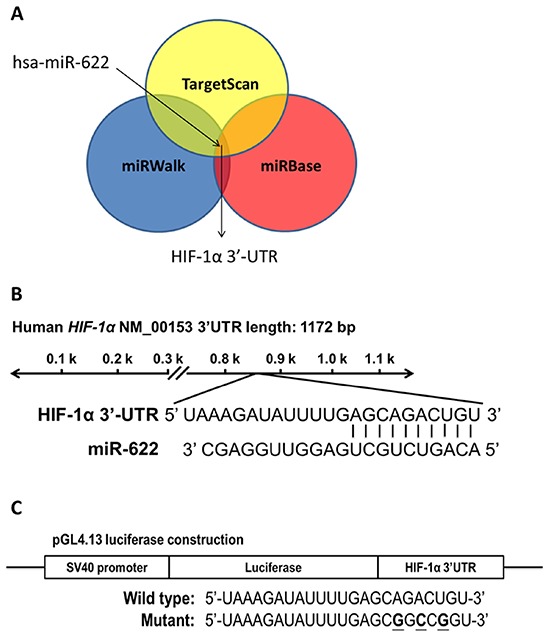
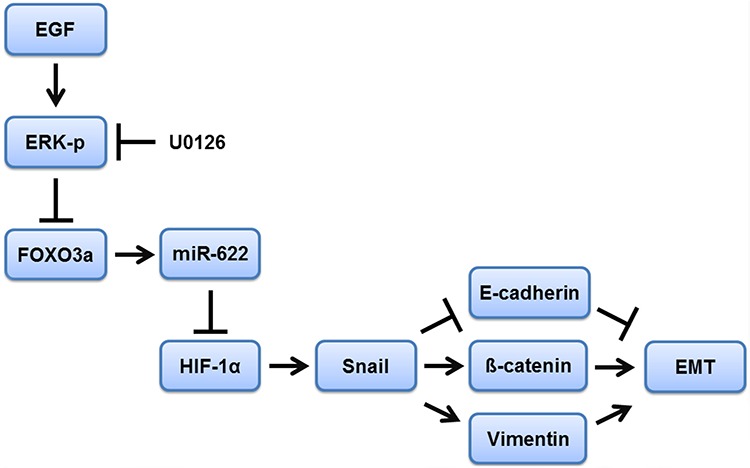
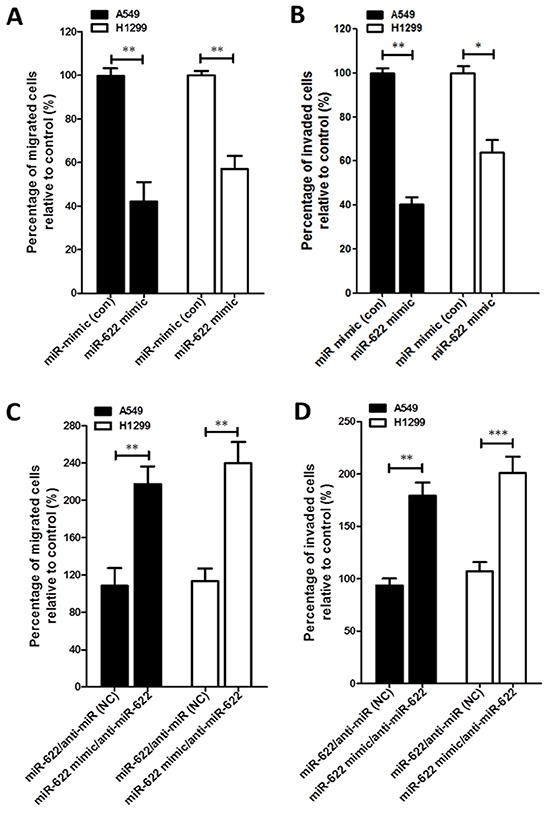
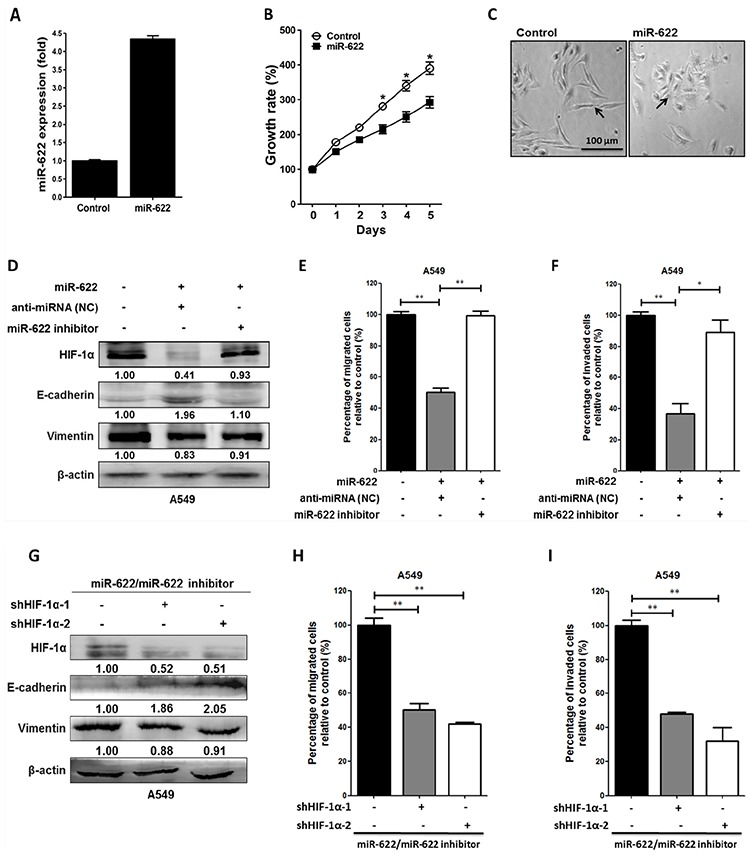
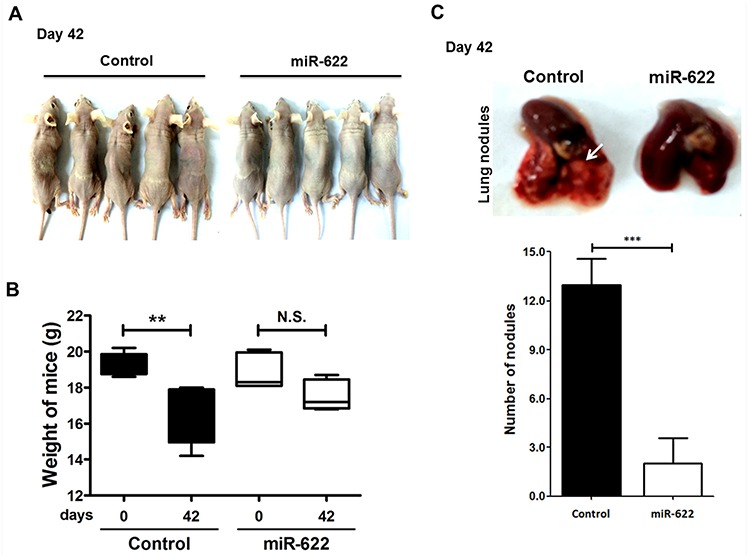
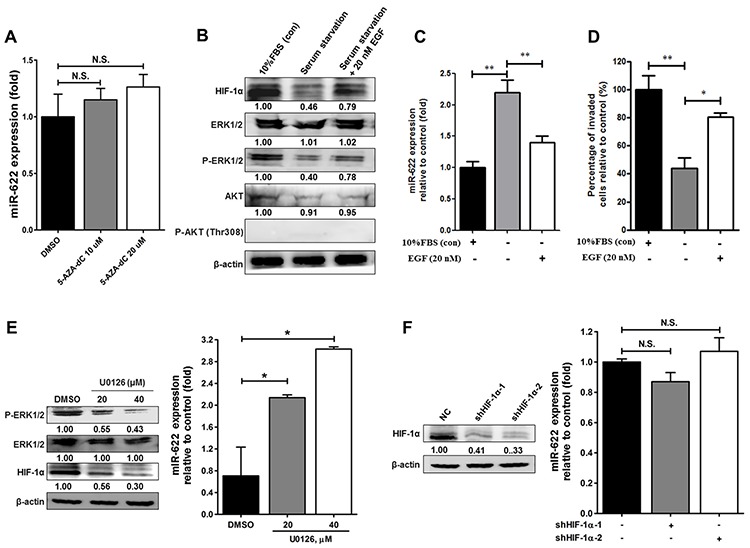
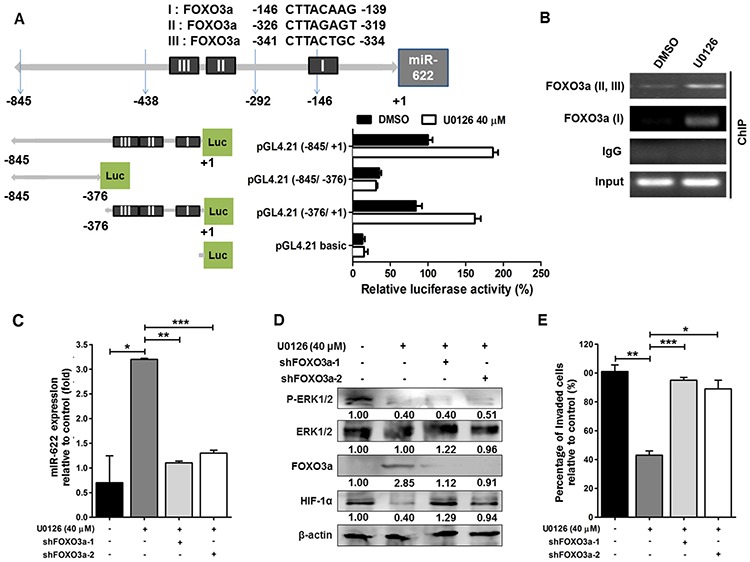
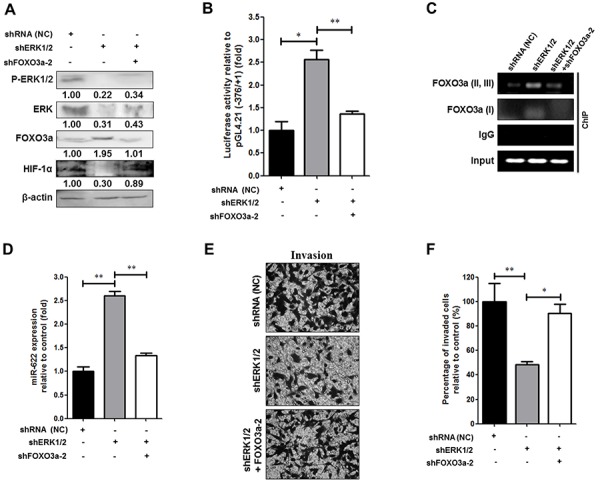
Metastatic spread of cancer cells portends a poor prognosis and mortality for lung cancer patients. Hypoxia-inducible factor-1α (HIF-1α) enhances tumor cell motility by activating the epithelial-to-mesenchymal transition (EMT), which is considered a prerequisite for metastasis. Recent studies of microRNA involvement in cancer invasion and metastasis have highlighted the role of such RNAs in tumor development. However, little work has been done to identify tumor suppressor microRNAs that target HIF-1α to down-modulate the EMT and thereby counteract the aggressiveness and metastasis of lung cancer cells. Here, we identified the 3'-untranslated region of HIF-1α mRNA as a target of miR-622 and established that miR-622-mediated down-modulation of HIF-1α correlates with decreased levels of mesenchymal proteins, including Snail, β-catenin, and vimentin. Functional analyses revealed that increased miR-622 expression inhibited lung cancer cell migration and invasion in vitro. miR-622 also inhibited the genesis of metastatic lung nodules as demonstrated in a lung cancer xenograft model in which nude mice were transplanted with A549 cells expressing miR-622. Mechanistic analyses showed that overexpression of EGF decreased the miR-622 level in A549 cells, and this reduction could be rescued by administrating U0126, an inhibitor of ERK. Moreover, miR-622 overexpression mediated by the transcription factor FOXO3a decreased the invasiveness of lung tumor cells by inhibiting HIF-1α via inactivation of ERK signaling in U0126-treated A549 cells. These findings highlight the pivotal role of the FOXO3a/miR-622 axis in inhibiting HIF-1α to interfere with tumor metastasis, and this information may contribute to development of novel therapeutic strategies for treating aggressive lung cancer.
癌细胞的转移扩散预示着肺癌患者预后不良和死亡率高。缺氧诱导因子-1α(HIF-1α)通过激活上皮-间质转化(EMT)增强肿瘤细胞的运动性,而EMT被认为是转移的先决条件。最近关于微小RNA参与癌症侵袭和转移的研究突出了此类RNA在肿瘤发展中的作用。然而,在鉴定靶向HIF-1α以下调EMT从而对抗肺癌细胞侵袭性和转移的肿瘤抑制微小RNA方面,所做的工作很少。在此,我们确定HIF-1α mRNA的3'非翻译区为miR-622的靶标,并证实miR-622介导的HIF-1α下调与包括Snail、β-连环蛋白和波形蛋白在内的间质蛋白水平降低相关。功能分析表明,miR-622表达增加在体外抑制肺癌细胞迁移和侵袭。在将表达miR-622的A549细胞移植到裸鼠的肺癌异种移植模型中也证明,miR-622还抑制转移性肺结节的形成。机制分析表明,表皮生长因子(EGF)过表达降低了A549细胞中miR-622的水平,而给予ERK抑制剂U0126可挽救这种降低。此外,在经U0126处理的A549细胞中,转录因子FOXO3a介导的miR-622过表达通过使ERK信号失活抑制HIF-1α,从而降低肺肿瘤细胞的侵袭性。这些发现突出了FOXO3a/miR-622轴在抑制HIF-干扰肿瘤转移中的关键作用,这些信息可能有助于开发治疗侵袭性肺癌的新治疗策略。