Horie Ryosuke, Nakamura Osamu, Yamagami Yoshiki, Mori Masaki, Nishimura Hideki, Fukuoka Natsuko, Yamamoto Tetsuji
Department of Orthopaedic Surgery, Kagawa University School of Medicine, Miki-cho, Kita-gun, Kagawa, Japan.
Int J Oncol. 2016 Jan;48(1):37-44. doi: 10.3892/ijo.2015.3227. Epub 2015 Nov 3.
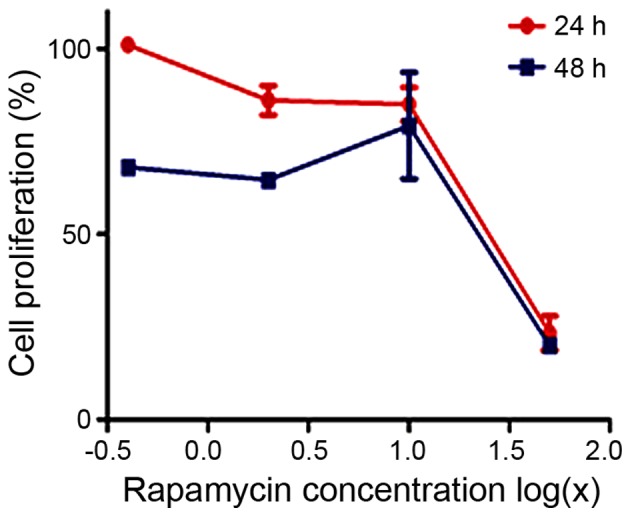
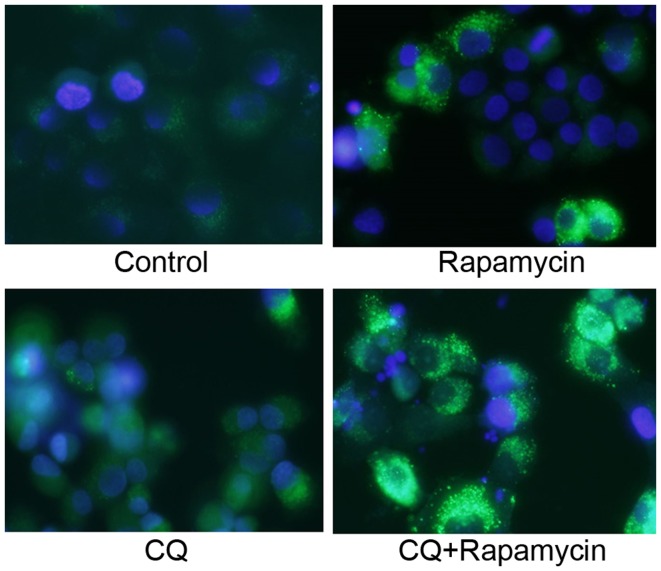
The inhibition of the mammalian target of rapamycin (mTOR) signaling pathway promotes the initiation of autophagy. Although it remains under debate whether chemotherapy-induced autophagy in tumor cells is a protective response or is invoked to promote cell death, recent studies indicate that autophagy is a self-defense mechanism of cancer cells that are subjected to antitumor agents and that blocking autophagy can trigger apoptosis. The aim of this study was to examine the effects of rapamycin, an mTOR inhibitor, on MG63 osteosarcoma cells. We further examined whether the combination of rapamycin and the small molecule inhibitor of autophagy Spautin-1 (specific and potent autophagy inhibitor-1) enhanced the rapamycin-induced apoptosis in MG63 cells. We examined the effects of rapamycin treatment on cell proliferation, phosphorylation of mTOR pathway components, and autophagy by western blot analysis. Furthermore, we examined the effects of rapamycin with or without Spautin-1 on the induction of apoptosis by western blot analysis and immunohistochemical staining. We found that rapamycin inhibited cell proliferation and decreased the phosphorylation of mTOR pathway components in MG63 cells. Rapamycin induced the apoptosis of MG63 cells, and this apoptosis was enhanced by Spautin-1. It was considered that Spautin-1 suppressed the protective mechanism induced by rapamycin in tumor cells and induced apoptosis. Therefore, the combination of an mTOR inhibitor and an autophagy inhibitor may be effective in the treatment of osteosarcoma because it effectively induces the apoptotic pathway.
雷帕霉素哺乳动物靶点(mTOR)信号通路的抑制可促进自噬的启动。尽管化疗诱导肿瘤细胞自噬是一种保护性反应还是被激活以促进细胞死亡仍存在争议,但最近的研究表明,自噬是癌细胞对抗肿瘤药物的一种自我防御机制,阻断自噬可触发细胞凋亡。本研究的目的是检测雷帕霉素(一种mTOR抑制剂)对MG63骨肉瘤细胞的影响。我们进一步检测了雷帕霉素与自噬小分子抑制剂Spautin-1(特异性强效自噬抑制剂-1)联合使用是否能增强雷帕霉素诱导的MG63细胞凋亡。我们通过蛋白质免疫印迹分析检测了雷帕霉素处理对细胞增殖、mTOR通路成分磷酸化和自噬的影响。此外,我们通过蛋白质免疫印迹分析和免疫组织化学染色检测了雷帕霉素单独或与Spautin-1联合使用对凋亡诱导的影响。我们发现雷帕霉素抑制MG63细胞的增殖并降低mTOR通路成分的磷酸化。雷帕霉素诱导MG63细胞凋亡,且Spautin-1可增强这种凋亡。据认为,Spautin-1抑制了雷帕霉素在肿瘤细胞中诱导的保护机制并诱导了细胞凋亡。因此,mTOR抑制剂和自噬抑制剂联合使用可能对骨肉瘤治疗有效,因为它能有效诱导凋亡途径。