Yokoo Masako, Kubota Yasushi, Motoyama Keiichi, Higashi Taishi, Taniyoshi Masatoshi, Tokumaru Hiroko, Nishiyama Rena, Tabe Yoko, Mochinaga Sakiko, Sato Akemi, Sueoka-Aragane Naoko, Sueoka Eisaburo, Arima Hidetoshi, Irie Tetsumi, Kimura Shinya
Division of Hematology, Respiratory Medicine and Oncology, Department of Internal Medicine, Faculty of Medicine, Saga University, Saga, Japan.
Department of Transfusion Medicine, Saga University Hospital, Saga, Japan.
PLoS One. 2015 Nov 4;10(11):e0141946. doi: 10.1371/journal.pone.0141946. eCollection 2015.
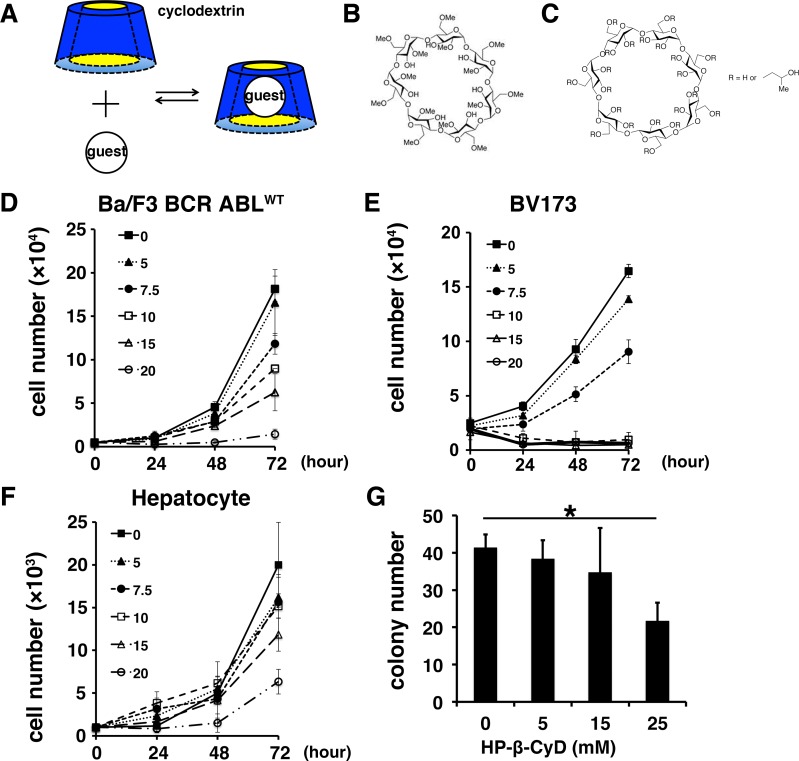
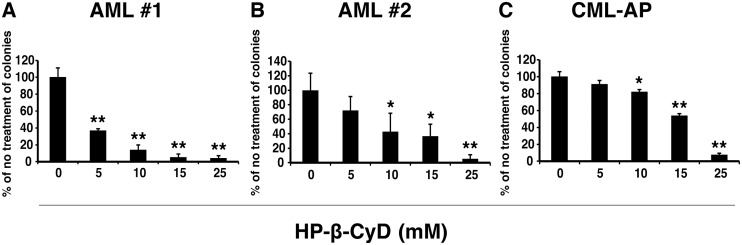
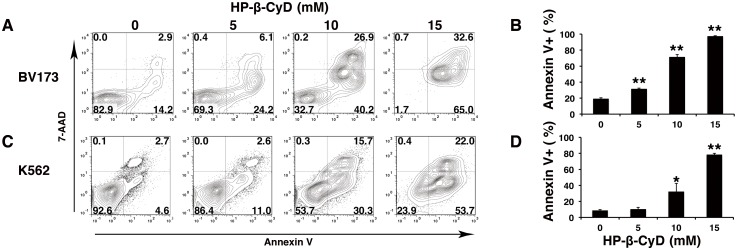
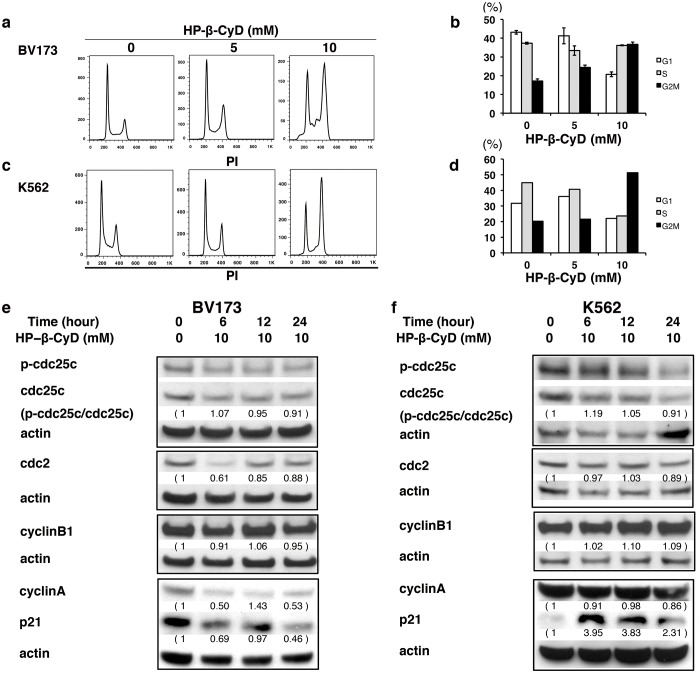
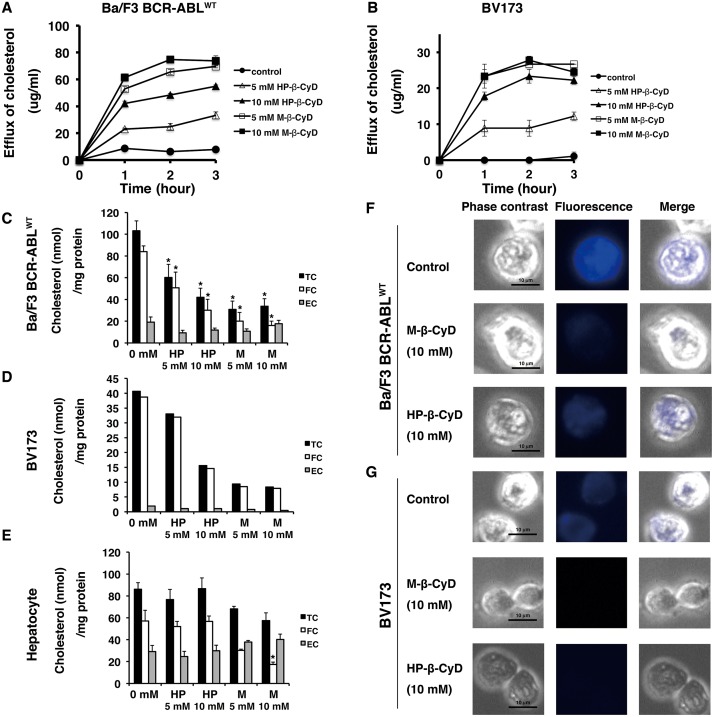
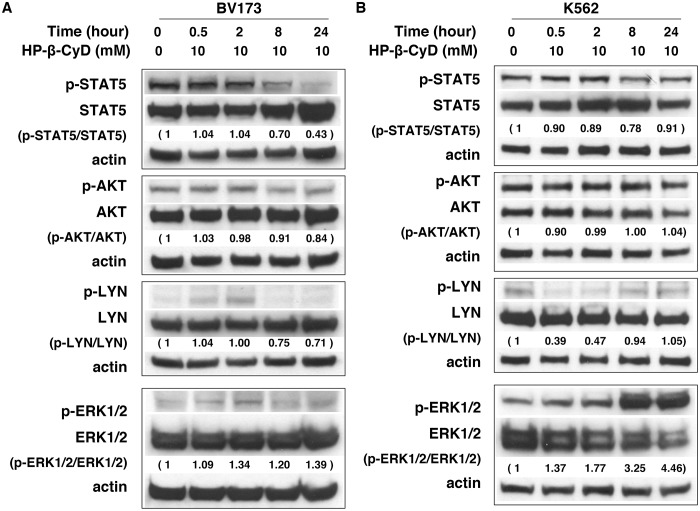
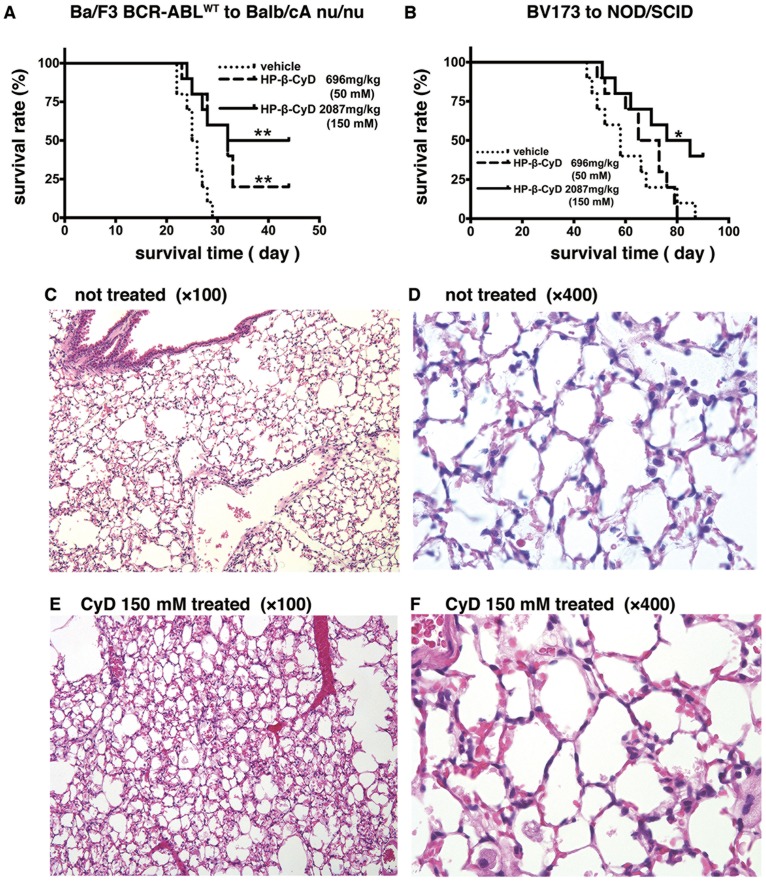
2-Hydroxypropyl-β-cyclodextrin (HP-β-CyD) is a cyclic oligosaccharide that is widely used as an enabling excipient in pharmaceutical formulations, but also as a cholesterol modifier. HP-β-CyD has recently been approved for the treatment of Niemann-Pick Type C disease, a lysosomal lipid storage disorder, and is used in clinical practice. Since cholesterol accumulation and/or dysregulated cholesterol metabolism has been described in various malignancies, including leukemia, we hypothesized that HP-β-CyD itself might have anticancer effects. This study provides evidence that HP-β-CyD inhibits leukemic cell proliferation at physiologically available doses. First, we identified the potency of HP-β-CyD in vitro against various leukemic cell lines derived from acute myeloid leukemia (AML), acute lymphoblastic leukemia and chronic myeloid leukemia (CML). HP-β-CyD treatment reduced intracellular cholesterol resulting in significant leukemic cell growth inhibition through G2/M cell-cycle arrest and apoptosis. Intraperitoneal injection of HP-β-CyD significantly improved survival in leukemia mouse models. Importantly, HP-β-CyD also showed anticancer effects against CML cells expressing a T315I BCR-ABL mutation (that confers resistance to most ABL tyrosine kinase inhibitors), and hypoxia-adapted CML cells that have characteristics of leukemic stem cells. In addition, colony forming ability of human primary AML and CML cells was inhibited by HP-β-CyD. Systemic administration of HP-β-CyD to mice had no significant adverse effects. These data suggest that HP-β-CyD is a promising anticancer agent regardless of disease or cellular characteristics.
2-羟丙基-β-环糊精(HP-β-CyD)是一种环状寡糖,它不仅作为药物制剂中的辅助赋形剂被广泛使用,还作为一种胆固醇调节剂。HP-β-CyD最近已被批准用于治疗尼曼-匹克C型病(一种溶酶体脂质贮积病),并已应用于临床实践。由于在包括白血病在内的各种恶性肿瘤中均已发现胆固醇蓄积和/或胆固醇代谢失调,我们推测HP-β-CyD本身可能具有抗癌作用。本研究提供了证据表明,HP-β-CyD在生理可用剂量下可抑制白血病细胞增殖。首先,我们确定了HP-β-CyD在体外对源自急性髓性白血病(AML)、急性淋巴细胞白血病和慢性髓性白血病(CML)的各种白血病细胞系的作用效果。HP-β-CyD处理可降低细胞内胆固醇水平,通过G2/M期细胞周期阻滞和凋亡导致白血病细胞生长显著抑制。腹腔注射HP-β-CyD可显著提高白血病小鼠模型的存活率。重要的是,HP-β-CyD对表达T315I BCR-ABL突变(赋予对大多数ABL酪氨酸激酶抑制剂耐药性)的CML细胞以及具有白血病干细胞特征的低氧适应性CML细胞也显示出抗癌作用。此外,HP-β-CyD可抑制人原发性AML和CML细胞的集落形成能力。对小鼠全身给药HP-β-CyD没有明显的不良反应。这些数据表明,无论疾病或细胞特征如何,HP-β-CyD都是一种有前景的抗癌药物。