Van Zee Janice, Piesman Joseph F, Hojgaard Andrias, Black William Cormack
Centers for Disease Control and Prevention, Division of Vector-Borne Diseases, 3150 Rampart Road, Fort Collins, CO, 80521, United States of America.
Department of Microbiology, Immunology and Pathology, Colorado State University, Fort Collins, CO, 80523, United States of America.
PLoS One. 2015 Nov 4;10(11):e0139630. doi: 10.1371/journal.pone.0139630. eCollection 2015.
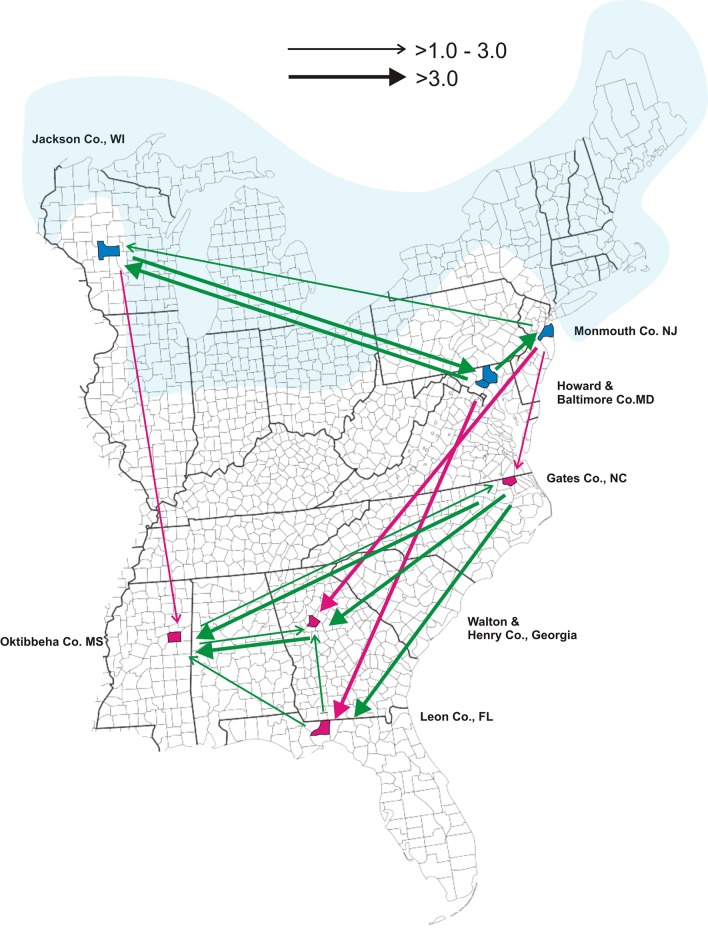
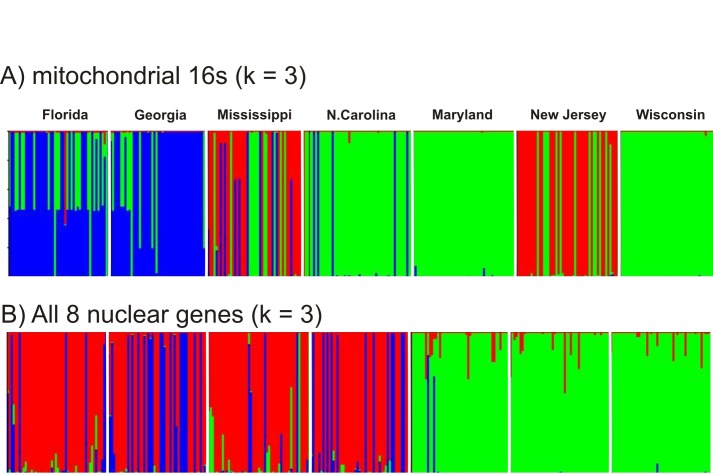
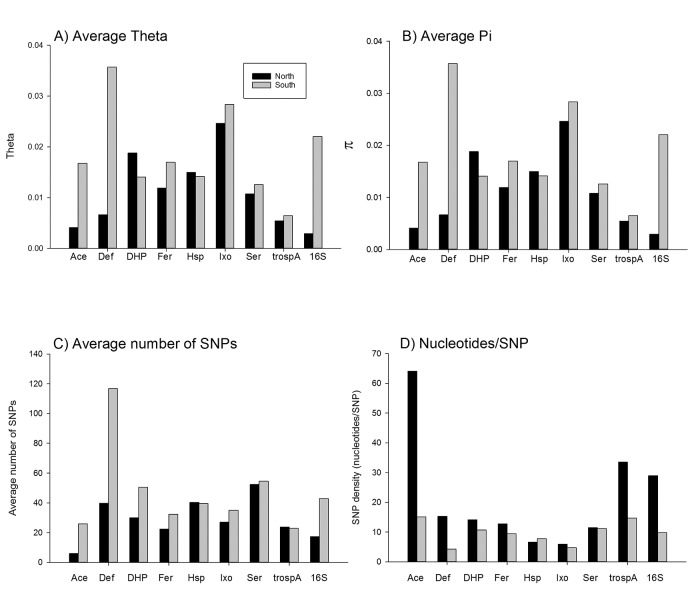
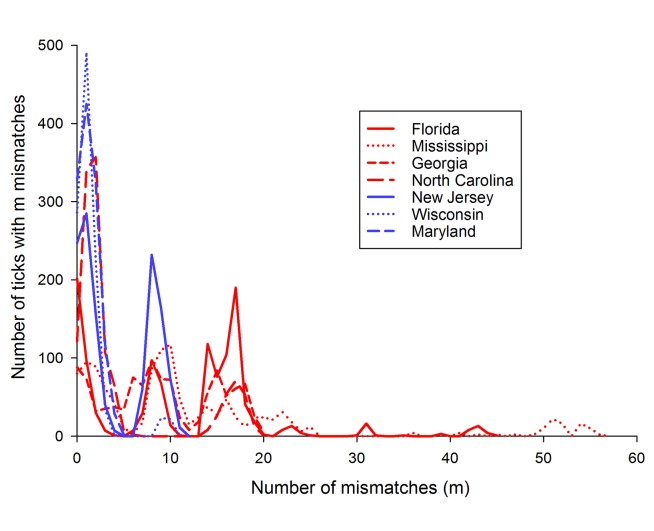
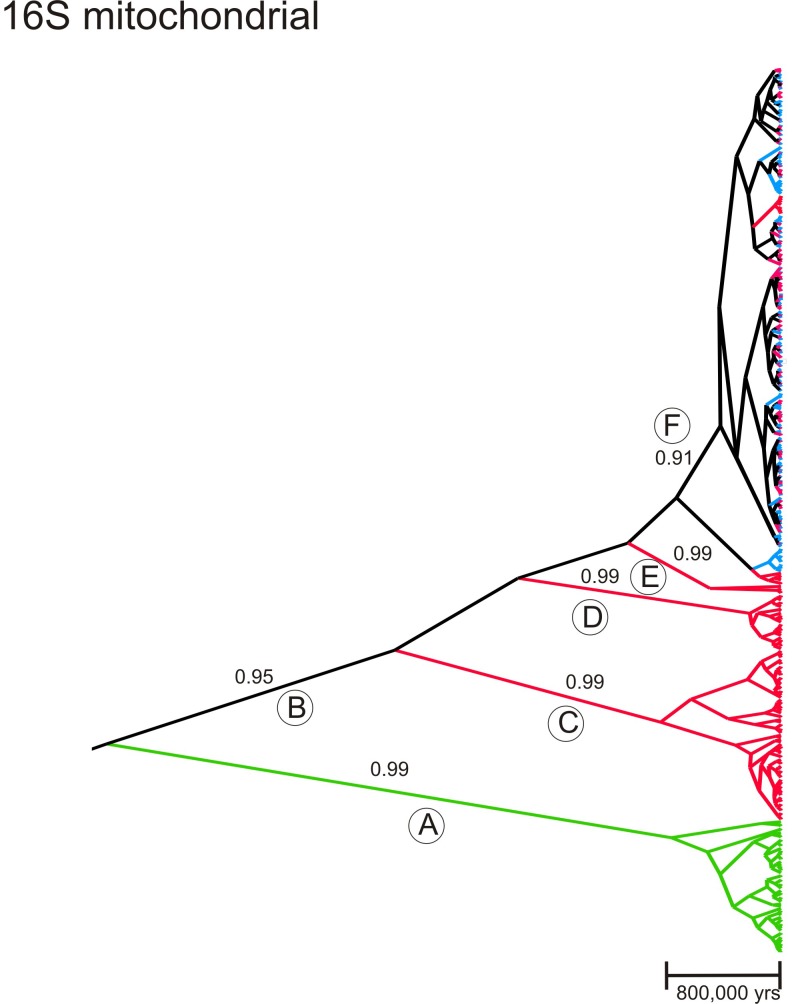
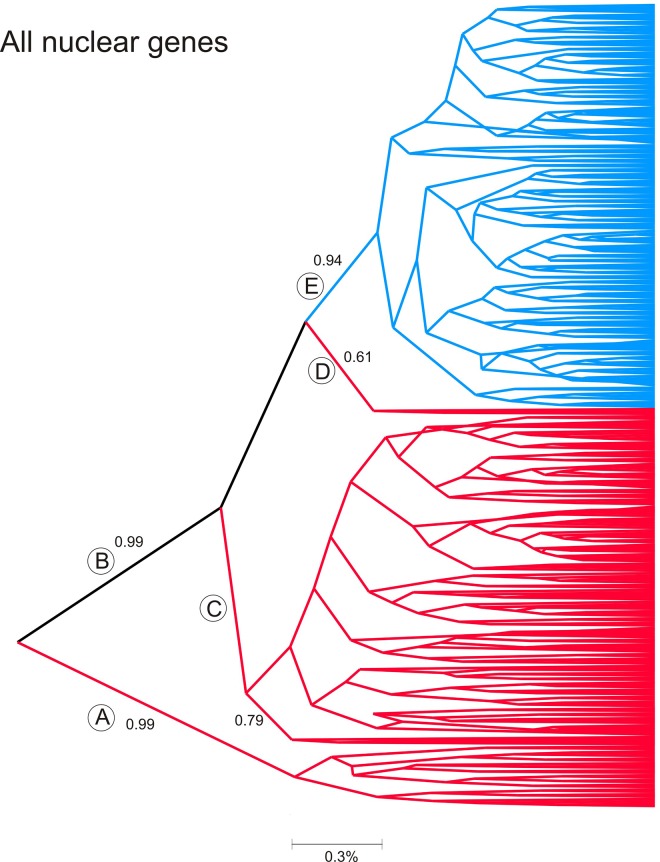
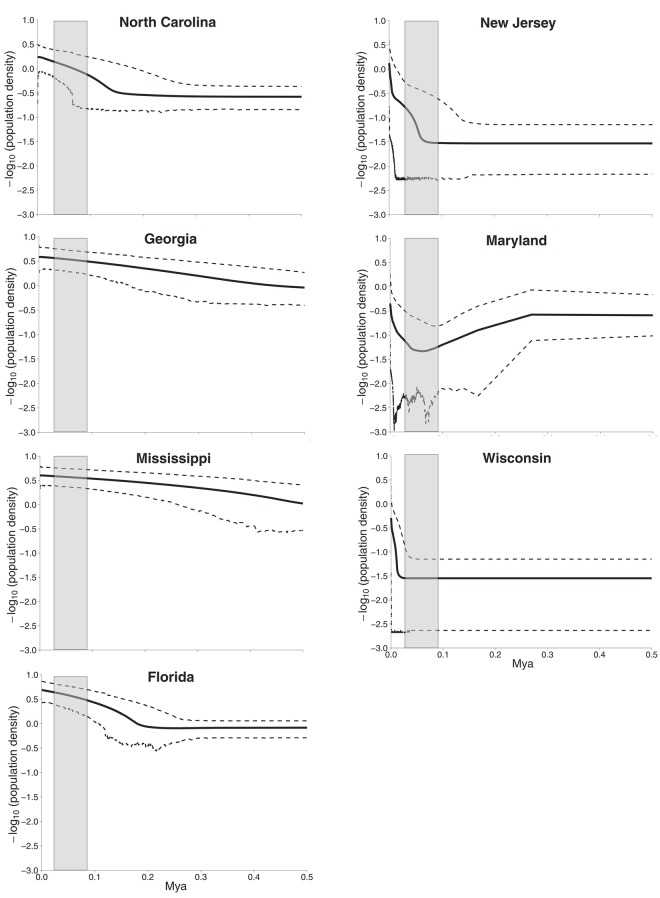
Ixodes scapularis, the tick vector of the Lyme disease spirochete, is distributed over most of the eastern United States, but >80% of all Lyme disease cases occur in the northeast. The role that genetic differences between northern and southern tick populations play in explaining this disparate distribution of Lyme disease cases is unclear. The present study was conducted with 1,155 SNP markers in eight nuclear genes; the 16S mitochondrial gene was examined for comparison with earlier studies. We examined 350 I. scapularis from 7 states covering a representative area of the species. A demographic analysis using Bayesian Extended Skyline Analysis suggested that I. scapularis populations in Mississippi and Georgia began expanding 500,000 years ago, those in Florida and North Carolina 200,000 years ago and those from Maryland and New Jersey only during the past 50,000 years with an accompanying bottleneck. Wisconsin populations only began expanding in the last 20,000 years. Analysis of current migration patterns suggests large amounts of gene flow in northern collections and equally high rates of gene flow among southern collections. In contrast there is restricted and unidirectional gene flow between northern and southern collections, mostly occurring from northern into southern populations. Northern populations are characterized by nymphs that quest above the leaf litter, are easy to collect by flagging, frequently feed on mammals such as rodents and shrews, commonly attach to people, and about 25% of which are infected with B. burgdorferi. If there is a genetic basis for these behaviors, then the patterns detected in this study are of concern because they suggest that northern I. scapularis populations with a greater ability to vector B. burgdorferi to humans are expanding south.
肩突硬蜱是莱姆病螺旋体的蜱传播媒介,分布于美国东部大部分地区,但80%以上的莱姆病病例发生在东北部。尚不清楚北部和南部蜱种群之间的基因差异在解释莱姆病病例这种不同分布中所起的作用。本研究使用了8个核基因中的1155个单核苷酸多态性(SNP)标记;对16S线粒体基因进行了检测,以便与早期研究进行比较。我们检查了来自7个州的350只肩突硬蜱,这些州覆盖了该物种的一个代表性区域。使用贝叶斯扩展天际线分析进行的种群动态分析表明,密西西比州和佐治亚州的肩突硬蜱种群在50万年前开始扩张,佛罗里达州和北卡罗来纳州的种群在20万年前开始扩张,而马里兰州和新泽西州的种群仅在过去5万年中开始扩张,且伴随着种群瓶颈。威斯康星州的种群仅在过去2万年中开始扩张。对当前迁移模式的分析表明,北部样本中有大量基因流动,南部样本中的基因流动率同样很高。相比之下,北部和南部样本之间的基因流动受到限制且是单向的,主要是从北部流向南部种群。北部种群的若虫在落叶层上方搜寻,通过拖旗法很容易采集到,经常以啮齿动物和鼩鼱等哺乳动物为食,通常会叮咬人类,其中约25%感染了伯氏疏螺旋体。如果这些行为存在遗传基础,那么本研究中检测到的模式就令人担忧,因为这表明更有能力将伯氏疏螺旋体传播给人类的北部肩突硬蜱种群正在向南扩张。