Shin Hwa Kyun, Choi Chang Woo, Lim Jae Woong, Her Keun
Department of Thoracic and Cardiovascular Surgery, Soonchunhyang University Bucheon Hospital, Bucheon, Korea.
J Korean Med Sci. 2015 Nov;30(11):1706-9. doi: 10.3346/jkms.2015.30.11.1706. Epub 2015 Oct 16.
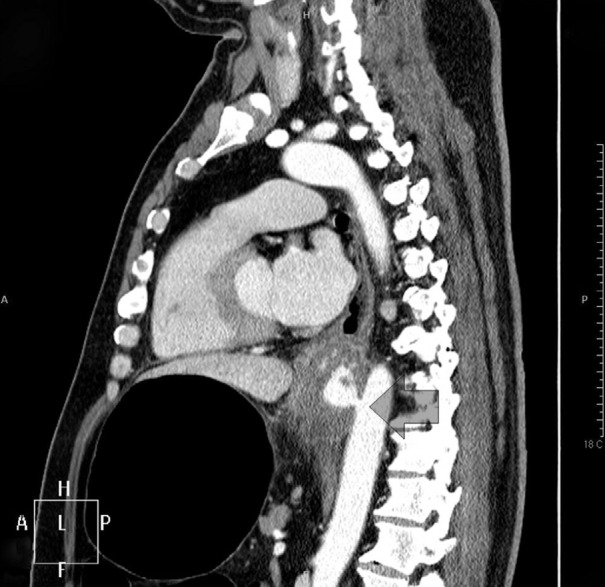
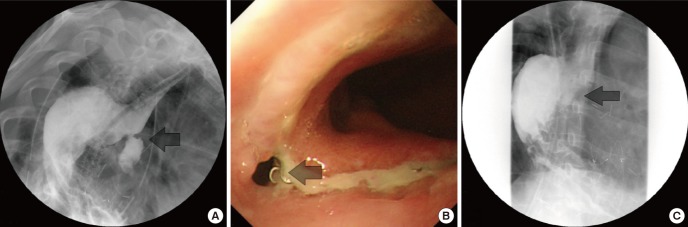
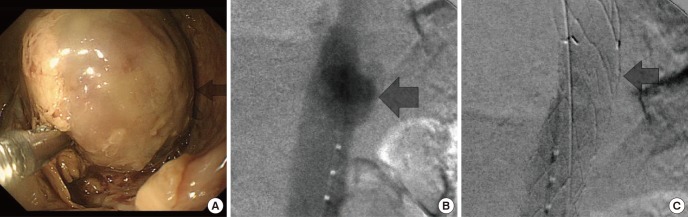
An aortoesophageal fistula (AEF) is an extremely rare, potentially fatal condition, and aortic surgery is usually performed together with extracorporeal circulation. However, this surgical method has a high rate of surgical complications and mortality. This report describes an AEF caused by tuberculous esophagitis that was treated successfully using a two-stage operation. A 52-yr-old man was admitted to the hospital with severe hematemesis and syncope. Based on the computed tomography and diagnostic endoscopic findings, he was diagnosed with an AEF and initially underwent thoracic endovascular aortic repair. Esophageal reconstruction was performed after controlling the mediastinal inflammation. The patient suffered postoperative anastomotic leakage, which was treated by an endoscopic procedure, and the patient was discharged without any further problems. The patient received 9 months of anti-tuberculosis treatment after he was diagnosed with histologically confirmed tuberculous esophagitis; subsequently, he was followed as an outpatient and has had no recurrence of the tuberculosis or any further issues.
主动脉食管瘘(AEF)是一种极其罕见且可能致命的疾病,主动脉手术通常在体外循环下进行。然而,这种手术方法具有较高的手术并发症发生率和死亡率。本报告描述了一例由结核性食管炎引起的AEF,通过两阶段手术成功治愈。一名52岁男性因严重呕血和晕厥入院。根据计算机断层扫描和诊断性内镜检查结果,他被诊断为AEF,最初接受了胸段血管腔内主动脉修复术。在控制纵隔炎症后进行了食管重建。患者术后发生吻合口漏,通过内镜手术进行了治疗,患者出院时无任何进一步问题。在经组织学确诊为结核性食管炎后,患者接受了9个月的抗结核治疗;随后,他作为门诊患者接受随访,结核病未复发,也没有出现任何其他问题。