Harvard-MIT Division of Health Sciences and Technology, Massachusetts Institute of Technology, Cambridge, MA, 02139, USA.
Center for Extreme Bionics, MIT Media Lab, Massachusetts Institute of Technology, Cambridge, MA, 02139, USA.
Sci Rep. 2019 Feb 13;9(1):1981. doi: 10.1038/s41598-018-38096-z.
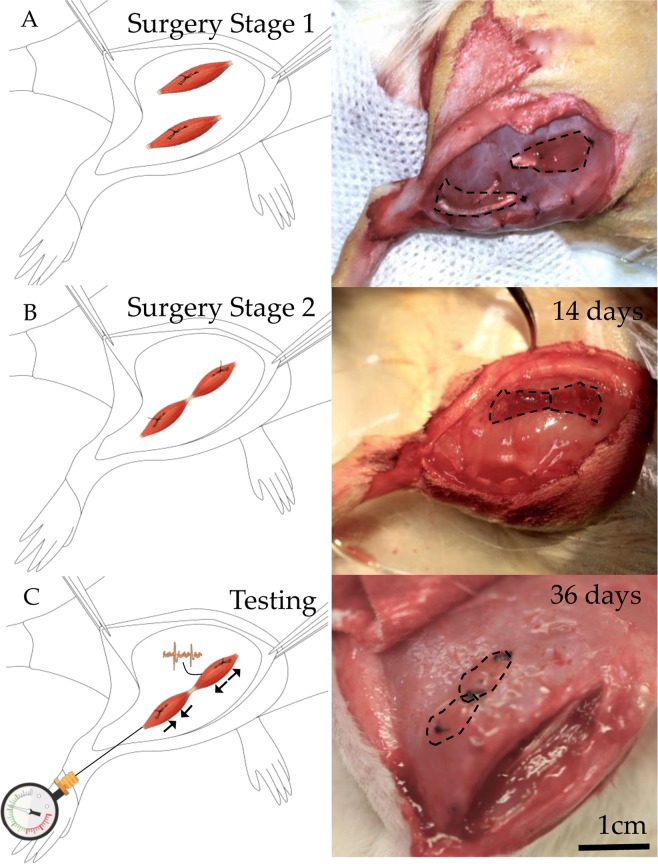
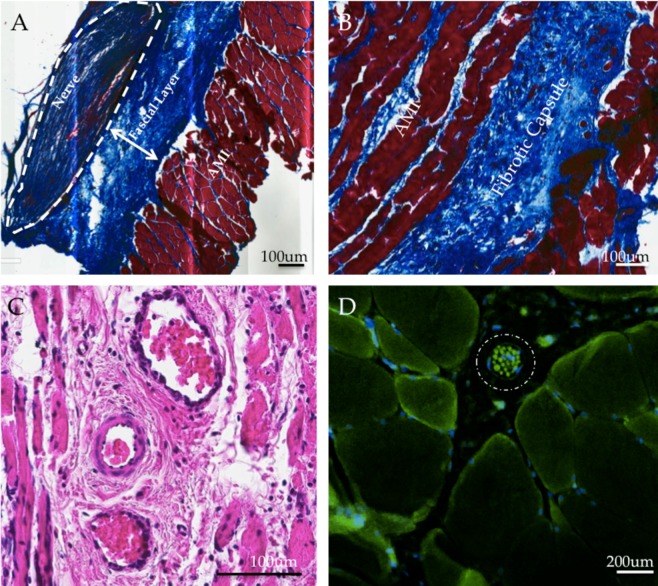
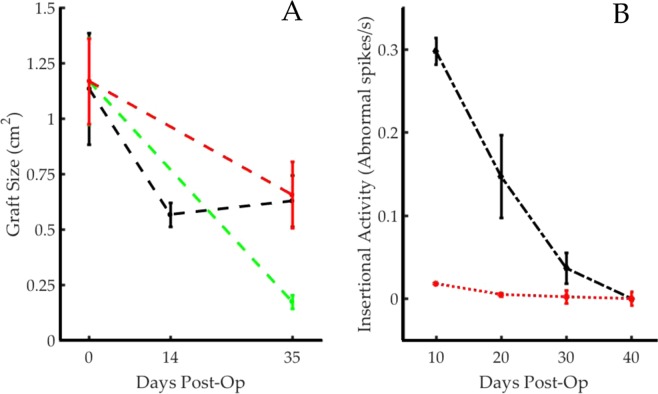
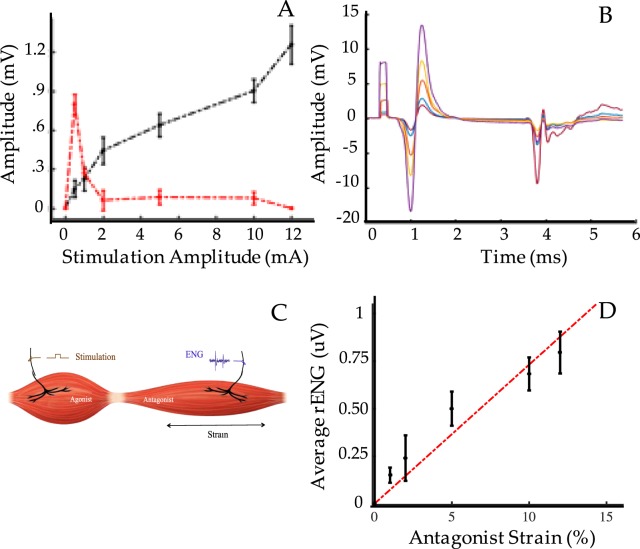
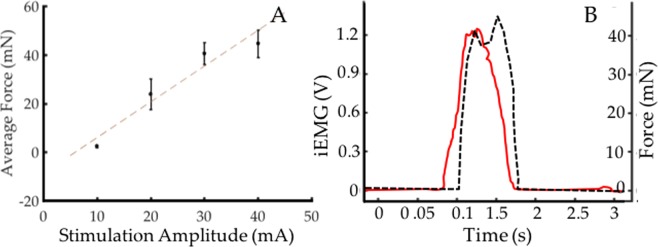
While amputation has traditionally been viewed as a failure of therapy, recent developments in amputation surgery and neural interfacing demonstrate improved functionality and bidirectional communication with prosthetic devices. The agonist antagonist myoneural interface (AMI) is one such bi-directional neural communication model comprised of two muscles, an agonist and an antagonist, surgically connected in series within the amputated residuum such that contraction of one muscle stretches the other. By preserving agonist-antagonist muscle dynamics, the AMI allows proprioceptive signals from mechanoreceptors within both muscles to be communicated to the central nervous system. Preliminary human evidence suggests that AMIs have the capacity to provide high fidelity control of a prosthetic device, force feedback, and natural proprioception. However, AMIs have been implemented only in planned amputations and require healthy distal tissues, whereas the majority of amputations occur in patients who do not have healthy distal tissues. Through the use of a dual-stage surgical procedure which leverages existent tissues, this study proposes a revision model for implementation of the AMI in patients who are undergoing traumatic amputation or have already undergone a standard amputation. This paper validates the resulting AMI's physiology, revealing robust viability and mechanical and electrophysiological function. We demonstrate the presence of H-waves in regenerative grafts, indicating the incorporation of the AMI into physiological reflexive loops.
虽然传统上截肢被视为治疗的失败,但近年来截肢手术和神经接口的发展表明,通过假肢设备可以实现更好的功能和双向通信。激动拮抗剂肌神经接口 (AMI) 就是这样一种双向神经通信模型,它由两块肌肉组成,即主动肌和拮抗肌,在截肢残端中以串联的方式进行手术连接,从而使一块肌肉的收缩拉伸另一块肌肉。通过保留主动肌-拮抗肌肌肉动力学,AMI 允许来自两块肌肉内机械感受器的本体感觉信号被传递到中枢神经系统。初步的人体证据表明,AMI 具有提供假肢设备的高保真控制、力反馈和自然本体感觉的能力。然而,AMI 仅在计划性截肢中实施,且需要健康的远端组织,而大多数截肢发生在没有健康远端组织的患者中。本研究通过使用双阶段手术程序利用现有组织,提出了一种针对正在经历创伤性截肢或已经接受标准截肢的患者实施 AMI 的修正模型。本文验证了所得到的 AMI 的生理学特性,显示出其强大的生存能力以及机械和电生理学功能。我们证明了再生移植物中存在 H 波,表明 AMI 已纳入生理反射环。